Thursday, June 24, 2010

Tom Paxton's "I Can't Help But Wonder Where I'm Bound"

When I was younger, there were certain poems and novels and songs and plays and films that I just knew I would love forever and would return to frequently. I've still never seen a better film than Lawrence of Arabia or found a poet more in tune with the subtle vibrations of experience than Robert Frost or W.H. Auden. Hemingway's For Whom The Bell Tolls still affects me deeply, and I still think that O'Neill's Long Day's Journey Into Night is the pre-eminent masterpiece of the American theater.

What I could not quite foresee, though, in my youth and callowness was that the ways these and countless other creative pieces would resonate for me through the decades would change, as change they have dramatically. To me as a sixty year old, David Lean's Lawrence is less heroic and more pitiable, and my sympathies in the O'Neill play now extend far beyond the helplessly drug-addicted Mary Tyrone to embrace as well her disillusioned, alcoholic husband and sons. Years and experience change us all and the ways in which we understand ourselves and our lives.

So has it been for me with this week's song, Tom Paxton's "I Can't Help But Wonder Where I'm Bound" - and so as I think we'll see has it also been for many of the myriad of other artists who have covered the tune. I have written before about the sheer and absolute "folkiness" of Paxton's best work in articles about his "The Last Thing On My Mind" and "My Ramblin' Boy", and "Bound" is the equal of these as a song that will long outlive any of us. All three songs seem simple and direct in both music and lyrics - deceptively so, I would suggest. For though they mean what they say, each song has the same quality that an abstract expressionist painting or an imagist poem does - we bring ourselves and our own life experiences into understanding the work, and thus each means more than the simple literal reading of the lyric.

One of the first things that any lit student learns to appreciate is the power of metaphor, and at least since the time of Homer three thousand years ago just about everyone recognizes the symbolic value of the journey as a metaphor for life itself. Paxton's lyric in this song may have been intended only as a reflection of his sense of his own and his generation's rootlessness and yearning for meaning in life, but in the hands of the musical artists who have interpreted this song below, we'll see that each infuses the verses with his or her own personal sense of quest.

First, Paxton himself lays down the template for the song. When this performance was taped in Israel in 1994 (with Shay Tochner, one of that country's leading folk artists), "Where I'm Bound" was already thirty years old and Tom himself was well into his fifties:


I like the confidence that emanates from TP here - he knows that the audience knows his song, and it's clear that he knows he's written a damn fine one at that.

The first version that I actually heard was from the Chad Mitchell Trio (known when they recorded this as The Mitchell Trio) from their wonderful Reflecting album. The CMT was probably more responsible than any other single artist for taking Paxton's work and giving it a national audience, much as Peter, Paul and Mary did for Bob Dylan and the Kingston Trio did for Rod McKuen:


I always liked the two-guitar accompaniment of this (Paul Prestopino and Jacob Ander), and in the context of the CMT's often overtly political stance in many of their albums, I have always believed that this version was a 1964 query about the direction of the country as a whole. Vocal lead is by Joe Frazier, now an Episcopal priest in Big Bear, CA.

The Kingston Trio also did a fine job with Paxton's compositions, and their studio recording of "Bound" on their Stay Awhile album is one of the highlights of their years on Decca Records. I've chosen for this piece, though, their live performance from July of 1966 at Lake Tahoe as they kicked off their farewell tour before disbanding (temporarily, as it turned out) in June of the following year:


However much the upcoming dissolution of the group may have seemed the right thing to do at the time, there had to be an attendant uncertainty about the future that I think this rendition expresses. As a side note - this Trio changes the lyric in the third verse from "I hear he's out by 'Frisco Bay" to "Monterey" - because as a Bay Area group they knew what Paxton did not - that longtime residents up there despised the abbreviation and just never but never said "Frisco" for anything related to their beloved city.

Johnny Cash's American Recordings were spare, stripped down arrangements recorded in the last years of this great artist's life. "Bound" appeared on an album released earlier this year, American VI: Ain't No Grave:


I love the craginess of the voice and the tentativeness of a man who knew he was facing his last long and mysterious journey.

Nanci Griffith collected an all-star line-up of musicians and songwriters for her Other Voices, Other Rooms album in the early 90s - an entire recording of other people's songs, often as here with the composer performing with her:


The song clearly lends itself to Griffith's uptempo, good time country reading.

We forget, perhaps, that Paul Simon and Art Garfunkel actually started out as a folk duo. Here is Simon in solo performance at Queen's College in 1964:


We conclude with two fairly recent, non-pro performances that I like. First, Riverbend - well, they're pros but have only recently come together as a group. Ron Wilburne, formerly of the New Christy Minstrels, is the lead in the center with David Meitz on mandolin and Art Morgan on guitar:


I haven't been able to find out much about Oliver Mulholland, who performs here. I believe he's up in the Puget Sound area: this video was originally posted by a high school classmate of his with whom I briefly corresponded, and I think this performance is from a reunion in the 90s:

Friday, June 18, 2010

A Rollin' Stone: An Appreciation Of Bob Shane

All successful singing groups develop their identities from the vocal synergy that evolves among the members, and often the most memorable moments in the group's careers are moments of brilliant and stunning harmony. At the same time, though, most of the great vocal groups (including the pop folk groups) were anchored in the bedrock of the group's best voice. It's hard, for example, to imagine the Weavers without Pete Seeger at the top of the blend, even though both Ronnie Gilbert and Lee Hays had more trained voices (and great as Seeger's replacement Erik Darling was - just not the same). Glenn Yarborough gave the Limeliters their unique sound, and for my money Peter and Mary would have gone nowhere without the warm, round baritone and dynamics of (Noel) Paul Stookey.

In the Kingston Trio, the greatest of the pop folk groups, the best voice by common acknowledgment by the other performers, the critics, and the public at large, and the one that stood at the center of the group's sound for forty seven years, was that of Robert Castle Schoen, better known for half a century by his stage name of Bob Shane.

I have always believed that this group had no single indispensable member because all three of the originals were utterly necessary for the burst of success that put the KT into the music history books. You just couldn't remove any one component - Dave Guard's arrangements and patter, Nick Reynolds' harmonies and exuberance, Shane's vocal skills and stage presence - and have ended up with the phenomenon that started fifty three years ago. Lou Gottlieb of the Limes noted this as he watched them develop, and Dr. Lou recounted to historian Ronald Cohen decades later that the three had "something really special...it was hard to describe it unless you heard and saw them."

Having said that, however, from the very beginnings of the group, it was clear the the voice at once most powerful and most refined belonged to Shane. An article in Time Magazine at the point of Guard's departure in '61 noted that of the original three, only Shane had the vocal chops to make it as a soloist. And Nick Reynolds, Shane's best friend for half a century, said in an interview a couple of years before his 2008 death that in retrospect he wished that the group had given even more vocal leads to Shane than they did.

In the post-Sanford Mesiner method acting era in performing arts, it has become customary to refer to a performer's physical attributes as his or her "instrument," and Shane's voice was precisely that - an instrument the use of which he honed and refined throughout his career. It has often been referred to as a "whiskey baritone," but I have never thought that quite accurate (possibly an unconscious reference to his most famous solo "Scotch and Soda"). But there was something more in that voice than drinks and smokes, and the best description I have seen of it comes from Time's Richard Corliss, who in a 2003 retrospective on pop folk referred to it as "dusky, knowing." That's it - dark shadings and the suggestion of having been around the block a few times.

Those qualities and Shane's excellent timbre were both on display from the start - his solo on the group's first album and almost everyone's favorite, the anonymous bar ballad "Scotch and Soda":


The combination of power and control and intuitive Sinatra-esque phrasing here makes this performance so exceptional that I believe that it obscures the middling quality of the song itself. Johnny Mercer, Harold Arlen, Cole Porter - those guys wrote really great bar songs. Shane's skills fool us into thinking that this song bears comparison to the work of those composers. It doesn't - but Shane's performance can stand shoulder to shoulder with any similar song that Sinatra ever waxed.

When you're talking about Shane as soloist, you have to start with "S&S", but for fifty years my favorite solo of his has been Stan Wilson's "A Rollin' Stone." Wilson, who was a local Bay area celebrity and night club star while the guys were still in college, helped to shape both the repertoire of the group and Shane's own approach to singing and song selection. (Jerry Kergan's "Liner Notes" has a lot more on Wilson HERE.) His "Stone" is classic:


The song is a lot closer to folk than some of the other selections here, and Wilson's jaunty, devil-may-care composition seemed ideally suited to the voice, talents, and jaunty, devil-may-care onstage attitude of Shane.

And speaking of genuine folk songs, Shane was an outstanding interpreter of these as well, as evidenced here in "Blow The Candle Out":


Though Shane has copyright for the lyrics, he freely acknowledged that he learned the song from Stan Wilson's performance of it. And in reference to the synergy described above - a good deal of the effect of this cut comes from Dave Guard's brilliant instrumental arrangement (with Reynolds supplying the guitar line) in support of Shane's vocal.

Shane co-wrote the lyrics (with his good friend Tom Drake) for "The White Snows of Winter," whose melody is based on a passage from Brahms' First Symphony. That knowing, smokey baritone never sounded better than it does on this Christmas-themed song:

Here in "Snows," Shane once again (as he so often did) strikes a perfect balance between an almost erotic longing and pure romanticism. Brilliant.

The next two selections are self-evident demonstrations of Shane's interpretive range, one a Broadway tune (see my article HERE to debunk certain myths about it) and one from off-Broadway's longest-running show in theater history:


I've chosen the 2009 Flashback 1963 album version of "Maria" over the original Hungry i recording (1958) because I think that the five year interval demonstrates brilliantly my contention that Bob continually refined and improved his technical and interpretive abilities. The versions of these songs presented here are arguably the two best ever recorded of these pop standards.

We close this retrospective with a song that for me was always special and is now especially poignant, Trio member John Stewart's lovely pop ballad from 1961, "When My Love Was Here":


Stewart wrote this when he was 21, and for my money this is absolutely the most mature and fully realized of all the songs that he wrote that were recorded by the Kingston Trio. Though Stewart seldom again ventured into pop balladry, "When My Love" is the one early composition of his that prefigures the prodigious songwriting talent that evolved during his forty year solo career - and he entrusted this gem to Bob Shane.

Occasionally during the two years and 90 posts of Weekend Videos/CompVid101 I've alluded to the fact that I think we who love folk type music are blessed to live at the same time as some truly sublime artists - I've mentioned Ian Tyson, Emmylou Harris, and Marty Robbins, among others. With these - and it goes without saying but hence needs even more to be said - Bob Shane stands at the head of the class. For more than fifty years he has entertained us, made us laugh, treated us as an audience with respect - and thrilled us with the marvelous use of that great, dusky, knowing voice. Blessed we are indeed.

Addendum - August, 2014

In the four plus years since this was posted, a significant number of other classic Shane solos have appeared on YouTube. Two  of the best, both essential to understanding Shane's brilliance as a performer, are below: the original studio track from 1962 of "Try To Remember" with brilliant but uncredited guitar work from John Stauber and one of Shane's earliest solos, Irving Burgie's lovely pop ballad "The Seine" from the 1959 album At Large.

"Try To Remember"


"The Seine"


Thursday, June 10, 2010

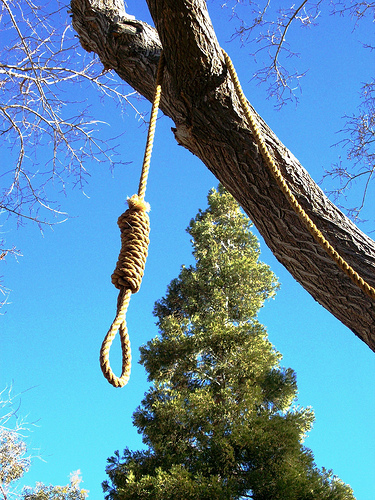
"Hangman/The Maid Freed From The Gallows"

This week's song goes under many names: the oldest is "The Maid Freed From The Gallows," though it has also been known as "The Gallows Tree" and "Gallows Pole" and simply as "Hangman, Hangman." It is a song with a rich and varied history and all the things that I love about real folk songs - a good tune and story, origins lost in the mists of time, major variations in tune, tone, and tenor, and that tantalizing single motif that unites all the versions and indicates a common source. Someone is about to be hanged and his/her family proves indifferent to the fact. Things are looking bad for our prisoner until his/her beloved (usually the fiance/fiancee) shows up with enough gold to bribe the hangman and save the day. Significantly - and unlike other folk songs like, say, the family of songs that eventually morph into "The Gypsy Rover" that have radically differing endings - our prisoner always escapes the noose due to the good offices of the beloved.

The versions of the song that we know come from England, where it was known in its oldest forms as "The Briarly Bush" or "The Prickly Bush," but the actual origins of the song are from the continent. Virtually every country in Northern Europe (and many in the south) have some variant of it, and the great folk scholar Francis James Child (1825-1896), the American who did landmark work in tracing both the origins and permutations of about three hundred ballads from the British Isles, believes the song to be German or Hungarian originally.

In UK and European versions, the prisoner is almost always a maid, often one kidnapped and held for ransom by pirates; in America's southern Appalachians and in the Texas-Louisiana area where the song is also known, the condemned is usually a man. Regardless, the motif of purchasing one's freedom from the gallows (or a hostage situation) does in fact have its roots in history. Though then as now capital punishment was a deterrent, an act of vengeance, and a kind of terrorism inflicted by the ruling class on the lower classes to keep them in line - it differs from the procedure-laden, appeals-rich and legally intricate method of today. In 17th century England and before, for example, those accused of capital crimes were not permitted a solicitor and had to mount their own defense. And if reprieve could not have been purchased all that frequently at the point of execution - some gold given to the right jurist prior to then could work wonders. And there were reported cases (in Scotland, not surprisingly) of executions forestalled by the payment of a ransom.

Our first version of the song is fittingly a pub performance from the UK, by an 84 year old woman simply known as Bella.:


Bella is apparently from central Europe but lived most of her nine decades in the north of England. She sings in the authentic a capella style that most ballads were performed in traditionally. I'm intrigued by how the younger-skewing audience (fueled by ale, no doubt) finds the parents' refusal to help amusing. Whatever dark humor permeates a lot of folk songs - there isn't much here in this one. Rather, it is an implicit commentary on how the bonds of romantic love transcend those of birth family - and the laughter shows what happens when folks get cut off from their folk roots. No wonder American Idol and its ilk are popular.

The two classic American folk performances of the song probably belong to Leadbelly, who claimed to have learned it in prison (he spent a lot of years there for various offenses including manslaughter) and Odetta. Leadbelly throws in a really bluesy tinge to the melody (which I bet influenced the Kingston Trio's Nick Reynolds) and in a comment on YouTube absolutely shreds the twelve string guitar here - if you ever wondered why people regard ol' Huddie Ledbetter with reverence, listen to him play here:


Odetta on the other hand approaches the song with the almost operatic seriousness that characterized most folk singing before the commercial/pop folk era began big time in 1958:


The commercial popularizing groups also took a couple of good whacks at the piece. The Kingston Trio included it - fittingly, I'd say - on their early 1961 so-called "dark" album Make Way, so called because of the generally quiet tone of most of the song selections (and the dark dust jacket, the illustration in the video):


The first generation of the Trio here is doing what it often did and is seldom credited for doing - using a fairly close reading of the original song with some interesting wrinkles. Note how close this version is lyrically to Bella's above and the aforementioned Leadbelly-esque bluesy tone of the vocals. I'm also wondering idly here if I am hearing Dave Guard on his fairly new Gibson twelve string and Bob Shane on plectrum banjo....

Peter, Paul and Mary also do a fine job with a melody a bit more reminiscent of the oldest British version that can be heard here - "The Briery Bush". From a 1965 BBC television show:


Led Zeppelin riffed off Leadbelly's version in 1970, as Robert Plant explains in his intro to this 1998 live performance with Jimmy Page:


There's a bit of Steppenwolf's cover of Hoyt Axton's "The Pusher" in the intro too, I think.

Two final versions - first, another opera-serious almost a capella rendition from Kentucky's master dulcimerist and folkorist, John Jacob Niles:


And I'm sure you've been waiting for this one - the Smothers Brothers unforgettable - ah, abbreviated version:


Roots and branches, roots and branches....the very nature of real folk music.

Thursday, June 3, 2010

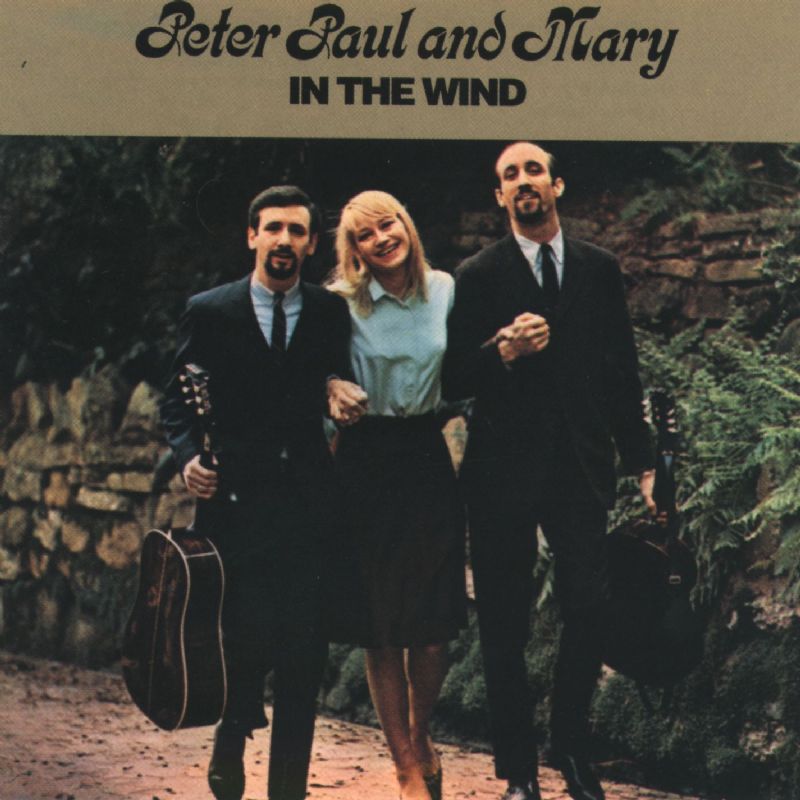
Let Us Now Praise Famous Songs: Dylan's "Blowin' In The Wind"

"Blowin' In The Wind" may well not be Bob Dylan's best song, but it is incontrovertibly his best known song, the one that has already attained the Stephen Foster-type status of a composed song by a known author that has moved into the oral folk tradition. As with Woody Guthrie's "This Land Is Your Land," people all over the world sing "In The Wind" in English and/or in their own languages, often without knowing who wrote it - because like "This Land," its ideas, hopes, and longings are expressed in an idiom that is all but universal. Like Guthrie's composition as well, "Blowin' In The Wind" has most all of the virtues of a real, traditional folk song - a simple melody line, repetitive structure, easy chorus, and a simple trope (the rhetorical question here) employed in every verse.

But more than that, and again like "This Land," "Wind" resonates with a simply but superbly evocative poeticism in the verses. Where Guthrie writes of "the sparkling sands of her diamond deserts" - and has anyone else ever expressed that vision better? - Dylan demands,"How many ears must one man have/Before he can hear people cry?" - and again, the combination of anger at injustice and hope for remediation never finds better expression than in that and many other lines in Dylan's straightforward but passionate lyric.

"Blowin' In The Wind" has a melody derived from a spiritual, as the first video below describes, and lyrically it represents a quantum leap beyond Dylan's earlier topical songs, not least because of the aforementioned universality. Born as it was of the civil rights era, it has easily transmuted itself to every decade since - and could have done so as well earlier, at least as far back as there were cannon balls that could be banned. For this reason alone, it has my vote for the one song by Bobby D. that someone will definitely be singing - and marching to - in the next century.

National Public Radio did a piece a couple of years ago on the song's composition, and NPR does a better job that I could of detailing its origins:


And without further ado - a very young Bob on TV doin' it the way it was written:


Now NPR got one part of the story wrong, or at least they skipped a significant element. They do point out that Dylan was not a household name at the time of this song - his albums sold in the thousands of copies only. But Milt Okun, former solo folk singer, collaborator with Belafonte, and musical director for several folk groups, brought the song first to - his proteges the Chad Mitchell Trio. That Trio (already famous for its satirical political songs) was eager to record the number, release it as a single, and title what would be their third album after it. An old school producer at the group's Kapp Records label vetoed the ideas, however, maintaining that "no song with death in the lyrics was ever a hit," and the album was released as The Chad Mitchell Trio In Action.

Okun, however, was also the musical director and arranger for another young and eager folk trio called Peter, Paul, and Mary, and he brought the song to them. PP&M did everything that the CMT had wanted to do with the song. They titled an album In The Wind, released the song as a single (it sold a million copies and hit #2 on the Billboard charts) and performed the number before ML King's "I have a dream " speech during the August, 1963 civil rights March On Washington. The success of the song made both Dylan and PP&M household names in the U.S.

So next - the stirring version by the CMT that was almost the first time most Americans would hear the song:


And a fine and feeling version it is to this day. But the vagaries of fate being what they are, here is the first that most Americans ever heard of Bob Dylan - Peter, Paul and Mary performing on the BBC what had been one of the great recordings of the era:


If you weren't around in '63 and didn't hear this on the radio for the first time - you have no idea of the electric thrill that went through millions who listened. And children - this was #2 on Top 40 charts. It signaled a new era in songwriting and popular music.

Almost immediately, other artists in droves began to cover the song, one of the earliest and best being the sublime Judy Collins, here live at the Newport Folk Festival:


Interesting variation on the melody, chord structure, and rhythm.

The Kingston Trio included a rather perfunctory cover of the song on their mid-1963 Sunny Side album, but that studio version paled in comparison to those by the artists above. In 2009, however, Folk Era Records released a CD of a 1963 concert in Kentucky by the group with a version of the song that rivals the CMT and PP&M for its power:


Of the thousands of other covers, hundreds of which are on the web, here are some of the best:

Dolly Parton:


Dylan's old friends Liam Clancy and Odetta, who died within months of each other:


Bruce Springsteen, 1985:


Glen Campbell and Stevie Wonder:


Joan Baez & Bobby D:


Punk Version From Cover Artists Me First and the Gimme Gimmes:


Poet W.H. Auden once wrote that poetry makes nothing happen; he was being slightly ironic, of course, because without poetry and the visions that it creates, nothing ever happens. Cannon balls may still fly and too many people still die - but if misery ever lessens or ceases, it will be because people will question why it has to happen. And they'll be singing "Blowin' In The Wind" when they do.

Thursday, May 20, 2010

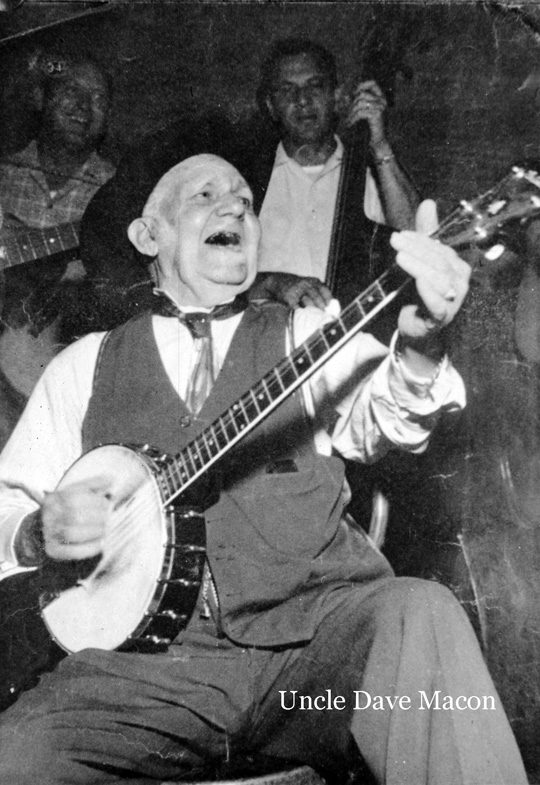
Uncle Dave Macon & "Keep My Skillet Good 'N' Greasy"


To start with, I had always thought that this song was just plain weird, and at two minutes, really just album filler on New Frontier. Allan Shaw and others had suggested that Dogies' Lament on the same Kingston Trio album was just a space-filler, though as you can see from the link, I disagree - the KT performance may be a bit perfunctory but the song is a good one and the arrangement was interesting.

But "Honey"? It seemed to me for decades just a bit of misfired strangeness, not unlike "Coo Coo U." I figured that despite the copyright to Trio members Shane, Stewart, and Reynolds it was probably based on some older, public domain song - but I could never find a source for it.

Then about four years ago I was reading a review of The Essential Kingston Trio CD by Billy Faier, a seminal force in the folk revival, acknowledged master banjo player, and an active performer still at age 80. Faier was trying to be even-handed in explaining his dislike for most of what the Kingston Trio did, and I've quoted parts of his review extensively both in these posts and in my Wikipedia article about the Trio. Faier suggested that the KT had at many points subverted the original meanings of traditional songs, and "Honey" was his most specific and developed example. He wrote:

“Keep My Skillet Good And Greasy” is a fine old folk song that paints a marvelous portrait of a lovable country ne’er-do-well. Here it is renamed “Honey Are You Mad At Your Man”, with an interesting but totally inappropriate instrumental arrangement, and the addition of a chorus from which the new title derives.

What Faier did not mention was that the "old folk song" was quite possibly composed solely by the legendary Uncle Dave Macon (1870-1952), the banjo-playing granddad of country and roots music in the U.S. - and a character whose approach to music had a lot more in common with that of the KT and other pop folk groups than it did with that of the dour-faced denizens of basement clubs in Greenwich Village. And what Faier also couldn't have known was how much this song provides us with an example of the connective tissue that links 19th century mountain music with 21st century pop.

You can read a solid if simple bio of Macon on Wikipedia HERE; note the emphasis on his connection to vaudeville and his emphasis on humor and banter as part of his shows. Macon understood that his later-in-life (age 51) career switch made him an entertainer, not the high priest of (at that time) a non-existent but soon to become sacrosanct tradition. The music was part of the show, as was the humor. (Macon may be the great unknown source of Trio song selection: in addition to "Skillet" becoming "Honey," he also popularized or wrote "Saro Jane" as noted in my Lou Gottlieb piece and "Buddy Won't You Roll Down The Line" - and possibly more.) Here is Uncle Dave's premier recording of "Keep My Skillet Good And Greasy" - Uncle Dave follows Stringbean and precedes Woody Guthrie in this extended video:


Most subsequent versions of the song include Macon's seventh-chord based accompaniment and that little hammer-on and wrinkle he is doing on "time, time, time" and elsewhere. Here for example is a clearer recording of the song by Woody Guthrie:


It appears that the legendary Sonny Terry and Cisco Houston are with Woody here, Terry on harmonica and Houston on (for him, a baritone) an unusual tenor harmony and fine guitar work. Guthrie is on mandolin.

Faier must have known of the Osborne Borthers' 1956 version, called "Ruby, Are You Mad?" that was the immediate antecedent of the KT "Honey Are You Mad At Your Man?":


Why this bluegrass adaptation did not strike Faier as "inappropriate" is a bit of a mystery, since the elements that he objects to in the KT version are present in prototype here.

The Kingston Trio, as Faier notes, added a chorus but preserve much of the original feeling of the song - with a unique banjo part by Stewart and that punchy, syncopated guitar strum by Shane:


What makes this recording significant and part of what I term above the connective tissue of popular music is this. While I may not have liked the song all that much - Lindsey Buckingham of Fleetwood Mac sure did. Buckingham was listed as producer for John Stewart's most financially successful solo album, 1979's Bombs Away Dream Babies with its Top Ten hit "Gold." But as Stewart relates in The Kingston Trio On Record, Buckingham was actually preoccupied with a FM project at the time, Tusk, I believe. So he told Stewart simply to crank the knobs on the mixing board until he liked what he heard - which Buckingham averred should be like "Seasons In The Sun" and "Honey" - simple, repetitive, and hypnotic, as Stewart said. Anyone who has listened to any significant amount of Fleetwood Mac recordings from the 70s and early 80s will recognize that formula for instrumentation immediately - take songs like "Rhiannon" or "Tusk". And like them or not, Fleetwood Mac gave much of 80s, 90s, and even 2000s rock a kind of template for instrumental accompaniment - derived from something Lindsey Buckingham heard in the Kingston Trio recordings, including "Honey."

The original "Skillet" version of the song has some fine performances available on YouTube. Three of the best, I think, are -

1) Lew Dite, a solo roots singer who has over 2 million views of his many roots recordings, most done like this one with great fidelity to the original:


2) The Mars Hillbillies, from Flagstaff AZ, just up the pike from Scottsdale - a really fun version of the song:


3) The Roe Family Singers from Minnesota, who have a clean traditional sound that sounds amazingly like Macon and Guthrie:


And a wonderful late addition in March 2012 - the fabulous Carolina Chocolate Drops:


I have the feeling that Uncle Dave would have liked all of these versions - they all make the song just weirdly fun - and repetitive and hypnotic to boot.

Friday, May 14, 2010

1964, Billy Edd Wheeler, And "Coal Tattoo"


1964 seldom gets credit for being as pivotal a year in American folk and pop music history as it was - seems as though '65 gets all the props. The latter year, of course was the flowering of Beatlemania with the second album and A Hard Day's Night and the explosion of folk-rock with the Byrds, the Mamas and Papas, and finally Dylan plugging in at Newport. American rock was also enjoying a renascence with the continued singles success of the Everly Brothers, the rise of the Beach Boys as likely the U.S. all-time greatest rock band, the growth of Motown, Phil Spector's "wall of sound," solo artists like Roy Orbison and Elvis, and more.

But the roots of much of this are in 1964 - the Beatles coming to the U.S., the break-up of the original Journeymen that sent John Phillips and Scott McKenzie to LA to work their folk-rock vocal magic while the Big Three with Doherty and Elliott was floundering - and the re-direction of popular folk music represented by the emergence of Bob Dylan and the continued and thoroughgoing dominance of the more politically-oriented Peter, Paul and Mary, whose self-titled debut album was still in the process of spending a astounding 84 weeks in Billboard's Top Ten, with their next two albums joining that elite level during the year.

What this meant, of course, was that the more good-timey pop folk groups like the Kingston Trio and their immediate competitors from the late 1950s, the Limeliters and the Brothers Four, went into a decline that proved irreversible, as none of those three or their lesser imitators every approached the levels of their early album sales again.

A sure sign of the decline was the KT album Time To Think. In terms simply of sales, the album made a bit of money for all concerned, as it sold 100,000 copies, which would have been respectable for anyone other than the former leader of the pack. The peak Billboard ranking of 18 was the lowest of any album released to date by the group, including the poorly selling Stereo Concert and holiday album. More seriously, though, it was the first time that the Kingston Trio was following a trend rather than initiating one, and trying to cash in on a style that was alien to their own "mission statement" and that was being pursued with huge success by their competitors. That is a simple but melancholy fact.

What that obscures, though, is just how good many of the performances on the album are - a decent if derivative "Patriot Game", perhaps the best recorded versions of "Seasons in the Sun" and "Deportee", and more.

One of the best cuts on the album is the rendition of another outstanding songwriting effort by Billy Edd Wheeler, Nashville Songwriters Hall of Fame inductee, successful playwright and artist, and composer of two previous KT hits, "The Rev. Mr. Black" and "Desert Pete." That song, of course, is "Coal Tattoo," said to be Wheeler's favorite among his compositions because of his own deep connections to West Virginia and its coal mines.

"Coal Tattoo" is a pointed observation on the hardships of the lives of American miners, but "The Times They Are A-Changin'" it's not. It has a lot more in common with Fred Hellerman's "Poverty Hill" and similar songs in its implied compassion. It reflects rather than prescribes, as do many of the other songs on this themed album - but that fact explains largely why the record never caught on. PP&M were doing Dylan and Ochs songs with a far more overtly political message and call to action - and that was what was selling. It is noteworthy that the Trio never tried another theme album again, or one with even distant and remote political messages. The Kingstons do, however, present "Coal Tattoo" with their trademark energy:


Lead singer John Stewart delivers a powerful and impassioned vocal here, but Voyle Gilmore's legendary production skills seem to fail him a bit in the mix , which has too much reverb and in which the instrumental blend is muddy rather than crystal clear, as 90% of the group's earlier cuts were.

Sadly perhaps, few of the song's many fans know it as a KT song. The best-known version is by West Virginia's alt-country star Kathy Mattea:


Mattea's version has the ring of authenticity to it, though with a fairly conventional country instrumental accompaniment.

Shawn Phillips has had a John Stewart-type of career, with a singular success with the title role on Broadway in Jesus Christ, Superstar and more than twenty folk albums that have a devoted but small following. He's a powerful performer, still with us at age 67:


The most recent version I found is by a younger ensemble that I featured in the "Darlin' Corey" post, Red Molly:


This is from a few days ago at Merlefest, one of the biggest remaining folk festivals in the US. I love the ladies' vocal and instrumental blends here.

The song is thought to be referring to a kind of atherosclerosis resulting in miners from black lung disease. But the "tattoo" was often just that - marks of coal dust embedded under exposed or cut skin, sometimes large, sometimes small. Look at the hands, arms, and necks of any log-time coal miners and you'll see the tattoos to which Wheeler makes reference.

Finally, our Xroads and FC friend Steve Cottrell has an excellent version on YouTube as well:


Steve's slower tempo brings out the melancholy of the lyric, and his distinctive three finger picking on the 12 string is an innovative and unique sound for the song.

"Coal Tattoo" is one of several genuinely enduring songs that Wheeler penned, and American pop music would be in better shape today if there were more younger generation writers of his ability.


Plus - Billy Edd Himself and Denver, Boise and Johnson - 11/18/12
A note from my fellow folkie Ron Wilburne prompted me to look on YouTube again, and I was delighted to find Billy Edd Wheeler singing his own song - a fine version in a sweet country tenor:


Also popping up was a recording by Denver, Boise, and Johnson - the last troupe of what had started out as the Chad Mitchell Trio. The Denver, of course, was John; the Johnson was Michael, later of "Bluer Than Blue" fame and a number of other hits in the '70s and '80s. This version, though, is a solo by David Boise, whom I got to know some months after this 1968 recording. The killer banjo part is by stringed instrument legend Paul Prestopino:


And a rousing version from bluegrass legend and "Union Maid" Hazel Dickens:


And Finally At Long Last - 10/16/17....

.....Judy Collins, whose rendition is the favorite of many folk revival music aficionados. I've always loved it, but it wasn't available on YT when I wrote this article seven years ago. Oversight rectified: