Showing posts with label Other Albums. Show all posts

Monday, September 4, 2017

The Longest Farewell - "Adieu, Foulard"

My long time folk music friend Rick Daly from Connecticut had a bit of extra time on his hands a year or so ago so he decided to look up the translation of the word foulard, part of the name of a lovely and heartbreakingly sad old French song from Martinique whose proper title is "Adieu foulard, adieu madras." Now people of Rick's age and mine likely know what "madras" means, if for no other reason than the brief fad that swept the country around 1960 of madras shorts and madras shirts. If you recall, those items were generally sold in inauthentic plaid-like patterns, and they were made from really cheap cotton and even cheaper dye in the city of Madras (since renamed Chennai) in India. What was distinctive about them was that when they were washed, even in the coldest water, the dyes would streak or run and the original pattern would turn into something approaching a psychedelic vision, giving rise to the term "bleeding madras." The fad didn't last very long because the dye often clung to the inside of the washer and/or dryer and could ruin the next load of clothes, and the garments themselves seldom survived more than three or four trips to the laundry machines. So why is someone apparently composing a musical ode saying goodbye to cheap shorts? Friend Rick was even more puzzled when he found out that foulard is usually translated as "headscarf" or even "headkerchief," which apparently renders the title into English as something like "Goodbye  Headscarf, Goodbye Cheap Cotton."

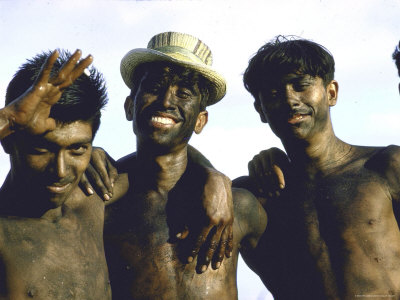
Of course, the song's title means nothing of the sort.  The picture above shows Martinican women  dressed in their traditional foulards and madras, a costume that likely dates back to the era of slavery, when as slaves they were dressed in the cheapest material available to their masters. I believe that I detect in the colors and flourishes of these designs a kind of quiet rebellion against bondage, as the women long ago made an artistic virtue out of brutal necessaity - as if to say "You may control our bodies but you cannot confine our souls, and we choose to adorn those bodies with color, beauty, and grace." A second glance at this picture demonstrates how brilliantly they succeded in doing exactly that.

Yet the song whose published title was originally  "Adieu les jolis foulards, Adieu tous le madras" ("Farewell to the pretty scarves, farewell to all the cotton clothes") did not emanate from these women but rather from a member of the masters class, an aristocrat from pre-revolutionary France named François Claude Amour, marquis de Bouillé. De Bouillé was a cousin of our friend the marquis de Lafayette, and like his cousin  de Bouillé was a brave and able soldier who also played a key role in our revolution by keeping British forces in the Caribbean occupied in defending themselves against  de Bouillé's raids and attacks and hence unable to aid their country's forces in North America proper. Prior to that war, de Bouillé had been the governor of the French Windward Islands, which included Martinique and where de Bouillé lived for two years. It was during that governorship, probably in 1769, that de Bouillé composed the song that he seems to have called “Les adieux d’une créole,” or "The Farewells Of A Creole Woman."

Right off the bat we have a number of problems understanding both the context and the meaning of the lyric for several reasons, and these center on the multiple and if I may say radically differing understandings of what is meant by créole and its English counterpart "Creole." Today, both terms imply a person of racially mixed ancestry (usually African and European but also possibly Native and Euro or even Native and African) in the Caribbean or Louisiana. But to the French of de Bouillé's 18th century, the word could also mean a white French person who was born in the island colonies and not in France proper, much as the British in the same century coined the derogatory term "American" to describe people of English descent born in North America and whose birth implied a lack of refinement and common couth.* Like the French, our Anglo-Saxon forbears also used the term "Creole" at times to refer to their own Euro-Caribbean colonists who may have dared to inter-marry with other white but non-English folks of (God forbid!) French or Spanish descent. Look back at the character of Bertha Antoinette Mason in Brontë's Jane Eyre for an example of the disastrous results of such nation-mixing (as the Brits saw it, at least).

If you're still with me after that paragraph, you may be wondering "so what?" Well, here's what: with all the variations over the centuries in the French lyrics, we are left wondering exactly who is saying goodbye to whom. In a remarkable and moving essay published a few years ago and called "Singing By Heart: A Meditation On 'Adieu foulard, adieu Madras,'" Dr. Sarah Waisvisz of the Department of English at Carleton University in Canada, herself a woman of mixed ethnicity including a Martinican grandmother, suggests that the lyric is to be sung by a créole woman to her departing French lover, perhaps even de Bouillé himself. This would fit with both de Bouillé's original title and with Dr. Waisvisz's emphasis on the chorus, which she translates as meaning "“My darling is leaving/sadly, sadly, it is forever.” Waisvisz also stresses the utter finality of "adieu" - the word is not a simple "goodbye" in French (that would be the more common "au revoir" or "à bientôt," roughly "see you next time") but rather "farewell," or to give it its proper weight in English "fare thee well." It is, as Waisvisz asserts, "a song  of goodbyes.... a song of diasporas. Of exiles. Of loss. Of a lost home impossible to return to, impossible to find again, but impossible to ignore."

This understanding helps us to grasp the title, if indeed it is a woman addressing a man. She appears to be saying something to the effect of "Goodbye my love - you will miss all the color and passion of me, your island woman of forbidden love, and I know you will never return." It works equally well for me - perhaps even a bit better -  if in some of the gender-neutral lyrics it could be the Euro man regretting his departure from the passion and romance of his island lady - with her foulards and madras - to return to the repressed culture of his native land.

With that in mind, I'd like to present as the first version of the song the one of this group that is perhaps the least traditional but at the same time the most apprehendable to those of us who speak English. It is a solo by Bob Shane of the Kingston Trio for an album that was never released until Collector's Choice did so forty years after the tracks were laid down:


The English translation that Shane employs here is accurate in terms of the emotion of the tune if not literally in terms of the meaning of the French lyrics. The straightforward and very simple folk accompaniment allows the primary emphasis to fall on Shane's superb evocation of the emotion of loss that is at the heart of tune.

Next is a much more recent and modern-sounding pop vocal by Tanya St-Val, a lady of Martinque's island neighbor Guadeloupe. She is abetted by male vocalist Kali here:


St-Val is an accomplished singer of both operetta and jazz, so I suppose she can be excused for investing the vocal with a bit of that post 1980s female pop singers' breathiness. For me, however, the female/male interplay here covers a multitude of sins, as do her multi-tracked final choruses. Really good, and the song more as I think that Dr. Waisvisz understands it.

St-Val's fellow Guadeloupean, albeit from two generations before her 1966 birth, Gilles Sala delivers the number with a simple folk accompaniment but with a dramatic and highly-trained pop vocal style:


Sala's approach is more what I think we would have gotten from his contemporaries like Franks Sinatra, Andy Williams, and Jerry Vale had they attempted a rendition of the song.

Finally, a lovely solo instrumental on classical guitar arranged by Roland Dyens and performed with sensitivity and technical skill by Edwin Erpenbach:


Dyens' arrangement and Erpenbach's rendition invest the tune with the more complicated and jazz-inflected chording that was favored by yet another Guadeloupean, Henri Salvador, in his major 1957 hit version of the number.

For some people, perhaps once in a lifetime, your heart is so broken, so shattered by a loss so profound that you know it can never be made completely whole again, as does the speaker in this song. Never. The finality of that realization and the necessity of trying to continue living in spite of it is, for want of a better phrase, sublimely human. And for those who know whereof I speak - "Adieu, foulard" is your song.

*Regarding the term "American" above: take a look back at Jonathan Swift's great 1729 satire "A Modest Proposal," the one where Swift suggests that the answer to poverty in Ireland is that parents raise babies to be sold for meat. Swift writes: "I have been assured by a very knowing American of my acquaintance in London, that a young healthy child well nursed is at a year old a most delicious, nourishing, and wholesome food, whether stewed, roasted, baked, or boiled ..."

___________________________________________________________
Addendum
My friend Bakersfield Dan Hartfield pointed out that Bob Shane's almost certain source for his version, complete with the English lyric, was San Francisco world music pioneer Stan Wilson, whose vast knowledge of folk and pop numbers contributed mightily to the repertoires of the early Kingston Trio as well as to other Bay Area pop folk acts like The Gateway Singers and The Limeliters. Shane was largely mentored in professional entertainment by Wilson (and Josh White as well), and the extent of Shane's debt to Wilson can be heard in Wilson's own surpassingly lovely rendition of "Adieu, Foulard":


_____________________________________________________________

Here is a translation into English of the oldest version of the song:

Good-bye lovely scarves, good-bye Madras
Good-bye golden necklaces
My sweetheart is leaving me
Alas! Alas! It is for ever

Good-morning, Mr Governor I come to submit a request
To ask your permission
To leave my sweetheart to me

My young lady it is too late
Your sweetheart has already embarked
The ship is close to the dock
And is ready to sail

Good-bye lovely scarves, good-bye Madras
Good-bye golden necklaces
My sweetheart is leaving me
Alas! Alas! It is for ever...



Monday, December 26, 2016

For The Season #9: "Good King Wenceslas"

One of the ongoing pleasures of the holiday season for me is revisiting Charles Dickens's A Christmas Carol, first in its original format as a novella - and a ripping good read it is and remains being - and then in looking at several of the almost 30 film versions out there today, most all of which make a commendable effort to translate to the screen a complex narrative replete with interior monologue from the storyteller. No single movie of the tale manages to relate the full work in all of its deliciously Dickensian asides and details, and directors inevitably must choose which aspects of the Carol that they want to emphasize. Should the redemptive transformation of an old curmudgeon take center stage, or should the more explicitly religious idea of a hell-bound monster derailed from that destination by the intercessory power of a loving God be the point of emphasis? The cute little crippled and dying  boy or the deeply loving nature of his devoted father and the clearer but tougher vision of his mother? The evils and injustices of the world and the society portrayed in the book (and this is, as we shall see, a large part of the author's intent) or the power of a right-minded individual to rectify some of those evils and injustices?

Like all great stories, A Christmas Carol speaks to each of us in different ways. If you haven't read it of late and/or if you mainly know it or only know it through one or more of the films, it might not be a bad idea at all to give the original text another look. It's not long, it's available free online at multiple sites, and you might well be surprised how much of the original story hasn't made it into any of the movies - and how much of the tale is spot-on relevant today and how thoroughly its importance and its value transcend the Christmas season. It is a book for all seasons in its attempt to wrestle with the same issues of social justice and welfare that have raised their heads into elections around the world in the last year or two, and it emanates from the exact same time, place, and cultural context of its analogue in popular folk music, the great (post) Christmas carol "Good Kings Wenceslas."

And "Wenceslas" most emphatically is a folk song. Its lyrics, characterized as they are by the call to works of charity in the closing couplet, were the sole work of High Church Anglican priest and composer John Mason Neale (1818-1866), but the melody was delivered to Neale by his choirmaster and collaborator Thomas Helmore (1811-1890), who had found the tune (a spring carol called "Tempus adest floridum" or "The time of flowers has come") in an already-ancient book of anonymous medieval songs from Finland. Now, Neale and Helmore together left a powerful and deep mark on the music of Christmas that we know in English today, having composed and/or re-worked the best-known Advent carol in "O Come, O Come Emmanuel," two very popular Christmas songs in "Christ Was Born On Christmas Day" and "Good Christian Men, Rejoice," and the only St. Stephen's Day carol that most of us have ever heard, "Good King Wenceslas."

Neale and Helmore published a truly impressive number of hymnals and other collections of sacred songs over the years of their collaboration, but our case in point here relates to their 1853 Carols For Christmas-Tide in which "Wenceslas" debuted and which appeared exactly a decade after the Dickens classic. "Wenceslas" and A Christmas Carol reach the selfsame conclusion, albeit via very different plot lines. The transformation of Ebeneezer Scrooge is confirmed not by word or by attitude but by deed - Dickens remarks at the close of the tale that

He became as good a friend, as good a master, and as good a man, as the good old city knew, or any other good old city, town, or borough, in the good old world...and to Tiny Tim, who did not die, he was a second father.

Wenceslas, already regarded as a saint by his people, acts with sympathy and compassion to alleviate the sufferings of a poor man in the depths of winter, giving Neale the opportunity to moralize an explicit lesson in a lyric that becomes a sermon:  

Therefore, Christian men, be sure, wealth or rank possessing, 
Ye who now will bless the poor, shall yourselves find blessing.

It is that "wealth or rank possessing" note by Neale that draws him closest in theme to Dickens. Charles D. was most certainly a liberal reformer in his day, having been born into a middle class family that had fallen on hard times resulting in several nightmare years in his childhood that saw him living in workhouses (an enforced servitude of the homeless and jobless poor, notorious for their exploitation and harsh treatment of their residents) and even debtor prisons with his father. These experiences clearly became the grist for the plot lines of some of Dickens's best-known and most successful novels - David Copperfield, Oliver Twist, Hard Times, and of course A Christmas Carol among many others. Dickens came to regard both Adam Smith's promulgation of unregulated capitalism and John Stuart Mill's Utilitarianism as pernicious lies that ignored the realities of the lives and plights of his own childhood and of millions of others like him in the Industrial Revolution era of the United Kingdom.

Neale shared many of Dickens's convictions, but please. We are not talking here about bomb-throwing anarchists or even members of Britain's incipient Socialist movement. We are talking about a pair of Victorian gentlemen of the upper middle class, High Church Anglicans both, men whose response to the savage inequities of the 19th century capitalist economy would warm the cockles of even the flintiest of hearts of modern American conservatives. For Neale and Dickens both believed that poverty could be alleviated and economic injustices resolved by moral action from those of wealth and privilege, not in the patronizing manner of the French concept of noblesse oblige but rather in the high-minded understanding of the Christian imperative to care for those in need. Dickens's reformed Scrooge and Neale's Wenceslas are literary embodiments of that belief, deeply held by both writers.

It likely doesn't matter that the Wenceslas story is entirely apocryphal or that the actual man was a Duke of Bohemia with the familiar Czech name of Václav who was murdered by his own brother. What bothered some of Neale's 19th century critics was that he and Helmore had co-opted the melody of a perfectly serviceable religious song about God's glory reflected in Spring and turned it into what one Grinch-like writer referred to as "insipid sentimentality" and "Christmas doggerel." No matter; "Good King Wenceslas" is doing quite well, thank you, more than 160 years after it first appeared. However, in the interests of fairness and full disclosure, here is that "Tempus adest floridum" root song in all its pristine glory:


There is much to like here, and the sprightly, even optimistic rhythm and melody fit perfectly with the lyric's joyful evocation of the wonders of Spring:

Spring has now unwrapped the flowers, day is fast reviving, 
Life in all her growing powers towards the light is striving: 
Gone the iron touch of cold, winter time and frost time, 
Seedlings, working through the mould, now make up for lost time.

For a sense of how this may have sounded in the era of its 1582 publication, here is Ernst Stoltz playing an authentic Renaissance lute with an anachronistic but charming and unobtrusive modern guitar:


For a solid pop-folk rendition of "Wenceslas," we turn to the Kingston Trio:


This is the longest-running iteration of the group that will celebrate its 60th anniversary next year, the configuration that has been touring together since 2005 and that features Bill Zorn doing the lead with the King's dialogue and George Grove and Rick Dougherty harmonizing beautifully with the page's lines. That kind of antiphony is characteristic of much medieval music, even if Grove's tastefully understated banjo line is not.

My good friend George, however, is not the only performer to see the possibility of an Americanization of this most English of carols via the inclusion of the banjo. Here is Dr. Josh Turknett, a neuroscientist and major proponent of clawhammer banjo music, with a delightful frailed version of the tune:


And if you were never quite sure what the difference was between the folk/clawhammer/frailing style of banjo playing and modern bluegrass banjo music, take a listen to Banjo Ben Clark with his instructional video in bluegrass rolls and fills - using this ancient carol as his model:


You can find scores more experimental versions of the song all over YouTube and other video sites, including reggae and blues and jazz and fiddle renditions. I love them all for their innovativeness and originality, just as I remarked above that I love the many cinematic versions of A Christmas Carol, however far they may stray from the author's initial intent. But "Good King Wenceslas" is in its own origins a stately English carol composed for Helmore's choir, so our last version today will be a recording of the great Robert Shaw Chamber Singers performing the traditional song as most of us first heard it:


Shaw's always tasteful arrangements and disciplined direction are here enhanced in this 1990s recording by baritone Victor Ledbetter singing the King's lines and mezzo-soprano Katherine Murray as the page.

The poor we have always with us, as Scripture reminds us, and both Charles Dickens and John Mason Neale use the Christmas season and its attendant joy to inspire people of good will everywhere to do what they could to meet the challenge of dealing with that sad fact. Their solution may not be mine and may not be yours, but it is an idea worthy of the earnest men who propounded it a century and a half ago. May we all feel blessed enough this Christmas season to share some of what we have with those who have less and bring the reformed miser and saintly king to life once again in our own world.

________________________________________________________________________________________________

*The first eight songs in this series of holiday-related folk tunes include #1 - "We Wish You A Merry Christmas"; #2 - "All Through The Night/Ar Hyd Y Nos"; #3 - "When Was Jesus Born/The Last Month Of The Year"; #4 - "Gloucestershire Wassail Song"; #5 - "Sing We Here Noel"; #6 - "The Bitter Withy/Mary Mild"; #7 - "The Coventry Carol"; and #8 - "The Cherry Tree Carol." Other Christmas-themed articles on CompVid101 include "The White Snows Of Winter", "Children, Go Where I Send Thee", "The Virgin Mary Had A Baby Boy", "Riu Riu Chiu/Guardo Del Lobo", and "Go Tell It On The Mountain".

Wednesday, May 23, 2012

Where The Walker Runs Down - Steve Gillette's "Darcy Farrow"

There was an urban legend circulating among my fellow coffeehouse folk performers in the late '60s that went something like this. Once upon a time, some time in the early 1960s, two enterprising young men were given what they regarded as an impossible assignment in a class in the UCLA department of folklore, one of the most distinguished of such university departments in the world. The assignment was to do some field work in folk music - to go off into a rural section of the Mountain West and find either a traditional song that had been as of then undiscovered, or a significant variant of a song already known. Well, our two young heroes made a valiant attempt to do so over a long spring break, covering hundreds of miles and visiting dozens of small towns in the rural Nevada/California border country in the shadows of the lofty escarpment of the Eastern Sierra and along the Walker River (pictured). Their efforts proved fruitless, and in desperate fear of failure on the assignment and perhaps in the class, the two decided to write an original song in a traditional ballad mode about a pair of ill-fated young lovers in the Old West and submit it as a "discovery." The song sounded so convincingly authentic that the professor of the class awarded them an A for the project. The students were alleged to have been Steve Gillette and Tom Campbell (who hailed from Nevada, not too far from the "Yerrington town" of the lyric) and their creation was what many a singer back in the day referred to as "the fake folk song, 'Darcy Farrow.'" There are variations on this tall tale, which has itself turned into a bit of folklore, but that's the way I heard it first years ago.

The tale is not nearly so far-fetched as our jaded 21st century media-saturated sophistication might have us believe. Only a bit more than a decade and a half before the real Gillette was a student in 1965 in Westwood, a bright young English lit major at the University of Virginia named Paul Clayton was hired as a research assistant by celebrated folklorist Arthur Kyle Davis and given just such an assignment. In the company of his fellow assistant Matthew Bruccoli, later America's most renowned scholar on the writings of F. Scott Fitzgerald, Clayton scoured the 'hills and hollers' of central Appalachia for several months and actually uncovered a number of variants of established folk songs and fragments of several that had been previously unknown, including two that Clayton appears to have fused into a song whose copyright bears his name, "I Feel Like I Gotta Travel On." Even later in the mid-1950s, at the urging of mountain dulcimer legend Jean Ritchie, American Diane Guggenheim (yes, those Guggenheims) went to Ireland on a similar mission, returning to the U.S. with a passel of hitherto unknown Celtic folk tunes and a very young Liam Clancy in tow.

Such doings lent an air of believability to the "Darcy Farrow" story, but alas! - it was cut from wholly fabricated cloth by what appears to have been none other than Ian Tyson himself. Ian and Sylvia were the first to record the Gillette/Campbell composition, and the liner notes on their 1965 Early Mornin' Rain album on which Darcy made her graceful debut are a bit vague about the song's origins. Gillette had been a major fan of the Canadian duo, catching their act as often as he could and eventually opening for the pair as the "local talent" musician at The Golden Bear in Huntington Beach, CA, where he and Campbell played a number of their own creations for the folk stars. It was "Darcy Farrow" that made the deepest impression, and Ian and Sylvia became the first of more than three hundred artists to perform and/or record the song, additionally employing Gillette as the opening act for most of their California engagements and helping him to secure a contract with Vanguard, the label on which they themselves recorded.

Gillette has told the rather more interesting real story of the song's composition in a number of interviews. "The song is based on something that happened to my little sister, whose name is Darcy. At 12 years old she was running behind her horse, chasing it into the corral, when she was kicked. She broke her cheekbone but had no other lasting effects; there was a three-day period where she was in the hospital, and we were all concerned she might have a concussion. During that time, my friend, Tom Campbell, my co-writer on the song, took a melody I had written and came up with a story about the two young lovers and the tragic fall. I was a little horrified about the idea since it was so dark and involved my sister's name, but as we worked with it and took it in the direction of the old cowboy songs, I was much more comfortable with it. So many of the old cowboy songs take their melodies from Scottish-Irish musical traditions." Gillette added to Jon Einarson in Einarson's recent Four Strong Winds biography of Ian and Sylvia that "The story that Tom and I wrote the song to fool a college professor isn't true, but Ian told that story for years. That wasn't the case. We really wrote it just as a song."

The very genuine and quiet loveliness of "Darcy Farrow" has moved scores of musicians to record it, each remolding it to fit his or her own skills and artistic visions. Still, as with many other great songs, the very best version may well be that by the composer himself - here is Gillette from his eponymous debut album from 1967:


"Darcy" was a highlight on an album full of highlights, including other tunes like "Back On The Street Again," which became a hit single for The Stone Poneys with twenty-year-old Linda Ronstadt singing the lead and which was covered wonderfully by The Sunshine Company and The Sandpipers as well, and "A Number And A Name," which I heard both John Denver and Michael Johnson perform live on different occasions. And lest we think that time must have its way with us - here is Gillette just a couple of years ago sounding as good as he did in '67, with his wife and performing partner Cindy Mangsen:


Ian and Sylvia's recording predated Gillette's own by a year or so, and the duo speeds the tune up a bit to that Canadian country tempo that they pioneered:


And in a moment of harmonic convergence, Ian and Sylvia included the aforementioned Ms. Ronstadt in their rendition for their 1984 reunion show. All the videos of this single performance have been taken down from YT for copyvio, but for some reason the whole show is still there. Ronstadt joins the Tysons for "Darcy" at exactly the 33 minute mark:


Ronstadt's third part lends a sweetness to the song that contrasts to the high lonesome sound of Gillette's original, and Ian and Sylvia have clearly slowed the tempo from their own 1966 recording...

...most likely because the highest profile that "Darcy Farrow" ever enjoyed was due to its inclusion in the 1972 multi-platinum Rocky Mountain High album that boosted another young singer-songwriter named John Denver into pop super-stardom - and Denver chose the slower tempo of Gillette's own first recording above:


This video is from the 1995 Wildlife Concert that Denver staged just two years before his tragically early death in a light plane crash. It was a wonderful show in most respects, though in many cases I preferred JD's earlier studio recordings of some of the songs. This "Darcy," however, is much better vocally than the '72 version and it fully and completely illustrates his most committed fans' contention that he was singing better at the end of his career than he was at its beginning. Even Denver's most rabid and contemptuous critics had to admit that he was a masterful showman, and this is a brilliant arrangement: note the gradual and sequential introduction of accompanying instruments verse by verse, the understated quiet of the performance, and Denver's own mellow, rounded, and emotional vocals. This video reminds me more than almost any other of how much I miss having Denver as part of the musical landscape today.

John McEuen and Jimmy Ibbotson, founding members of The Nity Gritty Dirt Band, reunited last year for an album and DVD called "Nitty Gritty Surround." This video is of only about half of the song and is a promo for the discs, but the arrangement and performance are so lovely that it needs inclusion here:


If you are not a Dirt Band fan - that's Ibbotson on lead vocals and McEuen, master of all things stringed, leading off the recording on guitar.

For something startlingly different, roots music star Nanci Griffith a capella, or almost so:


I will hazard the opinion that the light conga accompaniment is intended to evoke the canter of a pony without replicating it. Griffith's vocals have the slightly rough edge of genuine old time country music.

Matthews Southern Comfort is the name of several differently configured bands organized by UK roots legend Iain Matthews, himself a member of Fairport Convention and several other high profile groups. This performance is from a house concert in the Netherlands last June:


The piano accompaniment and vocal harmony make this version unique, and Matthews' singing is beautifully restrained.

Finally - in 1967, the Kingston Trio was at the point of disbanding after a ten year run, but the group wanted to put out a final album of contemporary numbers before breaking up. The three performers of the group, Bob Shane, Nick Reynolds, and John Stewart, each recorded in the San Francisco studio that they owned some rough run-throughs of songs that they planned to include on the record. However, when Decca (their label at the time) shelved the project, the unfinished tapes went into the vault for 40 years until Collectors' Choice Music resurrected them and released them in 2007 as The Lost Album. John Stewart, who was himself about to embark on a long and distinguished if under-appreciated career as a singer-songwriter until his death in 2008, laid down this very rough track of his take on "Darcy Farrow":


I had mixed feelings about making this video and posting the JS version to the article because his "Darcy" was never intended to see the light of day in this form. Stewart was a far better singer and guitarist than this shows, though you can hear the rudiments of what could have become a good recording here. Stewart had a tinge of loneliness in his voice that served him well on this track as it did in many of his own best songs, and a refined and finished cut might well have been a worthy one.

I have to say that despite my 40 years as a college teacher (or maybe because of them), I find the image of a couple of clever students snookering an old prof to be an appealing one somehow. But as is almost always the case, the reality of what Steve Gillette and Tom Campbell achieved with the writing of "Darcy Farrow" far transcends the myth of undergraduate hijinks that has become attached to the tune - because they succeeded in creating a song that does indeed and in fact evoke both the Celtic and Old West melodies that they sought to emulate and that is so well-crafted and so moving that we can be pretty sure that someone will be singing it a century from now when we are all naught but dust and bones. And that is what I would term a "real" folk song.

...And A Late Addition 7/5/2012

I just found this outstandingly arranged version by bluegrass band Chesapeake from their album Rising Tide - sublime harmonies and instrumentation:


Appendix

Steve Gillette has uploaded to YouTube two instructional videos on how to play "Darcy Farrow" as he wrote and performed it. It's worth pointing out how generous this is of Steve - after all, he could be charging folks for sheet music or tabs off of his website (which is HERE and which includes the one, true, accurate rendering of the lyrics to the song). There are plenty of far wealthier musicians who do just that. Hats off to Mr. G, who seems to understand that he has created a classic that has found its way into our popular folk culture.


Friday, May 11, 2012

"Pay Me My Money Down"

I saw on FaceBook that today is the 31st anniversary of the death of the legendary Bob Marley, the musical genius who was probably more responsible than any other individual for the popularization worldwide of reggae music. I've often thought of reggae as an acquired taste for many of us who were already grown up when the genre took shape in the late 1960s and 1970s. The musical emphasis on the counter-beat moves syncopation to a new and initially unfamiliar level to those of us who grew up on 4/4 time and 3/4 time standard rhythms, not unlike the effect of the really far-out jazz of a decade or so earlier of Charlie Parker and Theolonious Monk and Dave Brubeck.

And that reggae revolution all but erased the older and more familiar calypso genre from the mainstream of popular music, a really significant erasure if you recall that for a few years in the mid-50s calypso was the most prominent form of pop in a craze that was spearheaded by the phenomenon of Harry Belafonte, one of the first black American musical artists whose crossover appeal far past the restricted areas of blues and jazz presaged in many ways the social upheavals that were to come in the Civil Rights era. Belafonte was a singer's singer, an artist who never limited the material he performed to a single genre and who started his professional career as a Greenwich Village folksinger. His Calypso album of 1956 on RCA Records is a landmark in American musical history as the first recording certified to have sold more than a million copies, and nearly every song on the record has become a pop standard - "Day-O (The Banana Boat Song)," "Jamaica Farewell," and "Will His Love Be Like His Rum?" to cite three. The album gave a boost to the careers of both the Caribbean originals from whom Belafonte learned the songs and to American folk groups like The Tarriers and The Weavers who had already included Jamaican and Bahamian songs in their repertoires.

Belafonte was born in New York City of Jamaican parents, and it was from them and from his trips to the island to visit relatives that Harry B first heard the music. The irony is, though, that to scholars what Harry was hearing and singing was not actually calypso music at all, which in its narrowest academic definition can only be from Trinidad and Tobago, whereas similar music from Jamaica must be called mento. So fine a distinction never reached the consciousness of the executives at Victor or the American population at large, and "calypso" came to be the preferred term for all Afro-Caribbean music before reggae.

What we call calypso today was markedly different from reggae in more than rhythm. Calypso music was derived largely from the work songs of black sailors and stevedores and not from the political sensibilities of individual writers as much of reggae is. Even the great calypso composers like Lords Kitchener, Invader, and Intruder were generally basing their compositions on older songs from the docks and fields. And the overwhelming popularity of the genre was such that songs that had originally been 4/4 folk songs were re-cast in the 6/8 calypso rhythm, songs like "Bay of Mexico" for example - or "Pay Me My Money Down."

However old "Pay Me My Money Down" may be, it was first "collected" for publication from dock workers in the Georgia Sea Islands in 1942 by Lydia Parrish, but it must have emigrated to the Caribbean well before that because it was being performed on radio by Lord Kitchener by 1946. Kitchener's lyrics differ somewhat from those published by Parrish, but the basic storyline of a somewhat comical and ill-fated adventure at sea of a roguish working stiff is common to both.

My favorite version of "Pay Me" currently available is the solo effort from 2008 by Bob Shane, the last man standing of the original Kingston Trio, a group whose repertoire in its earliest days and its very name evolved from the '50s calypso craze:


This is classic calypso rhythm and instrumentation, at least as those came into mainstream American pop. Belafonte's recordings often also included steel drums and brass instruments, but the "folk" nature of the genre is on display here more effectively.

Fifty years before that recording, Shane's Kingston Trio was rehearsing the number and testing it out on audiences at San Francisco's Purple Onion nightclub:


A more refined version of the song by the Trio appeared on the CD release of the group's Stereo Concert album, but I prefer the wild energy of this early cut.

The song resurfaced in pop music with Bruce Springsteen's 2006 album and tour that the Boss called "The Seeger Sessions" because the repertoire consisted of largely re-imagined American folk tunes that had been recorded fifty years early by Seeger, or rather in most cases by Seeger's Weavers. While YouTube includes a number of uploads of Springsteen's live version from the tour, I prefer this folkier promo video from 2005:


Springsteen's comments after the song are worth a listen as well - I find his extolling of acoustic instruments somehow amusing. But this cut, which the Boss used to open many of the shows, demonstrates I think Springsteen at his best with this folk material. I thought that the Seeger experiment was a mixed bag: Bruce's attempts at Anglo-American songs fell flat for me, but the spirituals and other African-American songs like this succeeded. Love that touch of zydeco as well.

More recently - a couple of weeks ago, in fact - an Irish folk supergroup consisting of contemporary singers Paul Kelly, Mick Hanly, Eleanor Shanley, Séamus Begley and Frankie Lane and calling themselves "Folk The Recession" posted this Springsteen-influenced version on YouTube:


And continuing with the European flavor - Sweden's young soloist Alexandra Jardvall gets her audience singing along in 2010:


I wish that folks would leave Bruce's off-tempo syncopation to Bruce alone - but I can't complain too much because I have a weakness for throaty alto voices like Jardvall's.

You can trundle around YouTube and find fifty more people channeling Springsteen, and that's fine. As a closer here, though, I thought it would be interesting and fun to include the pop-song hit "Cindy, Oh Cindy" by Vince Martin - the melody will be instantly recognizable as a rewritten version of "Pay Me":


The group backing Martin is none other than The Tarriers, one of the few pre-KT groups to have an actual acoustic folk hit, the calypso "Marianne."

"Pay Me My Money Down" is a two-chord song and consequently is one of the first songs that a number of my guitar playing friends ever learned (mine was "Good News). In folk music, such simplicity is a virtue, and I think that may be what Bruce Springsteen is trying to get at in his comments after his performance of the song in the video above. Elaborate arrangements are what people quite rightly pay to see and hear - but what keeps a song alive is its sing-ability, and "Pay Me My Money Down" certainly has that.

Addendum - May 12, 2012

I'm delighted to have the comment below from "Ranzo" (fine sea chantey name that is), who is Hulton Clint. Hulton has created a YouTube channel dedicated to his renditions of and comments on "chanteys of the seven seas," and his total video view are just under 2 million. Hulton has himself an extended discussion of the nature and history of "Pay Me" on his YouTube upload of the original version of the song HERE, and I'm delighted to present his video below. Thanks, Hulton!


And Further - May 22, 2012

I had intended to include this version of "Hey Li Lee Li Lee" in the article above because it is essentially the same song as "Pay Me." This is a trademark Limeliters number from 1961, featuring a their typically slightly naughty lyric and excellent audience participation:

Friday, May 4, 2012

Innocence Regained: Donovan's "To Try For The Sun"

I sit here quietly on the evening of the 4th of May, reflecting on the terrible events of this date 42 years ago when National Guard troops fired live ammunition into a crowd of student antiwar demonstrators at Kent State University in Ohio, killing four and wounding nine. American soldiers firing on American students - it was something that I never expected to see in my lifetime. It was a page out of a history book, something that might have happened in 1864 or 1893 but surely not in 1970.

I was a few weeks short of my 20th birthday - and days away from an accident that grew indirectly out of this event and that very nearly ended my own life. I had already experienced, like everyone else my age, a series of traumatic national shocks: the Cuban Missile Crisis where we went to bed in October of '62 not knowing if we would be alive in the morning; the assassinations of JFK, RFK, Martin Luther King, and Medgar Evers; riots and violent demonstrations in Detroit, Los Angeles, my own home of Chicago; nightly news film of the carnage in Viet Nam; the general tearing apart of the social fabric of the country as a whole. I have read and heard it said that the 1960s began with John Kennedy's murder and ended with Watergate - but that is a kind of academic untruth, one that a professor or political pundit might espouse but not one shared by those of us who were on the ground living out those years. No. The 60s began with the ringing rhetoric of Kennedy's Inaugural - "Ask not what your country can do for you - ask what you can do for your country" - that ignited a burst of idealism in a generation of the young, and it ended in the utter and complete disillusionment of tear gas and blood in Kent, Ohio just under a decade later. May 4, 1970 is a line of demarcation in the nation's history, even given all the disasters cited above. Things have never been quite the same since that day. Whatever was left of our national innocence after the travail of our first two centuries expired on what had been a quiet university campus in America's midwestern heartland.

Or so it might seem were we all not aware that these are always someone's good old days, to crib a line from Carly Simon, and if the nation's identity and self-image and belief in the efficacy of politics and government to do good have all been seriously eroded in the last four plus decades, two subsequent generations have been born and come of age in those years, and for the young, the great world is always new and enticing and exciting and rife with the sense of limitless possibilities that all of us elders once harbored as well. "Your young men shall see visions," says the Good Book, " and your old men shall dream dreams." Amen to that.

If our elder dreams are of times long past and worlds that we have lost, those of the young are often colored by the hunger for the kinds of experience that we mature folks often recall ruefully. Taking an intercity Greyhound bus or long haul passenger train, for example, seemed desperately adventuresome and romantic when I was twenty; I doubt that today I would find the stench and the discomfort and the seediness of either quite so enticing as I did then. But that is not a failing or a descent into cynicism - it is simply part of the normal progression from innocence to experience, from ignorance, really, to knowledge. We should know more at 60 than we did at 20 - but we should also treasure the existence of those places in our hearts where the dreams of the boys and girls who we once were yet survive.

For my money, nothing quite delves into that secret repository as effectively as any song that I loved as a youth that celebrates youth itself, and just such a song is Donovan's "To Try For The Sun." I had my general say about Mr. Leitch a few weeks back in a post about "Colours", and writing that article reminded me of how much I loved the unabashed innocence and idealism of his best compositions, of which "To Try For The Sun" is certainly one. Written as Donovan himself notes in the first video below in 1964 when the composer was 18, "To Try For The Sun" not only embodies much of the best of youthful idealism - it also stands in stark contrast to the anger and disillusionment that was already beginning to characterize quite a bit of the other really good music coming out at the time.

Donovan has always performed the song, and in our first video from 2007, he provides a little background about the writing of it:


His original recording was a bit faster and included a great verse that he omitted in the video above - "We sang and cracked the sky with laughter...":


Several subsequent artists have changed the phrase "gypsy boy" to "gypsy girl," thus transforming the tune into a romantic story of a young couple. One of the best versions of these is that of Nemo Shaw, a young UK musician with a 60s sensibility who like Leitch himself is a Scot:


Shaw's voice, timbre, and intonation remind me a bit of a young Graham Nash.

John Stewart was one of the best songwriters of his generation, but in his last days as a member of the Kingston Trio he recorded "Try For The Sun" as a solo for an album of more contemporary songs than the Trio was accustomed to doing. That album was shelved until 2008, the year of Stewart's untimely death:


This is an unfinished cut but one that showcases some of Stewart's best qualities as a performer - thoroughgoing professionalism as a guitarist and that strangely affecting throaty singing voice that evokes a kind of loneliness that is perfect for this lyric.

Lindsey Buckingham is one of the scores of artists younger than Stewart who has acknowledged JS as a major influence on his own singing, writing, and instrumentation. The Stewart-Buckingham connection is not apparent at first glance in Lindsey's arrangement of "Sun" because the erstwhile Fleetwood Mac stalwart has gone all electrified folk-rock with his performance:


While I can't say that I like this version as much as some of the others on this page, I do enjoy Buckingham's restless experimentation and his willingness to take a chance at reinterpreting a classic in a wildly different mode.

"To Try For The Sun" touches me deeply and reminds me of who I once was. It also reminds me of the closing speech in Tennessee Williams' The Glass Menagerie, one of the great creations of the modern theater and a play whose very theme is about an older man remembering the scenes of his younger days:

I followed in my father’s footsteps attempting to find in motion what was lost in space. I traveled around a great deal. The cities swept about me like dead leaves, leaves that were brightly colored but torn away from the branches. I would have stopped but I was pursued by something that always came upon me unawares, taking me all together by surprise. Perhaps it was a familiar bit of music. Perhaps it was only a piece of transparent glass. Perhaps I’m walking along the street at night in some strange city before I have found companions. And I pass a lighted window of a shop where perfume is sold. Windows filled with pieces of colored glass. Tiny transparent bottles and delicate colors like bits of a shattered rainbow...

That "shattered rainbow" is nothing less than the character's sense of loss over what he most valued as a youth. For me, however, a fine song like "To Try For The Sun" obliterates all the years between then and now - and takes me squarely back into the heart of youth's adventure.


Addendum - May 6, 2012
Donovan was inducted into the Rock and Roll Hall of Fame this year on April 14th. The show was broadcast last night on May 5; here is a cell phone video from the event of "Sunshine Superman":

Thursday, January 5, 2012

Folk Royalty & "The Fox Went Out On A Chilly Night"

The recently concluded holidays are probably what got me to thinking about children's songs, what with the powerful emotional pull of the carols and more modern songs that flooded radio airwaves and shopping mall muzak machines for the last couple of months (really, way too long, but that's another story). Celebrating holidays is, after all, about maintaining traditions, and the music is more than merely a background for those - it is, coupled with the scents of holiday cooking permeating one's home, the absolutely most emotionally evocative of all the elements of our winter festivals.

When Art Podell (formerly of Art and Paul and the New Christy Minstrels) and I did a program of Christmas music for Mary Katherine Aldin's KPFK-FM "Alive And Picking" radio show (of happy memory) a month ago, Art noted that all Christmas songs are in one way or another folk songs - they are all meant to be sung and remembered and sung again, year in and year out, even those most recently composed as well as centuries-old carols. "Rudolph The Red-Nosed Reindeer" and "Santa Claus Is Coming To Town" (which I included on our radio playlist), for example, were popularized by Gene Autry only in the 1940s, but it is hard to find anyone in the U.S. who has not at least heard those songs, and most of us under 80 probably sang them as well. Art was spot-on correct: if that doesn't make a tune a folk song, I am not sure the term has any meaning worth paying attention to.

The primary means of oral transmission of folk music through the most of the last century was through group singing, especially in primary schools. It was a poor school indeed that did not make at least some provision for children, especially younger ones, to sing together on a weekly basis. That's how most of us learned "Skip To My Lou" or "Camptown Races" or "Oh, Susanna!" and many more - and as I noted last summer in my post about "The Hunter", those music programs have been chopped dramatically through the last several decades, leaving an ever-growing number of children to develop emotional bonds with the music of the Disney animations that they see that rather than with the meat-and-potatoes folk-ish songs of our own childhoods.

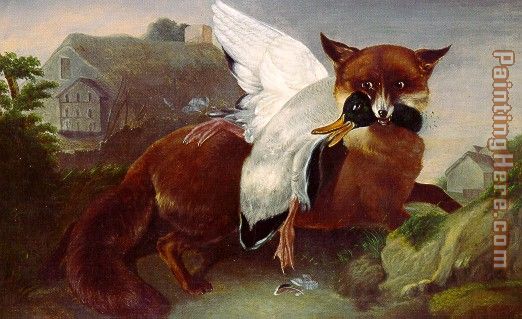
That's a pity, because those children may well be missing the delights of songs just such as "The Fox Went Out On A Chilly Night," a bit of nonsense that posits a very homey-looking family of anthropomorphic foxes, with a daddy fox going to town to provide for his ten little fox kits. It is a very old song, even by English folk song standards, with versions in print as long ago as 1500, a mere fifteen or twenty years after printing came to England. The Oxford Book Of Nursery Rhymes lists the first verse as

It fell ageyns the next nyght
the fox yede to with all his myghte,
with-outen cole or candlelight,
whan that he cam vnto the toowne.


That's pre-Shakespeare Middle English, though only "yede" (meaning "go") is completely archaic, and you can see that the opening is very close to the version sung most widely today. The near-uniformity of the lyric that we hear in this week's versions results in all likelihood from the 1810 miscellany of fairy tales and songs printed in the UK called Gammer Gurton's Garland - a book used routinely by schoolmarms on both sides of the pond throughout the 19th century for the edification of the minds of the young.

The song came across the Atlantic with the English colonists and embedded itself firmly in America's folkways, and it is no surprise that one of the most popular versions of the era of recorded music was done by Burl Ives, who actually had a number of folk hits in the 1930s:


Ives' version contrasts interestingly with that of his one-time friend Pete Seeger:


Seeger and Ives were both fine singers, but the instrumental laurels here clearly go to Pete, who could really make that banjo blaze.

Odetta brings a greater dramatic flair to her interpretation, and you can practically see her entrancing a room full of children with this:


Such a fine voice, and so sad that she is gone.

But Bob Shane of the Kingston Trio is still very much with us, and in 2008 after fifty years of recording with groups finally released a solo album. Shane thought enough of "The Fox" to include it with a number of other gems on that recording, and in the liner notes he writes that he used to sing it in the early 50s with fellow KT founder Dave Guard when both were school kids - "We felt it was a cute song and fun to sing. I still think it's cute song and fun to sing.":


Shane's recollection of this goes back 60 years, and I'd wager a modest sum that singing it brings back more than a few memories for him.

Harry Belafonte is a contemporary of Odetta and Shane and was in fact something of an inspiration to them both. But there's no mistaking Harry B's inimitable calypso-flavored take on the number:


Like nearly everything else Belafonte did, this works wonderfully in his own idiom.

Finally, the pride of San Diego's roots music scene, Nickel Creek with a more modern inflection, in a very early performance of theirs from the 90s on Austin City Limits:


There you have a half dozen of the major folk artists of the last half century or more bringing their talents to bear on a centuries-old ditty designed to delight children. The why of that may be quite simple. There is also a video on YouTube of actor Jake Gyllenhaal singing a fragment of it, saying that his father used to sing it to his siblings and him - and there are at least half a dozen comments on the video versions out there which identify dad or mom as singing the song better than the pros themselves. I'd guess that sentiment would sit just fine with our artists, because that's what folk music is supposed to be about.


Late Addition, 1/12/12

Just found this version by pop/rockabilly star Jimmy Rodgers, of 1950s vintage. It was hiding under the title of "The Fox and the Goose":