Comparative Video 101 appeared 30 times during 2011, significantly less frequently than the 46 and 47 times of the two previous years. Still, those thirty posts included some stellar performances of the songs profiled in the articles, and once again, we end the year with a completely subjective selection of the videos and arrangements that I found most compelling from the last calendar year. Some of these are wonderfully original takes of songs that I have long known and loved; others are just very fine videos or live performances.
As in my earlier "Best Of" posts, the song titles are hyperlinks back to the articles in which the arrangements appeared. We will, God willing, return to weekly posts in 2012 - and my heartfelt best wishes for a wonderful year to all who do me the great favor of stopping by this site to share my enthusiasm for this wonderful music.
The second week of May marks the third anniversary of my first modest post on "Tom Dooley," published on Kingston Crossroads in May but uploaded to the web in general in July when at the suggestion of folks here I began saving the posts into a blog.
Since that week in May, 2008 there have been 132 editions of Weekend Videos/Comparative Video 101 (both silly names but all I could come up with at the time - now I'm stuck with them). 12 of the articles have been special subjects, like the retrospectives The Best of Comparative Video 101 - 2009 and 2010, retrospectives on the careers of Dave Guard, Bob Gibson, Bob Shane (linked below), two on John Stewart (Nick Reynolds upcoming), fantasy camp, and other topics.
That leaves 120 separate posts on individual songs. The mathematically inclined among us will note that that means these articles have covered the equivalent of ten complete, 12-song LPs. Most of the posts include versions of the songs as performed by the Kingston Trio, and I believe that no comparable archive exists for any other artist anywhere else on the web. CompVid101 is not a comprehensive page and pales in comparison of scope to genuinely landmark sites like Jerry Kergan's Kingston Trio Liner Notes, Rick Daly's Folk USA, Ake Holm's wonderful Harry Belafonte website, or the lamentably retired John Stewart page by Ron Beffa called Clack's Cellar - and of course the full site of Ken Laing's The Kingston Trio Place where these articles first appear.
But this series is, as they say, what it is. I'm sure most of you have noted that the posts really aren't research articles, exactly, though I am proud of the bits of background I've been able to provide about the songs. Each article is actually an essay, one that presents my personal experience with and memories of each individual tune and my opinions on the performances I've been able to find. That anyone at all would care to read my ramblings on often long-forgotten folk songs is something I find immensely pleasing.
Which brings us to this anniversary edition. I really love doing these posts, and I have to review them with some frequency to be sure that the videos I have included in each article are still there - and if YouTube has yanked some of them for copyvio, I try to find replacements. (And one of my big projects for the summer will be to create a usable index-by-song-title page.) Of the 132 posts, nine stand out for me as the best overall of the whole group - best writing, best information, and best range of musical/video performances.
So this shamelessly self-congratulatory post simply re-presents for your consideration my own favorite articles of the last three years. Here they are in order of publication - and thanks to all for doing me the great compliment at looking at my work over the years.
In 2010, Comparative Video 101 has appeared 46 times, one fewer than in 2009. We had a larger number of special posts this year - tributes to Bob Shane, Dave Guard and Bob Gibson, a retrospective on Kingston Trio Fantasy Camp, a celebration of my 100th article, and more. There were still profiles of 38 individual songs, and each profile included about six video performances on the average - so CompVid 101 included more than 220 videos in toto. The ones below (listed with the song name as a hyperlink to the articles about them) are the eight performances that I enjoyed the most but had not heard before of songs that most all of us know and love. They are listed in chronological order of their appearance this past year.
I am certainly looking forward to the new year, and my best wishes for a peaceful and prosperous one to all who have been good enough to stop by and read my weekly ramblings on folk music - which will continue, God help us, through 2011.
Not exactly a retrospective, this - but one of the joys of doing this blog (whether readers number in the single digits, as they sometimes do, or the thousands, as they have when someone else picks up a post from here on a higher profile blog) has been discovering creative, fresh, interesting, or strange versions of songs that in virtually every case I've known for more than forty years.
There are forty seven songs that have been profiled on this blog this year, and here are the eight versions (out of more than 250 embedded renditions) of some of those songs that I enjoyed the most, with the heading linking to the original posting.
Talk about getting not nearly enough respect for a career of splendid achievement. Carl Sandburg (left, with Jean Ritchie), regarded during his lifetime as a major American poet second only to his contemporary Robert Frost, is now neglected to the point of being all but forgotten. I suppose one possible reason for this is that he is sandwiched in terms of time between two other great free verse poets, his own role model Walt Whitman and his more flamboyant successor Allen Ginsberg.
But Sandburg is much more dimensional than either of those two, and in his cultural importance - and in his importance to those of us who love folk music - he beats out nearly every other writer and folkie in American history in one critical regard. Sandburg is the link, the connection, between the high culture of published poetry and the people's culture (of folk music, actually) in a way that Whitman dreamed of but never quite succeeded at and that Ginsberg attempted but never realized (Ginsberg's success at being the iconic voice of the outsider).
Sandburg took the Whitman-esque style of long lines of apparently rambling free verse and infused it with a more pointed political perspective than Whitman ever quite managed to do. About the most political that Whitman ever got was to endorse the Union cause in the Civil War and fall in love with the idea of Abraham Lincoln. Sandburg, on the other hand, channeled his eighth grade education and early life of manual labor into a poetry that transcended Whitman's dreamy paeans to the common man into a harder edged, more real imagery that nonetheless celebrated the wisdom and virtue of the masses. Does anyone still remember "Chicago"?
Hog Butcher for the World, Tool Maker, Stacker of Wheat, Player with Railroads and the Nation's Freight Handler; Stormy, husky, brawling, City of the Big Shoulders:
They tell me you are wicked and I believe them, for I have seen your painted women under the gas lamps luring the farm boys. And they tell me you are crooked and I answer: Yes, it is true I have seen the gunman kill and go free to kill again. And they tell me you are brutal and my reply is: On the faces of women and children I have seen the marks of wanton hunger. And having answered so I turn once more to those who sneer at this my city, and I give them back the sneer and say to them: Come and show me another city with lifted head singing so proud to be alive and coarse and strong and cunning. Flinging magnetic curses amid the toil of piling job on job, here is a tall bold slugger set vivid against the little soft cities....
A lifelong socialist activist, Sandburg had the same faith in the People that we today associate with a Whitman or a Woody Guthrie or a Pete Seeger. But Sandburg was also an early contributor to and editor of the august Poetry magazine, popular among the intellectual elites of two continents, and his work was in fashion in salons from New York to London and Paris.
At the same time, though, Sandburg was out collecting folk songs, inspired in part by the Lomaxes and other early collectors, but also by his own belief that folk music was the art of the common people, with a power in and of itself (without resorting to writing new political songs) to transform and redeem America.
The result of his work was the classic American Song Bag of 1927, my own personal favorite right behind the Lomax books. It was apparently one of the Kingston Trio's favorite books as well, because they took maybe half a dozen songs from it that they list as copyrighted by Sandburg, including landmarks "Sloop John B," "The Colorado Trail," - and "This Morning, This Evening So Soon."
Often called "Tell Old Bill" and copyrighted by Sandburg as "Dis Mornin' An' Dis Evenin' So Soon," the song is clearly an African-American country blues number that may have originated from an older song in Georgia in the mid-nineteenth century. Sandburg told of hearing it in St. Louis in 1922 from a Nancy Barnhart, and it was roughly her arrangement he published. Sometime in the 30s, the recently-deceased Sam Hinton heard another version in Texas and recorded it. Sandburg's later editions of Song Bag reflect some of the elements of Hinton's song, and it is through that latter arrangement that most of us have come to know the number, courtesy of Sandburg's fellow Chicagoan Bob Gibson.
The Kingston Trio's version on their 1960 album String Along follows the basic chord pattern from Sandburg's book but with some extra minor chords thrown in and a bluesy guitar opening that sounds a bit like the Guard trio's opening for "Don't You Weep, Mary":
The vocals on this cut are IMHO just outstanding - one of my all time KT favorites.
And for outstanding vocals - how about Chad Mitchell on lead, from the CMT Reflecting album from 1964:
Next, a version from the great Dave Van Ronk, Greenwich Village's "Mayor of MacDougal Street" who was a powerful influence on the young Bob Dylan and one of the most effective of white singers who interpreted African-American blues:
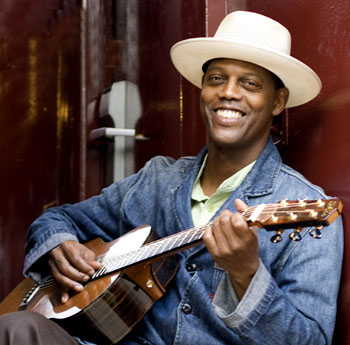
More recently, Eric Bibb, son of art folk performer Leon Bibb, with Brian Kramer in a version that may be the closest to what the song that Sandburg first heard sounded like:
There is one very significant Kingston Trio connection to Sandburg, one I think not widely known. At my first fantasy camp in 2003, John Stewart and Nick Reynolds duetted on "Sloop John B" in a rough, unrehearsed version that I've posted on YouTube(link below). Even before the thunderous applause subsided, Nick had grabbed the vocal mic and with an asperity in his voice that I found arresting said, "When we were first starting out, there were a lot of people calling us 'phony folksingers' and such. One man who stood up for us - one of the really righteous men - was the poet Carl Sandburg, who collected that song. He sent us all a really nice letter with autographed copies of his works The Lincoln Years*. We never forgot that."
Amen, Nick Reynolds. And God bless you, Carl Sandburg.
Addendum - March, 2012
Thanks to Alex Edouard, whose comment appears below, we can also enjoy Nathan Salsburg & Will Oldham doing their version in 2007 - Oldham is better known by his stage name of Bonnie Prince Billy:
*Nick was referring to Sandburg's Pulitzer Prize-winning biography in two volumes, Abraham Lincoln: The Prairie Years and The War Years.
Courtesy of Bo - Fred Grittner, me, Neal Spivey, Mr Banjo, and Art Yow a few weeks ago:
Addendum, 2/6/10
At the risk of sending Carl Sandburg spinning in his grave - Merle Haggard is a major performing artist whose singing and song selection I usually enjoy. Here, though, Merle got a hold of the number and turned it into something quite different:
Well, I guess that's one use you can put Public Domain material to....
Another cowboy song, you think. Another fluffy bit of album filler, you say (and Allan Shaw et al. in The Kingston Trio On Record did). A forgettable Trio effort that pales in comparison to their best work, you opine.
And beyond the standard disclaimer of "each to his own" - not hardly, I would say. Not only is "Get Along, Little Dogies" (called "Dogies' Lament" by the Kingston Trio and others) a legitimate bit of classic Americana, worthy of notice by the many wonderful artists included here, but the KT's recording from one of its best albums, New Frontier, is itself a fine performance and a very interesting point in the long recording career of that group.
First, the song itself. I'd guess that many, perhaps most, of us knew this song before the abovementioned KT recording from late '62-early '63. It was certainly a staple of children's TV shows, recordings, and school music appreciation classes. I knew that I had heard it in several versions long before New Frontier. I'm sure my family had a 78rpm of Burl Ives doing it, I can remember Win Stracke (whom I've mentioned in these posts frequently) did it on his after-school show, and I'd bet that several other children's records in our family included it as well.
Not surprisingly, the song leaves cattle country and comes to America at large through the Lomaxes, father and son. John A. included a version in his 1910 collection of cowboy songs, and Alan had versions in the several different editions of his Folk Songs Of North America (1947). Both Roy Rogers and the Sons of the Pioneers can be credited with popularizing it in movies (as below), and both Burl Ives and Pete Seeger recorded it on vinyl in the late 1940s.
I never really cared to understand what a "dogie" was, but for my 11th birthday I received a copy of the '47 Lomax book above. Its explanation was that the term for a cow derives from "dough-guts," cowboy jargon for a yearling animal, often orphaned, whose distended belly resulted from eating grass prematurely and whose underside reminded the cowpokes of sourdough bread dough.
Whatever the term's origin - our earliest version today is from the 1940 film West Of The Badlands, starring the erstwhile Leonard Slye of Cincinnati, who of course had re-invented himself as (with Gene Autry) the personification of the Singing Cowboy - Roy Rogers:
I cannot adequately express my delight at finding this on YouTube. For me, as for millions of American children, Roy Rogers was my hero even before Davy Crockett. When my dad would ask me what I wanted to be when I grew up, I'd invariably reply "Roy Rogers." (My mother added that when I was told that there was only one RR and I'd have to pick some other line of work, she swore that I'd say "God.") This video is a reminder of what a beautiful voice Roy had - several of the background singers were at one time or another members of the group associated with Roy and from which he emerged as a solo star, the Sons of the Pioneers.
Now what is notable about the Kingston Trio's 1962 version is this. "Dogies' Lament" is a Dave Guard Trio song done by the Stewart Trio. By that I mean that it is absolutely, 100% a traditional song, and the KT had been moving steadily away from those after Guard's departure. What's more, the guys give this a respectful and generally straightforward reading that demonstrates a clear understanding of the song's roots. But with a Guard-type wrinkle, they change the accompaniment. Where Rogers and most of the others below (Seeger excepted) are doing a basic C-F-G7 chord progression, on the verses the Trio is using a C-Dm7-Em7 progression - for non-guitarists, a closely associated set of chords but which give just a hint through the minor sound of the "lament" that you hear most clearly in Pete's version:
John Stewart has the perfect baritone voice for this number, and the Trio's version may well be the most authentically traditional currently available (ironic point, of course). I threw together the video above with illustrative paintings from the great Frederic Remington, whose fervent attempts to record Western life before it disappeared (he died in 1909 at48) became the template from which virtually all of our modern images of the Old West come. When Hollywood started making Westerns, it was to Remington they went for the "look" of the movies.
Of later artists, who could do a cowboy song better than Marty Robbins? This version is from a short-lived TV series starring Robbins in 1965 called The Drifter:
That may be the smallest six string guitar I have ever seen.
One of my children's records above had a version similar to this one from Pete Seeger, with a distinctively "lamenting" minor key to begin the chorus:
After hearing this next version, I'm almost ashamed to say that I knew nothing of Elton Britt. With Rogers (and Jimmie Rodgers before that), Britt helped to popularize yodeling as a part of American folk tunes. He was an excellent singer, and I love this recording:
And a spare, straightforward rendition by one of my all-time favorite folksingers, Woody Guthrie's boon companion Cisco Houston:
By whatever name you call it, the "Dogies" song is an authentic link to our shared American past and the mythos that best expresses our image of ourselves - which makes it a fine choice for a Weekend Videos for our nation's birthday. A happy 4th of July to all!
Playback Note
YouTube has significantly upgraded its playback capabilities, but to save bandwidth it has made the low resolution 360p the default playback mode (on some videos, even - shudder - 240p). For best results on these and all YT videos, check in the lower right-hand corner of the video screen with the cursor to see if playback in 480p, 720p, or hi-definition is available. It will take a few seconds for the video to reload in the new resolution - but it will be well worth it.
"The Colorado Trail" is one of those folk songs in the American tradition that appears as a genuine surprise, like maybe "Shenandoah" and "The Streets Of Laredo" and "Coffee Grows On White Oak Trees." American frontier culture has given rise to rough-hewn ballads like "Jesse James" and fiddle and dance tunes like "Old Joe Clark" and "Turkey In The Straw" and topical/historical pieces like the hundreds of Civil War songs and railroad songs and sea chanteys. We're not generally known, though, for the lyrical beauty of the Celtic songs of Ireland, Scotland, and Brittainy or the stately and often melancholy classics of England (think "Greensleeves" or "Barbara Allen").
Every so often, though, some anonymous American worker came up with a melody and some words of genuinely aching beauty, real polished diamonds set sparkling against the rough and grainy backdrop of American folk tunes. Such a song is the very real cowboy ballad, "The Colorado Trail."
We owe our knowledge of this obscure ballad to classic American poet Carl Sandburg and Weaver Lee Hays, the same pair who gave us "The Wreck of the John B" and dozens of other traditional songs that found their ways into public consciousness through the books of Alan Lomax and the records of Burl Ives and The Weavers. The story goes that Sandburg "collected" (as they say in the folk music biz) the song in 1927 (about the same time as "John B") from Dr. T.L. Chapman, an old surgeon in Duluth, Minnesota who maintained that some decades earlier he had treated an anonymous cowboy for "bones of both upper and lower legs broken, fractures of the collar bone on both sides, numerous fractures of both arms and wrists, and many scars from lacerations." According to Chapman (from Sandburg), the cowboy spent several weeks convalescing, singing "The Colorado Trail" several times daily to other patients who just couldn't get enough of it.
And no wonder. The song is pure (if a bit schmaltzy) genius and includes one especially fine technical point - the rise in the melody of the chorus where the meaning of the words rises - "wail, winds, wail" - with the subsequent gradual stepping down of the melody as the words return to earth - "all along, along, along - The Colorado trail." [Lomax's published musical setting gives you the option to sing the word "wail" at either the high end of an octave as the Kingstons do below or the lower as with the Bar D Wranglers - Ives did the high octave.] You generally don't hear that kind of sophisticated gambit in any kind of music outside of the really serious pop and classical stuff. That ol' cowpoke knew what he was doing.
I first heard it on what may have been the earliest commercial recording by Ives, who put out literally hundreds of 45rpms and 78rpms before the mid-Fifties debut of LPs. The Weavers may also have waxed it in the Gordon Jenkins sessions with Decca, though I can't say for sure or find direct evidence of it.*
It's safe to say, though, that the awesome commercial punch of the Kingston Trio in 1960 brought the song its widest attention to date, appearing as it did on their album String Along, the fifth consecutive (and final) album of the original trio's to go to #1 on the Billboard charts, where it stayed according to The Kingston Trio On Record for an impressive ten weeks. The Trio's reading stands after nearly fifty years as one of the loveliest cuts that they ever recorded:
Given the single source for the song from Sandburg, there are still major variations in the lyrics because a)Lee Hays added two verses of his own to Sandburg's find, including the last verse that the KT sings, and b) most of the other artists who have recorded it (Johnny Cash, Don Williams, Tex Ritter, and more) have felt free to write their own verses as well.
We have some fine performances of the song from amateurs and professionals alike. For a pure and simple folk arrangement featuring only vocal, guitar and recorder, I would like to start with one of my favorite singers of all time, Cisco Houston, who died at 42 years old in 1961 just as his career was taking off in the folk boom. Houston had the best baritone voice in roots music, one that some traditionalists felt was "too good" for the simple tunes he sang. I disagree most emphatically:
Rick Devin is a multi-faceted and thoroughgoing professional who has had different incarnations as a rock, folk, and blues performer. Since 1985, though, he has focused on cowboy songs, teaming up with Michael Martin Murphey, among others. This video is a bit of a commercial but still a fine performance:
Marshal Bailey and The Silver Bullets put a definite and very melodic country spin to the song - this was recorded last June at the Colorado Bluegrass Festival:
Mike Iverson gives a genuine and authentic-sounding reading at last year's Western music Alliance meeting in Albuquerque, New Mexico - the mouth harp makes you nearly smell the campfire smoke:
A lovely, understated melody, melancholy tone, haunting lost love theme - "The Colorado Trail" includes for me just about everything there is to love about traditional music.
*4/21/12
Well, here's some pretty direct evidence - The Weavers with Lee Hays on lead. Seeger is playing the recorder, but the brush drums and strings are the work of Gordon Jenkins, so this is indeed from the 1949-52 Decca era of the group.
Updates, April 2013
In the nearly four years since this post first appeared, the number of videos of all kinds posted to YouTube has more than tripled, and despite the occasionally problematic actions by record companies to enforce copyright restrictions (as has happened with the Kingston Trio video above), this has been good news for music lovers of all stripes. In May of 2009 when I wrote this, I had a hard time coming up with YT renditions of "The Colorado Trail" that I liked enough to include in an article such as this. The ones in the original posting above are of genuine excellence - but they were all that I could find. Recently, though, especially in the last year, a substantial number of outstanding versions of the song have been uploaded to YouTube. Here are several of the best of those, all by major artists whose work was not available in video form four years ago.
The previous 39 posts in this series have more or less adhered to the same format of presenting different interpretations of songs traditional and modern that might be termed at least loosely as "folk."
However, as the margin note to the left indicates, all of these pieces appear originally on the Kingston Crossroads message board, and last week and this week I've posted essays there that don't quite fit the pattern. Last week's post was simply a collection of YouTube videos of the twelve songs included on the 1962 album The Best Of The Kingston Trio, and this week's is a consideration of the Rod McKuen/Jacques Brel song "Seasons In The Sun," which cannot be stretched in any way to be called folk or roots or Americana.
But Kingston Crossroads doesn't archive posts, and a few friends have asked that these two entries be preserved, so I'm uploading them here.
Next week - back to CompVid.
In celebration of the fortieth post in this series and twenty-ninth consecutive weekly entry, I've decided to forgo the "comparative video" approach just for this week and use the miracle of the internet to present a video version of the 1962 album The Best Of The Kingston Trio.
When I began uploading videos to YouTube in July of 2006, about seven months after it came into existence, a search for "Kingston Trio" was likelier to pull up my Chilly Winds group than anything by the KT, simply because nothing at the time had been posted of the greatest of all folk groups. In fact, I attribute the (to me) astounding ongoing popularity of Chilly Winds videos on YT to that fact - people found us early on and continued to look in even after the KT began to appear in first dozens, then scores, and now hundreds of video uploads.
A telling point is that of the twelve videos herein presented, ten were already on the internet when I conceived of doing this a couple of weeks ago. Only "Everglades" and "Billy Goat Hill" were created by me specifically for this post. The rest of the videos include seven actual (if not always complete) performance videos by the Trio, one amusing home movie, and two video montages.
It's a testament to the amazing popularity, longevity, and durability of the Trio and its music. So, without further ado and presented in order by side of the original LP -The Best Of The Kingston Trio.
Side A
(Note: The original KT video of "Rasberries, Strawberries" was removed, so here's the current KT.)
A few months back, I mentioned in one of these weekend videos posts that I didn't intend to do any really high profile songs by the Kingston Trio that became famous in subsequent versions because I thought there just wouldn't be enough variety in the performances to justify the time and effort - and I specifically mentioned "The First Time Ever I Saw Your Face" as an example of such a song.
Well, doing these video reports has been an education for me, and I've found a wide variety of interpretations in songs that I would have guessed had really only one basic arrangement, even really common ones like Scotch and Soda or Greenback Dollar or Someday Soon.
So it was a revelation to me to find out just how many different ways that artists have found to present this classic love song, penned by the late great Ewan MacColl as a paean to his great love (but at the time, not his wife) Peggy Seeger (the couple pictured at left) and first brought to wide attention in the U.S. by the Kingston Trio, whose New Frontier album including the song sold several hundred thousand copies.
I had heard of MacColl several years before this because one of the treasures of my boyhood was the pair of Vanguard albums from the Newport Folk Festival of 1960, which featured MacColl as a solo (doing what many consider the definitive recorded version of the classic Scots traditional ballad "Lang A-Growing," though Liam Clancy's version is also highly regarded) and as a duo with Seeger, performing a topical song that was one of my favorites of the era and covered by many other folk artists, "The Springhill Mine Disaster" about an actual event in Nova Scotia in 1958.
MacColl had a fine, strong, masculine voice with a burr that you could cut with a knife (see appendix), and he projected the same kind of image through a tumultuous fifty year career as a radical labor organizer, street actor, folk song collector, performer, and composer of excellent traditional-sounding songs like "Springhill" and "Dirty Old Town" and "Freeborn Man" and my favorite, "The Shoals of Herring." He was in an unhappy second marriage when he met Peggy Seeger in Britain, and the two began an open affair that created a scandal at the time that even a subsequent marriage never quite completely erased. According to legend, Seeger phoned MacColl requesting that he write a love song for a play that she was to appear in; he wrote the song both for and about her in less than an hour, called her back, and taught it over the phone.
So the first public performance of "The First Time Ever I Saw Your Face" was actually by its inspiration, Peggy Seeger, who performs it here from about 1961:
and more recently in a live performance here:
Intrepid song sleuths Shane, Reynolds, and Stewart knew a good number when they heard it, but they also knew that the slightly PG rating of the third verse ("the first time ever I lay with you") probably wouldn't fly with their wholesome image, so they changed the wording to "ever I held you close" in addition to shifting the tempo and emphasis of the melody a bit. Combined with a stunningly effective guitar duet (and I'm betting on a John Stewart arrangement of that) and impeccably tasteful harmonies, "The First Time" is one of the prettiest numbers that the Kingston Trio ever recorded:
A wonderful version now from the other great folk trio of the era, Peter, Paul and Mary - here from a 1965 BBC show when the group was at the height of its popularity and prestige:
After the KT but before Roberta Flack ten years later, Johnny Cash recorded a version that some feel was among his most effective ballad recordings. This video is a personal montage of anniversary pictures set to Cash:
Later in his career - but before he lost his voice and became a caricature of himself - Elvis Presley came to the song and put his distinctive, soulful stamp on it. Like Bob Shane, Elvis had a marvelously rich, natural baritone with an instinctive vibrato - a truly gifted singer:
You can't talk about this song without acknowledging the truly inspired singing and fabulous, operatically-trained voice of Roberta Flack, with whom this song will ever be associated:
Sublime is the only word for this. Would you like a barometer of how far popular culture has sunk since 1972? Without the Kate Moss anorexic, Barbie-doll looks preferred today - how far would Flack get on American Idol? Let Celine Dionne and Lauryn Hill and the rest of them over-sing their over-produced versions - Flack's is the benchmark performance.
I want you to know that I searched thirty-plus pages into the YouTube results to find these next videos. Three instrumentals - first - acoustic guitar in an open tuning, derived from Bert Jansch by Chumblefish:
Jazz sax by CooolJazzz - really sweet:
Finally, slide guitar from "Shakey":
I have to say that I'd take any one of the least of these renditions over any of the aforementioned hyper-orchestrated mishmashes that come out of pop music today.
Appendix:
Here's what Ewan MacColl sounded like - nice radical union song,"My Old Man":
I'm not sure that Woody Guthrie ever wrote a piece more direct and powerful than "Plane Wreck Over Los Gatos," more commonly known by the more succinct "Deportee." I say "piece" deliberately because I learned via email a couple of years back from our good friend and too-occasional Xroads poster Peter Overly that Guthrie penned this and published it as a poem in the months following the incident, a January 28, 1948 plane crash in Fresno County, CA that killed 32 people, 4 American crew members and 28 Mexican farm laborers who were being returned to their country. It wasn't until nearly 10 years later that a Martin Hoffman (a teacher and someone I believe that Peter knows) put the words to music.
The incident is as described in the lyric, and I think most of us of a certain age are well aware of the braceros program of the 1940s through the 60s that set the stage for the disaster. The braceros (from the Spanish "brazos" or arms - Gregory Nava's powerful 1980s film El Norte makes an ironic comment on the word) were legal laborers who today would be termed "guest workers," though the use of "guest" obscures both the desperation of the people driven to this most extreme expedient to stay alive and the often harsh and dishonest treatment afforded them by the "hosts." A common trick of the time was to bring the low-paid workers over the border from Mexico with contracts that were intentionally flawed (in English) so that they would have no legal force. Following a season of backbreaking work in California's orchards and fruit fields, the braceros would at times be rounded up as illegals because of the invalid contracts and deported without being paid at all.
Even when the farm owners were just and humane - which I suspect they were far more often than they are credited for being - the wages were so low that the braceros would need to spend much of their money as a fee to a labor contractor to secure work for the next year's harvest.
But it wasn't that fundamental injustice that angered Guthrie the most, again as the song attests. Newspapers across the country reported the incident by naming the four members of the flight crew but listing the others as "deportees" - who were buried in a mass grave near Coalinga and only 12 of the 28 of whom were ever identified by name. (Until 2013, that is; please see the note below the post.)*
It was this dehumanization of flesh and blood people that stirred Guthrie to write his most directly polemical piece. I can think of no other Guthrie song so visibly angry or as direct as the last verse here is - "Is this the best way we can harvest our orchards?" His point remains well-taken, and whatever side of the ongoing and likely eternal and international dispute that you find yourself on, Guthrie's implicit plea for basic decency and humanity transcends the politics and is hard to deny.
We are fortunate to have recordings here of some of the major artists of our time performing the song, each in a style unique to their own form of music.
The Kingston Trio's arrangement from their themed Time To Think album is IMHO the best of their later years and one of the best of the whole initial ten year run. What makes it so, I think, are unique contributions from each member. John Stewart's lead vocal demonstrates the same youthfully idealistic passion that also characterizes another great cut on the album, Stewart's own "If You Don't Look Around." Nick Reynolds had a certain intonation in his upper register - a kind of wail, almost - that could sound impassioned and tragic (think of his marvelous vocal on "The Wanderer"). And Bob Shane's rhythm strumming (as well as the use of sixth and minor chords instead of the major chords of the original) is wonderful, creating the only recorded version of a song about Mexican people that actually sounds similar to a Mexican song:
Capitol Records Studio B never sounded better than it does here.
I suppose it might seem odd to follow this impassioned performance up with a version by Dolly Parton. But her diminutive size, kewpie doll looks, good humor, and decades of Johnny Carson jokes about her figure all may make us forget what a powerful singer and great performing artist that she is. She does the lyric here with a great artist's passion:
Arlo Guthrie here has his usual interesting take on one of his father's song - similar to dad's but still very much his own:
Now I don't know who Michael Pickett is - clearly a blue-eyed bluesman. But he does a flat-out sensational and mesmerizing blues version of the song, here from 2007:
At the dawn of his mega-popularity in 1981, Bruce Springsteen foreshadowed his later-developing interest in folk music leading to the 2006 "Seeger Sessions" CD and tour with this emotional (but truncated) bootleg from a Los Angeles concert:
Now for another duet, more musical - Arlo again with the angelic Emmylou Harris with the incredible Sam Bush on mandolin. This is how harmony is supposed to sound:
The Good Book asserts that "The poor ye have always with ye," and I suppose you could add immigration problems to that as well. But I don't think that the Biblical verse is a simple statement of fact - it's more of an indictment, and admonition, a call to action. In this song, using his own tools and talents, Woody Guthrie stepped up and answered that call.
*Note 7/15/13
In the four years since this post first appeared, ongoing research has finally established the names of all 28 of the Mexican workers who perished in the crash. They were -
Miguel Negrete Álvarez. Tomás Aviña de Gracia. Francisco Llamas Durán. Santiago García Elizondo. Rosalio Padilla Estrada. Tomás Padilla Márquez. Bernabé López Garcia. Salvador Sandoval Hernández. Severo Medina Lára. Elías Trujillo Macias. José Rodriguez Macias. Luis López Medina. Manuel Calderón Merino. Luis Cuevas Miranda. Martin Razo Navarro. Ignacio Pérez Navarro. Román Ochoa Ochoa. Ramón Paredes Gonzalez. Guadalupe Ramírez Lára. Apolonio Ramírez Placencia. Alberto Carlos Raygoza. Guadalupe Hernández Rodríguez. Maria Santana Rodríguez. Juan Valenzuela Ruiz. Wenceslao Flores Ruiz. José Valdívia Sánchez. Jesús Meza Santos. Baldomero Marcas Torres.
Certainly one of the most affecting and moving renditions of the song was recorded by one of our American masters and national treasures, Judy Collins. When I wrote this piece six years ago, Collins' version was not yet on YouTube, an oversight corrected in 2013. With thanks for the timely reminder of this marvelous version to my French friend M. Fanchbrezoneg:
Comparative Video 101 is a resource for performance videos of some of the classic popular folk songs of the last several decades with personal commentary on them by Jim Moran, a teacher of literature for nearly forty years and a folk musician and writer for a decade longer. He was also co-host of the "Roots Music And Beyond" radio program on KPFK-FM in Los Angeles. Some of these posts appeared originally on the Kingston Crossroads message board, and many of the profiled songs were performed by the classic pop folk group the Kingston Trio. The page will be updated once or more per month. Your comments are welcome.
Use the Google Search Bar above as you would use the Google web search. Enter the name of a song or artist, press "search," and the results will appear showing every mention of your search term in the 150+ articles on this blog. An alphabetical index of song titles is coming soon; until then, the Google Search This Blog will substitute for it.
Since Blogspot/Google has recently begun including readership statistics as part of its service to bloggers like me, I have become aware that the readership for these pages is far more extensive and international than I had ever dreamed, usually approaching 1,000 visitors per week from literally all around the world. I am profoundly appreciative of the interest in these posts and glad that folk music fans find enjoyment and value in them.
There are currently more than two hundred articles here, and nearly all of the twelve hundred posted videos in those articles are from YouTube. Most readers will already know that because YouTube is another subsidiary of Google, the latter company is being sued for copyright infringement by a significant number of content providers like Sony-BMG and Warner's Music Group. YouTube/Google's normal response to infringement claims is to remove the disputed videos or ban them from certain countries in which the claims have been filed.
This, of course, has a profound effect on the content of posts like the ones in this blog. Videos that I have selected for any given article can be and often have been removed at any time without warning. I try where possible to replace deleted videos with other versions of the same performance or with similar renditions of the songs, though this is not always possible.
Policing the hundred plus posts to be sure that there are interesting and representative video performances is itself a major undertaking, one that involves a significant commitment of time. I hope that those of you good enough to stop by this blog will have a bit of patience. I review as many of the older articles as I can every week with the goal of maintaining the integrity of each, and sometimes this enables me to find newer, better, and more exciting performances of the songs profiled here.
 Comparative Video 101 appeared 30 times during 2011, significantly less frequently than the 46 and 47 times of the two previous years. Still, those thirty posts included some stellar performances of the songs profiled in the articles, and once again, we end the year with a completely subjective selection of the videos and arrangements that I found most compelling from the last calendar year. Some of these are wonderfully original takes of songs that I have long known and loved; others are just very fine videos or live performances.