Showing posts with label BackInTown. Show all posts

Friday, March 29, 2013

Dino Valenti's "Let's Get Together"

For western Christianity, today is Maundy Thursday, which in my Catholic childhood was called simply "Holy Thursday," and it is the beginning of the Passiontide, which gives way at dawn on Sunday morning to Eastertide. For Christians, this is the most sacred and significant phase of the nearly 2,000-year-old liturgical year, observing as it does Thursday's Last Supper, Good Friday's Crucifixion, Holy Saturday's quiet entombment (and for those who really know their traditional theology, the Harrowing of Hell), and Easter Sunday's Feast of the Resurrection. All of the mysteries and core beliefs of the religion coalesce into the three day observance (again for traditionalists, the Triduum or "Three Days" is the official name) - the incarnation of the son of God as a human being, the point of which was to redeem humanity from its sins through a sacrificial death (symbolized by the eucharistic elements of Thursday's Last Supper) followed by a triumphant resurrection that solidified the possibility of redemption for all of us wretchedly flawed and miserably sinful people.

Yet another odd opening for an article on a folk song, it might seem at first, but I would suggest that it is the perfect context in which to understand why Dino Valenti's (pictured) "Let's Get Together" attained such popularity when it was written and recorded almost fifty years ago,  and why it remains relevant today, this week, now - even, perhaps especially, for those many of us who do not profess any such beliefs as described.  Valenti's lyric makes a clear if slightly oblique reference to mainstream Christian theology ("When the one who left us here/Returns for us at last," alluding to the belief in the second coming of Christ), but I would suggest that in the aggressively irreligious and secularist zeitgeist of the late 1960s when the tune became a major chart hit for The Youngbloods, its popularity with the record-buying youth of the day had nothing to do with conventional religion or theology whatsoever.  Rather, it is the way that the lyric expresses the universal desire for peace and love of nearly all the segments of that era's youth culture - the hippies and war protesters and Hare Krishnas and Transcendental Meditators and Flower Children and all their attendant wannabees and fellow-travelers - that propelled Valenti's composition to high-profile popularity and embedded it in the consciousness of the time.

Those last two sentences are, I suppose, some sort of heresy at best and apostasy at worst, and the good nuns of St. Raymond's School in my native Illinois are undoubtedly spinning in their graves even as I write this. Yet rest easy, good sisters - your lessons were not completely lost on this errant child. Beyond the theology, beyond the religious trappings of today, there remains at the core of the Holy Thursday story a transcendent moment, one of genuine historical significance whatever attitude one has toward  religion itself. In the Gospel of John, after the Passover Seder, Jesus is imparting a final lesson to his followers, which he begins by saying, "A new commandment I give to you, that you love one another, even as I have loved you..." - a corollary of sorts to the golden rule of doing unto others as you would have others do unto you. Taken together, the commandment and rule are enough to warm the hearts of even the flintiest and most committed of non-believers, including such luminaries as Thomas Jefferson and Benjamin Franklin, both of whom revered Jesus as a great teacher without adhering at all to conventional beliefs in his divinity or in any traditional theology. Mahatma Gandhi also noted the significance of the imperative to "love one another" as the foundation of any society with pretensions to justice.

Whatever  Valenti's  intentions were initially, the song owes its popularity to the idealism of the young five decades ago - the plea of his chorus to "love one another right now," written in late 1963, expresses an urgency that seems poignant now that we know of the darkness that was settling over the land at just that time. Valenti (who was born with the name Chet Powers) recorded the song for his debut solo album on Elektra Records in January of 1964:


This beautifully clear recording is a digital remastering from 2007, significant in that Elektra (now a subsidiary of Warner Music Group) felt that despite
Valenti's spotty career, frequent legal troubles resulting from drug use, and early death at 57 in 1994, that there was still enough of a market for his music to validate the expense of upconverting the original analog tapes to a digital format. If their confidence proved justified, it was on the basis of this song.

Cover versions began to appear even before
Valenti's album was released, likely due to the small and close-knit community of folk and rock musicians (and the soon-to-be fusion of the two) in the San Francisco Bay area to which Valenti had moved, where everyone knew everyone else and traded and stole songs from each other. Kingston Trio manager Frank Werber apparently heard Valenti performing the song in a San Francisco nightclub, liked the tune, and brought it to his group, who also liked it and recorded it a mere two months after the release of Powers' record. This is from the Trio's eighteenth original and final LP for Capitol Records - Back In Town, recorded live at SF's Hungry i, from which the group had rocketed to fame six years prior:


Pop country legend Glen Campbell sat in on many of the tracks on the album, uncredited, and it may well be Campbell playing the 12 string guitar here. Though the album itself was of only middling success in terms of performances, sales, and recording quality, several of its tracks received favorable critical response. Just a few years ago, prominent Allmusic critic Bruce Eder remarked that "'Let's Get Together' might even have put the Trio out in front of the folk-rock pack, had Capitol gotten either this performance or the Trio's studio recording of the same period (which wasn't heard until the mid-'90s) out as a single."

Frank Werber also managed We Five, the Bay Area folk-rock group headed by KT member John Stewart's younger brother Mike. We Five had had an international smash hit early in 1965 with their rendition of Sylvia Tyson's "You Were On My Mind," and Werber believed that the follow-up release in late '65 should be the group's arrangement of "Get Together":


We Five's arrangement seems to have been a cross between
Valenti's original and the Kingstons' cover. Like the KT, We Five re-ordered the lines in the song's chorus and added an element of drama to their version that anticipates the Youngbloods. This recording reached a respectable #30 on the national singles charts, but it was the last of the group's 45s to make the Hot 100.

Folk superstar Judy Collins was also transitioning away from the accepted perimeter of revival-era folk music when she performed the song on a BBC television show in 1966:


Collins' syncopated take on the song reminds us that Brazilian bossa nova was all the rage in American pop that year, and Collins had the versatility to pull this off. It helps that her accompanying guitarist is the multi-instrumental genius Eric Weissberg, late of mid-50s folk group The Tarriers and a few years later the banjoist on the recording of "Dueling Banjos" that was included in the film Deliverance.

Back in the Bay Area, an assemblage of former folkies had created a folk-rock band that they named The Jefferson Airplane, including "Let's Get Together" on their debut album, which was released in mid-1966:


This is the Airplane pre-psychedelia - and pre-Gracie Slick. Signe Anderson is the female voice here.

Less than a month after Woodstock, in September of 1969, the "Celebration At Big Sur" in California sought to replicate the New York festival's success. It didn't come close, but at least Joni Mitchell was able to make this one - here with Woodstock vets Crosby, Stills, and Nash:


Mitchell was early in her career most successful as a soloist, and this apparently impromptu rendition doesn't reflect the best of what either she or CS&N were capable of. The video itself, however, with its crowd shots and cuts away from the performers, works nicely as a time capsule of sorts.

And that brings us to The Youngbloods, who first waxed "Let's Get Together" in 1967 and released it as a single. It went almost nowhere until '69, when this recording was used in a popular public service announcement for the National Council of Christians and Jews. RCA, the band's recording company, sensed that it was on to something and rushed out the nearly two-year-old track as a single. The suits were right in this case - the record reached #5 on the national charts:


Jesse Colin Young is the lead here, and the arrangement seems to owe a little bit to each of the preceding recordings, Collins perhaps excepted - the emotional crescendo of the Kingston Trio, for example, and the dramatics of We Five, and the guitar stylings of the Airplane. Like the track or not, it's a fine example both of the professionalism of the performers and of the superior technical know-how of the RCA engineers and producers.

Looking at the live performance videos above, it is tempting to relegate "Let's Get Together" to the dustbin of history as a naive and perhaps even shallow manifestation of a time period as fleeting and ephemeral as youth itself. The musicians are mostly in or nearing their seventies if they are alive at all, and many of the fresh-faced kids in the audiences are grandparents today. The Revolution came and went, effecting changes in many areas of American society without fundamentally altering it, and the battles we fight today - political, economic, and moral - are largely reincarnations of the same battles we were fighting with each other back then. The intensity and acrimony generated just this past week by the Supreme Court's consideration of same-sex marriage cases, not to mention the intensity and acrimony of a recently-concluded presidential campaign whose chief issues were economic justice and war and peace, remind me of nothing so much as of the divisive political conflicts of the late 1960s. How, then, has
Valenti's song lost even an iota of relevance? Should not the religionists pay more attention to Maundy Thursday's "new commandment" and demonstrate genuine love of neighbor transcending sectarian prejudices? And should not the humanists act as if they genuinely cared about real people and believed in the worth of individuals, even those whose ideas they find unacceptable? And is this not exactly the urgent plea of Dino Valenti in this song?

Thursday, June 7, 2012

Sir Lancelot & "Shame And Scandal In The Family"

"You think you know a story," intones the voice of Jonathan Rhys Meyers as Henry VIII over the opening credits of Showtime's The Tudors television series, "but you only know how it ends. To get to the heart of the story, you have to go back to the beginning." As far as much of the mainstream pop audience in the U.S. (at least outside of New York City) was concerned in the 1950s, calypso music began with the landmark recordings of Harry Belafonte and pretty much ended there as well, with minor exceptions like Terry Gilkyson and the Easy Riders' "Marianne" and The Tarriers' "Everybody Loves Saturday Night." Of course, most all of the pop-folk groups of the 1950s and 60s - the Kingston Trio, Peter, Paul & Mary, The Brothers Four, The Limeliters, The Chad Mitchell Trio, the large ensembles like The New Christy Minstrels and The Serendipity Singers - also included calypso numbers in their repertoires in what was a kind of extended afterthought to the fad or craze centered around Belafonte. That they did so was an homage not only to Harry B but also to The Weavers of the late 1940s, who were at one and the same time the first commercial folk group and an extension of the leftist People's Songs outfit of earlier in the same decade.

The roots of calypso's popularity in the U.S. go back rather earlier than Belafonte and are entwined to a degree with the history of People's Songs. While Trinidad's Lionel Belasco was recording calypso numbers as early as 1914, much of the credit for bringing the music to the U.S.* has to go to Lancelot Victor Pinard (1903-2001), better known by his stage name of Sir Lancelot. Pinard was the well-educated son of a well-to-do Trinidadian family, the very opposite of the banana-slinging dockworker that became a kind of calypso cliché. After a private school education in the islands, Pinard went to New York in the early 1920s to study medicine but was drawn into music by seeing performances of African American singing stars Roland Hayes and later Paul Robeson. Pinard's early performances were of almost exclusively classical music, though gradually over the next decade he began to introduce the calypso songs of his homeland as novelty pieces in his repertoire. "This orchestra leader from Trinidad who had a nice band in New York heard one of my concerts and said, 'Would you condescend to record a couple of calypsos for me?' " Pinard remembered. "This is the music of my country," he replied. "I'd be proud to do it." Eventually the novelty songs became more popular with his audiences than the serious ones, and in 1940 Pinard adopted his stage name and did calypso full time - when he wasn't acting on Broadway and in films.

It was during this period and later in the postwar 1940s, when Pinard and other calypso singers were all the rage in NYC if largely unknown outside it, that Pete Seeger and Alan Lomax of People's Songs began to host a series of concerts in Carnegie Hall that they called "The Midnight Specials," including one called "Midnight Calypso." The political underpinning of the concerts was the same one that has illuminated most of Seeger's musical career - that folk music was the music of the common people, possessing a kind of virtue because of that fact, and that the reformation of the world was going to begin with people everywhere embracing the music of their own cultures and everyone else's as well. Pinard was drawn to this vision and participated in several Seeger-initiated concerts that had grown out of Midnight Calypso. These shows were hugely popular in New York and solidified Pinard's position as one of the leading nightclub acts of the city, right up to the time he was seen around 1949 by an ambitious young singer and actor named Harry Belafonte, whose repertoire and musical approach he has always acknowledged to have been strongly influenced by Pinard.

But Pinard's rather aristocratic family back in Trinidad had a position to maintain and were less than thrilled by his double career switch, first from medicine to music and then from serious music to vulgar. "They have a whole British style down there and figured this is the music of the lower classes," Pinard recalled. "Gentlemen didn't sing calypsos at that time. I was the first, and when I went back . . . my friends did not receive me." Nor did his family, which according to several sources all but disowned him, despite the tuxedoed dignity with which Pinard invariably performed in the posh music clubs of 40s New York. It was this rejection that gave Pinard the idea for the chorus of "Shame and Scandal," which made its first appearance with Pinard performing it as "Fort Holland Calypso Song" in the 1943 horror classic I Walked With A Zombie:


In the 50s, Pinard expanded his Zombie song into a full-blown calypso number with a plot more familiar to modern fans, including it on his Trinidad Is Changing album (along with soon-to-become-standards "Marianne," "Matilda," "Sweet Like A Honeybee," and "Oken Karenge"). Embedding is disabled for the video of that version, but it can be heard HERE.

Pinard's now-complete and humorous song was re-written slightly by "Lord Melody" (Fitzroy Alexander) around 1960 in what would become the template for the many version that followed:


Though Burl Ives had recorded a version in the late 1940s, it was Lord Melody's arrangement that inspired this 1964 take by the Kingston Trio, which of course had started its career seven years before as a calypso group:


Trini Lopez, whose proto-Latin-folk-rock impact is all but forgotten today, was the next to pick up Pinard's creation - about 1965:


Also in 1965, the recording in Portugese and in Brazilian jazz style by the Cords anticipates the crossover into ska and reggae about to come...


...which it does here, with this version by Shawn Elliott's band that features ska master Peter Tosh on lead vocals and reggae master Bob Marley singing backup:


The song has remained an international favorite. A kind of French reggae was waxed by Sascha Distel:


Harry und Ronny "Die Schande unserer Familie" - 1965 from Germany:


Britain's Tomcats singing in Spanish:


A French instrumental semi-ska arrangement - now there's a category for you - by Franck Pourcel:


There is a goodly number of interesting, scholarly, and entertaining sites across the web that deal with the calypso phenomenon, and it was fascinating to see how few of them mentioned Belafonte and how many wrote about '30s NYC stars like Roaring Lion, Attila the Hun, and Sir Lancelot. What was also moving was the number of warm personal recollections of Lancelot Pinard by fans who sought him out toward the end of his very long life. Even in his 90s, Pinard would receive uninvited guests in his Anaheim, California home, apologize for the fact that his recordings were long out of print (they did not come out on CD until after his 2001 death), and offer a personal photo to those good enough to remember him. The music world owes a good deal of remembrance to Lancelot Pinard, and when you think of the contributions through the decades of his acolytes direct and indirect like Belafonte, Irving Burgie, Bob Marley and more, it is hard not to think of his near-anonymity in death as just another garden variety injustice of memory perpetrated by an industry whose leading lights today know not where they came from and thus do not know who they are. Given the state of popular music in America today, this just cannot be a surprise.
______________________

*The popularity of calypso and other Caribbean music in the UK is quite another story, with major figures like Edric Connor and Lord Kitchener.

Friday, March 2, 2012

"The World I Used To Know"

It is with a bit of misgiving that I approach this week's entry, and for one very good reason - in no way is Rod McKuen's "The World I Used To Know" a folk, roots, or Americana song, no matter how elastic your definition of the same may be or how far you stretch the borders of the genres. No, "World" is just good old fashioned American pop music, albeit with with a 1960s guitar-based singer-songwriter inflection to it. However, like several other pop songs of the decade, most notably "Try To Remember" and "They Call The Wind Maria", many of the cover versions of the tune were released by pop-folk and country musicians, and the nexus of composer, song, and performers gives me the chance to make a few observations about folk and pop music - and to present some interesting versions of a good number, folk or not.

I had my say regarding McKuen in two earlier posts, one on "Seasons In The Sun" and a bit more completely on "Doesn't Anybody Know My Name?", and I don't want to repeat myself here. Suffice it to say that while I am not a fan at all of McKuen's attempts at poetry, I hold him in high regard as a composer and lyricist, one whose musical vision in both songs and orchestral compositions was so idiosyncratic and so out-of-step with the pop culture of his times that an artist whose songs sold tens of millions of recordings (and "Seasons" as done by Terry Jacks is one of only a handful of single records with certified worldwide sales of ten million or more units), who had arguably the greatest pop vocalist of the last century record an entire album of his compositions (Frank Sinatra's 1969 A Man Alone), and who sold millions of books when a genuine bestseller scores in the tens of thousands in hardcover - this artist is nearly anonymous today, despite being a healthy and active senior citizen. So much for the glory of the world.

Part of the problem with McKuen's legacy, and here I mean the fact that this artist whose works in different genres were wildly popular in their day (even though he never evolved into a leading performer himself) is so largely unknown to younger generations today and forgotten by his own, is that McKuen's music was never quite either fish or fowl - never traditional-sounding or protest-oriented enough to be remembered as folk but never quite complex enough to bear comparison with the work of great pop songsmiths like Cole Porter or Johnny Mercer.

And therein lies a tale, and for my money not an especially happy one. For the first half of the 20th century and beyond, American popular music was created largely by a small army of technically competent and usually highly trained professionals. They were musically literate, often steeped initially in classical influences, and they could read and write in formal notation. The best of them, whether they cut their musical teeth in windowless offices in Tin Pan Alley like the Gershwin brothers or Hoagy Carmichael or in smoky nightclubs like Duke Ellington or in grand ballrooms like Glen Miller, created a national popular music that could actually rival the serious European "classical" composers in depth and complexity.

Then came Elvis - or more to the point, then came the rock revolution. Derived as it was from the rhythm and blues music of self-taught African-American artists, rock was by its very nature a simpler, more straightforward kind of music than the older American pop - three simple major chords in the accompaniment, usually, and not a hell of a lot of texture to it. The artistry in this genre, both in its R&B roots and in the various evolutions of rock itself, was in performance and improvisation, not in carefully structured compositions and arrangements. When the three-chord folk influence was grafted onto rock through the lyrical brilliance of Bob Dylan, you had a new version of American pop music take root and eventually supplant the older and much more sophisticated version of the 50s and earlier.

And that created the crack into which Rod McKuen has fallen. His period of greatest musical productivity was the 1960s and 70s, an era when the most successful musicians could play supersonic solos on guitar but who were musically completely illiterate - and still hacking away with three chords when McKuen was (in his orchestral work especially) employing the whole palette of musical colors that his older generation pop predecessors had. In the larger pop world, it was left to a now-aged group of musically literate producers and arrangers, Quincy Jones foremost among them, to create interesting and complex musical settings for singers, bands, and rappers who in a thousand years could never do so for themselves. McKuen had no such problems - but in the Alice-in-Wonderland musical landscape of today, when "folk" music was written five minutes ago and the hilarious oxymoron "classic rock" is an actual radio format and a term people use with a straight face, McKuen and his work have found no place to call home.

Too bad, really, because the man could write really good pop material and channel the French cabaret with uncanny skill. "World I Used to Know" is 100% American musically, but it is tinged with a very Parisian melancholy. Here is how McKuen himself interprets his song:


Note the minor chord structure with which he opens the tune. I have always liked McKuen's vocals on his own songs - that gravelly voice suggests depths of emotion that a more polished one would not.

McKuen wrote and recorded the song in 1963; it was immediately covered in '64 by pop-country chart-topper Jimmie Rodgers and pop-folk stars the Kingston Trio. Rodgers' version broke the top 50 on Billboard's Hot 100 but rose as high as #9 on the adult-contemporary charts:


Rodgers is another one of those innovators who deserves to be better remembered than he is. Long before Dylan and the Byrds, Rodgers was performing a kind of proto-folk-rock - but his gentle arrangements of actual traditional sources like "Kisses Sweeter Than Wine" and "The Wreck of the John B" tend to exclude him from any serious discussion of the genre.

The Kingston Trio did more to bring attention to McKuen's work than any other artist, at least in the early stages of the composer's career when the pop-folksters still had a powerful commercial appeal. This is from the group's last album of their seventeen on Capitol Records, the live Back In Town. Vocal lead is by Bob Shane:


Uncredited on the album, Wrecking Crew member and soon-to-be pop and country superstar Glen Campbell is sweetening the accompaniment. Campbell included his version of the song a few years later on Gentle On My Mind, his first of an impressive seven #1 albums on the country charts:


Also in 1964 - former Limeliter Glenn Yarbrough signaled his move toward pop music by bringing that memorable voice and vocal style to bear here:


****

Bless me Woody, for I have sinned - in straying so far this week from my own folk roots and preferences. But I have been thinking quite a bit recently about the directions in which pop music has been heading - and dragging what used to be folk and country music along with it. I noticed on FaceBook that today, March 2nd, would have been the 62nd birthday of Karen Carpenter, a flawless pop singer whose voice, phrasing, pitch, inflection, and good taste are scarcely to be found anywhere in pop music today. I never warmed to the treacly nature of most of what she sang, but she had a voice of liquid velvet and actual musical training that glowed in every phrase she sang. With brother Richard's supremely competent orchestrations and arrangements, Karen Carpenter is as much a relic of a bygone era as Rod McKuen himself - and we are none the better for that melancholy fact.

Friday, February 24, 2012

"You Must Come In At The Door"

Of the 153 articles on this site, probably 140 of them profile individual folk or roots songs - and 11 of those are either spirituals or gospel numbers (tied, by the way, with sea chanteys for the largest number of posts on a single subject). Given the fact that the great majority of the songs presented here are American, the rather high percentage of religiously-oriented songs is hardly surprising. After all, if you think back to the origins of European colonization of the new world, it was either religion or money or a truly unholy combination of the two that brought the Spanish, French, and English to North America. The Spanish came with the cross in one hand and the sword in the other, the French with dreams of wealth and empire with Jesuits in tow. The English, we all remember, seemed to split the difference, with 1607's Jamestown being a primarily commercial enterprise and the Plymouth and Massachusetts Bay plantations of the 1620s mainly religious in their foundation.

But that is not the whole story, truth being always more shaded and complex than the simple-minded wish that it were. The Jamestonians were an upright group of high church Anglicans who enforced religious law as well as civil, and the supposed theocrats of Puritan New England were also industrious workers and sharp-eyed businessmen who viewed material wealth as a sign of God's approval and quite possibly of that ever-elusive sign of election. And yet - it was those same Anglicans who brought the curse of slavery to these shores (often on Yankee slave ships) and those God-fearing Puritans who hanged Quakers, adulterers, "sodomites," and "witches." Thus the troubling history of the toxic combination of religion and state power that led to that man-made miracle, the First Amendment that separates private religion from public policy.

Fortunately for those of us who love folk music, no such "wall of separation" as Jefferson termed it existed for our hymns and religious songs, which often moved across racial, regional, and sectarian lines to become a significant element in our national musical heritage. Think, for a moment, of "Amazing Grace," an English hymn that was first published on our side of the Atlantic around 1780 and quickly became far more popular here than it ever was in its country of origin. Some music historians term it a spiritual, or slave song - but it was sung in the 19th century from one end of the country to another, in churches of virtually every denomination and creed except for Catholicism, which did not until only a few decades ago approve its use in church (because justification by faith alone is implicit in the text).

In the sense of crossing lines and borders, "Amazing Grace" has quite a bit in common with today's song, known both as "You Must Come In At The Door" and "Heaven Is So High," among several other titles. This latter tune may be of 20th century origin, and it was certainly popularized from the mid-1930s on by the legendary Golden Gate Quartet (a group originating in Virginia, the "golden gate" being that door that You Don't Knock at and through which you must come). However, versions published in choir books in 1924 (as "Open Door"), 1930 (as "My God Is So High"), and 1933 (as "You Must Come In Through The Lamb") strongly suggest that the song is much older, a legitimate antebellum spiritual, and early copyrights generally identify the number as "traditional."

Though there are several gospel-styled versions of "So High" on YouTube, nothing there currently sounds quite as traditional as Doc Watson's reading. This rendition, like others I have posted in different articles about spirituals, is an Appalachian sensibility transliterating a black song:


...and Doc can still make a guitar sing like that, though he is approaching 90.

Probably the highest-profile version of the song out and about now is from the late Rev. Timothy Wright, who rearranged both its melody and lyrics - this is a full-on modern gospel treatment:


The KCR Trio of North Carolina follows more closely the earlier published versions:


The good-natured high spirits of the song made it a natural selection for the pop-folk groups of the 1960s. The Kingston Trio included it in their Back In Town album recorded live in 1964 at San Francisco's showcase nightclub, the Hungry i, site of the Trio's first significant success several years before this:


After the swinging bass opening, note the 12-string guitar instrumental lead in. Uncredited on the album was Glen Campbell, even then a legendary studio musician and member of the now-celebrated Wrecking Crew, and the fact that the group's usual 12-string player John Stewart is clearly whaling away on the 5-string banjo here is a clear indication that Campbell is on the 12.

Wesleyan University's The Highwaymen (of "Michael, Row The Boat Ashore" fame) present a similar arrangement from the Steve Lawrence & Eydie Gorme show:


This is a later configuration of the group, from the mid-60s.

Finally - Peter, Paul and Mary combined "So High" into a medley with "Rock My Soul" and had a minor hit with the result. No YouTube video exists at the moment of their version, but here is Peter Yarrow solo in 1964 in Australia leading a group sing of the PP&M arrangement:


Plenty of variation here indeed, as is only fitting for a song so thoroughly embedded in the religious folkways of a country as genuinely diverse in its peoples and creeds as ours is.

Thursday, January 26, 2012

"Salty Dog Blues"

A fine line exists, perhaps, between songs and jokes and that are outright bawdy and those that are merely naughty. I would guess that to people of a certain degree of refinement, no such line exists because some topics are simply not fit material for either humor or tune-making. But refinement is not a quality that we ordinarily associate with folk music, or its makers for that matter, since the volk are, well, the volk, and that implies a view of life that the bluenoses might call vulgar but that we might more correctly and less pejoratively term earthy. A good many English language folk songs, the older ones especially, are unselfconsciously ribald, and why not? While the refined Norman nobility of England in the Middle Ages sat in their castles with troubadours strumming lutes and singing Provençal poems of romantic and courtly love, the Anglo-Saxon majority labored as subsistence farmers, raising pigs and chickens, oats and barley, fervently hoping that both their livestock and their children would mate successfully to produce another generation of both food from the former and laborers from the latter. Not much tolerance for flighty romance there, but plenty of interest in the mechanics and strategies of reproduction.

By the time many of those Saxon songs became rooted in America, alas, the pervasive influence of the puritanical theology of depravity and shame forced the often openly sexualized nature of the lyrics to go underground, sort of, and in the U.S. we have far more suggestively naughty numbers than we do outright bawdy ones. Even in the years of the folk revival, old English ditties like "Three Jolly Coachmen," "Blow The Candle Out," and "The Hunter" needed a certain degree of expurgation to be acceptable to record labels and radio stations - if you look back at those hyperlinked articles, you'll find some discussion in each of the original and saltier lyrics.

And the fact that I can use the word "salty" to mean "off-color, suggestive" takes us right to the double entendre behind this week's song selection, "Salty Dog Blues." There are all kinds of explanations for what a "salty dog" is - and none of them is even remotely respectable. They range from the elaborate (a heated, brined sausage worn in the underclothes in winter to ward off colds) to the obvious (a salted Coney Island hot dog on a stick, with all the phallic implications thereof). I can think of a couple of other rather literal possibilities as well, but no matter - in any and every event, the singer of the lyrics is expressing a very recognizable longing for the charms of the favored lady, with the lines "If I can't be your salty dog,I won't be your man at all/Honey, let me be your salty dog" or something very similar appearing in every version.

Though most of the modern bluegrass versions of "Salty Dog Blues" can be traced to the Morris Brothers' 1938 recording, older versions were waxed in the 1920s by the Allen Brothers, a white duo who may have been the first to adapt a black blues number that probably originated with Papa Charlie Jackson somewhere around 1910. There is a very old and very scratchy recording of Papa Charlie singing it, but the upload on YouTube is virtually unlistenable - so here is my favorite Delta blues musician, Mississippi John Hurt, with an arrangement pretty close to Jackson's:


Hurt was an amazing guitarist, and there is an impossibly fetching warmth to his vocals - along with some saucy suggestiveness - "please don't leave me in this fix..."

The Allen Brothers' combination of banjo, guitar, and kazoo gives the tune an almost ragtime sense of fun - from 1927:


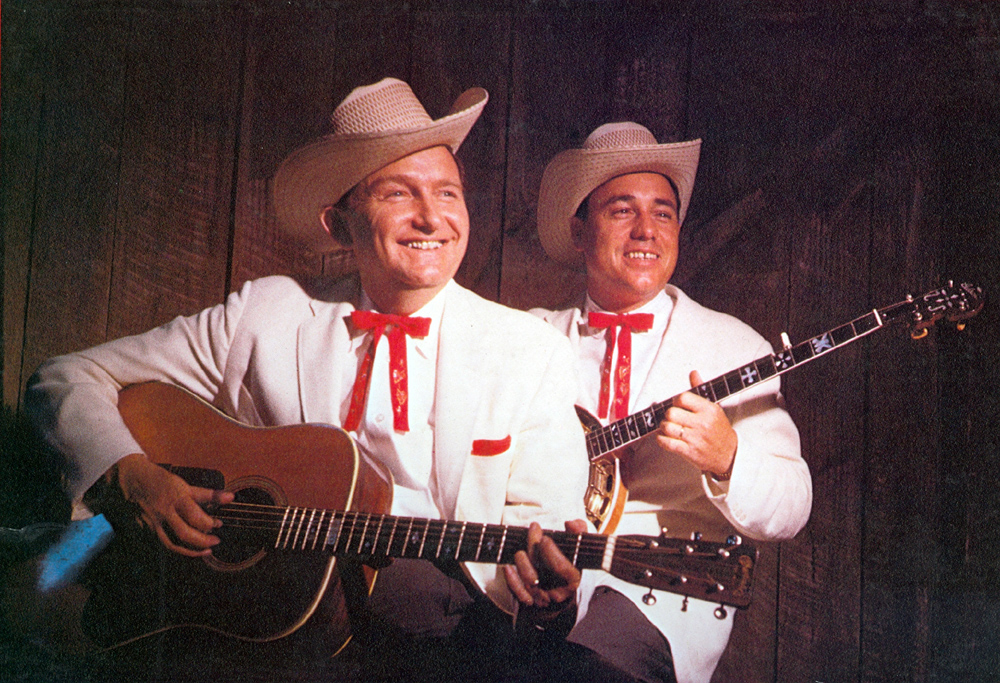
I first heard the song from Lester Flatt and Earl Scruggs and the Foggy Mountain Boys (which is why they are pictured above) on the Vanguard Newport Folk Festival 1960 album. This TV performance (right after Johnny Cash) is from about the same time:


Flatt and Scruggs recorded "Salty Dog" in the studio several times - interestingly, here with fiddler Benny Sims singing the lead instead of guitarist Flatt, who is featured in the previous video:


Nobody has ever done bluegrass better than Flatt and Scruggs - and Earl just turned 88 and is still performing.

Slightly more countrified and with that classic Nashville sound, Buck Owens and the Buckaroos:


Pop folksingers also got into the act with the number. Here is Sylvia Fricker (at the time, soon to be Sylvia Tyson) on the ABC-TV Hootenanny in 1963:


We can overlook the oddity of a lady singing this particular lyric because of the back-up group. Even through the grain of the video, you can see Ian Tyson leading off, with Scott MacKenzie next on 6 string, Bob Gibson on 12, John Herald ("Four Rode By" and the great 12 string riff on I&S's original "You Were On My Mind") on the first banjo, Journeyman Dick Weissman on the next banjo, and what looks to be Bill Lee on bass. Wowsers, as my students are wont to say at times.

The Kingston Trio also stepped up to the plate with their version of "Salty Dog." Please note how this version differs instrumentally from the preceding. There will be a quiz immediately after the recording.


If you noticed that the band that did as much as or more than any other folk group to popularize the 5 string banjo with non-country, mainstream audiences in the 1950s is not using one on this number - you get +500 extra credit points and an automatic A for the day. The 12 string intro and rhythm (likely played by Glen Campbell, who sat in on this recording) interestingly takes the song back closer to its African-American roots than do the banjo-based bluegrass arrangements above. Not bad for a bunch of crass and commercial popularizers, I'd say.

It's a fine and tuneful bit of slightly naughty fun - and maybe now we can all tell Bob Shane of the KT "what the hell is a salty dog" the next time we see him.

Thursday, January 21, 2010

A Trip Down To "Columbus Stockade"

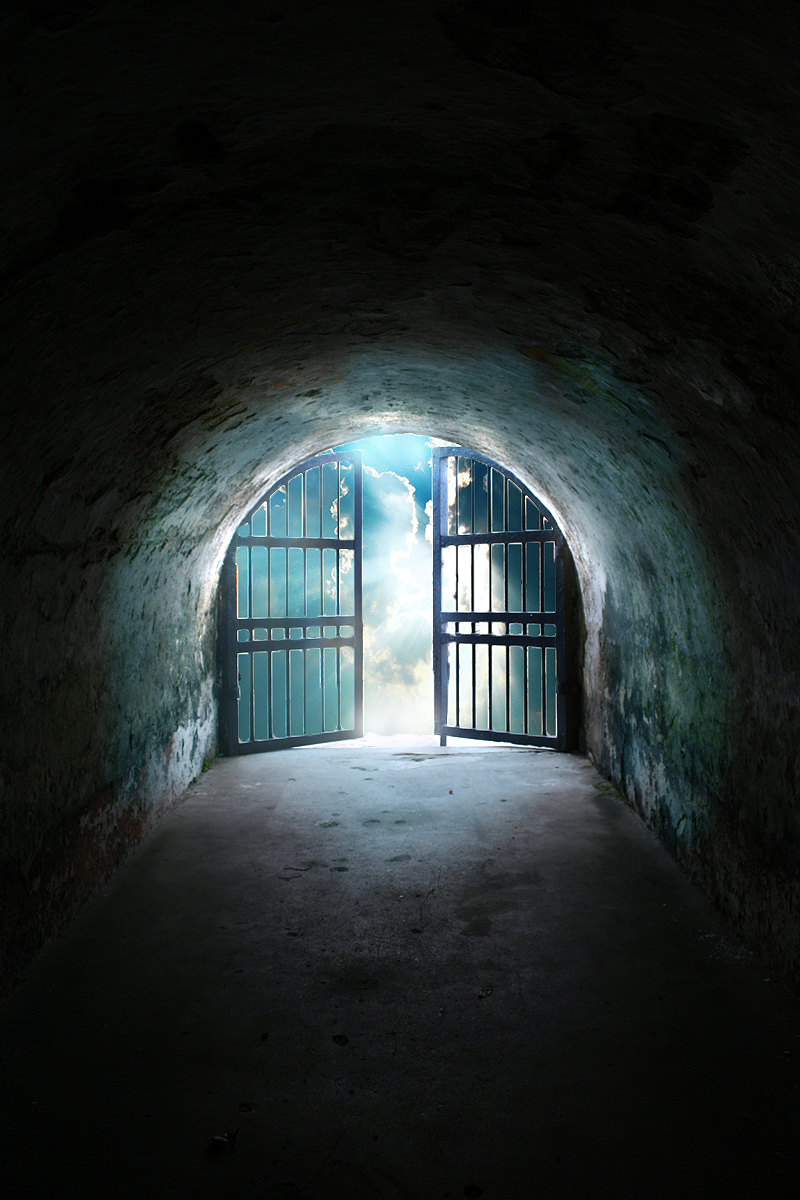
One of the most widely covered and often-performed of the early country/old-time (and eventually bluegrass) tunes, "Columbus Stockade Blues" is, like most good folk songs, of uncertain origin. The earliest recorded version (below) was copyrighted by Tom Darby and Jimmie Tarlton in 1927, but they were almost certainly using an older and likely well-known tune as the basis for their song, because by the 1930s and through every decade since, a multitude of singers and groups have re-arranged and recorded this prison song. Like its Texas counterpart "The Midnight Special", "Columbus Stockade" (the real stockade today in the picture) works as everything from a Delta blues number to an Appalachian two-part harmony in thirds to a banjo-based bluegrass burner.

It's always nice to save time and space for the music, so I was delighted to find this YouTube video that gives the background of the building and the song better than I could hope to:


The few lines of the song heard at the end of that video are Darby and Tarlton, whose first recording of the song sold over 200,000 copies in 1927 and 1928, a truly amazing number for the day. Of interest here is that the original version is fairly slow and bluesy, and Tom Darby is using a technique on guitar called from his time until I learned it in the 1960s "bottlenecking" - called so because the originators of the style, African-American Mississippi Delta blues players, created that sliding, whining sound by using the broken-off neck of a whiskey bottle* across steel guitar strings in an open tuning. Native Hawaiian guitarists were doing somewhat the same kind of thing and were all the rage in 1927. Darby is the first white musician I've heard playing in this style, which becomes the ancestor of the dobro and pedal steel guitar guitars heard in country music today.


If for nothing else other than historical interest - from all places, The Lawrence Welk Show in 1956, before there was an actual pop-folk revival. This version is from Welk regulars Buddy Merrill and Buddy Hayes with guest star Mary Stadler:


The Kingston Trio recorded the song as "Columbus Stockade" for their 1964 Back In Town live album, their last release of more than 20 LPs for Capitol Records. Trio founder Bob Shane's 1981 edition of the KT included the late Roger Gambill on guitar and a talented and versatile banjoist, George Grove. Shane was within limits trying to reproduce the original sound and arrangements of familiar Kingston numbers, though here the addition of Oscar Cisneros on percussion seems to belie that - and though George Grove is following the basic banjo line of John Stewart, he provides some of his own original embellishments:


And now, as of June 2013 and thanks to Capitol/EMI as detailed to the left - we can hear Stewart and the original KT recording from 1964:


One great artist deserves another, and I've shown a predilection in these articles for posting Marty Robbins videos. Marty takes Trio manic and Darby/Tarlton original and blends it into that velvet-smooth pop country that he could do like no one else:


Now for a pop-country-blues version from the '50s by The Browns, who had a number of hits with folk and country tunes:


More truly remarkable versions from Japan. The first is from Yoshio Ohno and dated 1960 - Ohno is apparently catching the country/bluegrass/cowboy wave that started in Japan in the 50s. Ohno's phonetic vocals are very good, and he's an excellent yodeler:


More recently, our friends from the group Back In Town in 2008 doing a letter-perfect replication of the '64 Kingston version:


Finally and just because I like the group and hope to see them out in Western Colorado some day - a group I featured on the "The Colorado Trail" post, the Bar D Wranglers with guest Cheryl Pickering:


Country Hall of Famer and Louisiana governor Jimmie Davis had a pleasant take on the song as well - :

http://www.youtube.com/watch?v=f3pSRVJ8Gv0

So many songs left to do, so little time.....

* My source was a beloved and long-lost book, Jerry Silverman's The Folksinger's Guitar Guide. It taught me, among other things, the rudiments of reading tablature, fingerpicking, bass runs - and bottlenecking.
____________________________________
Addendum, August 2013 

And I'm delighted to have found this 1963 version by Roy Rogers' old group, The Sons of the Pioneers: