Wednesday, May 23, 2012

Where The Walker Runs Down - Steve Gillette's "Darcy Farrow"

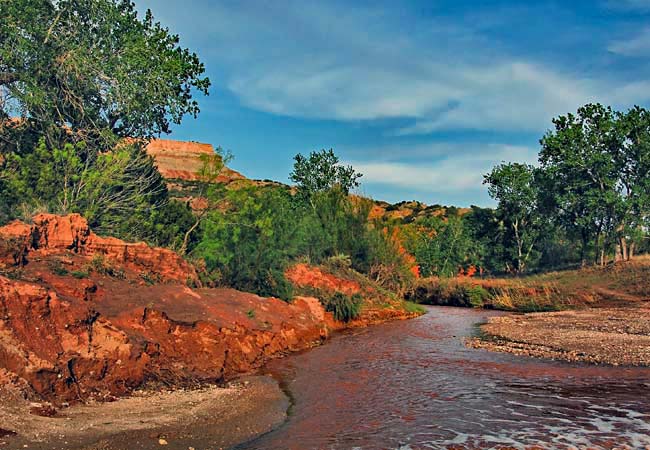
There was an urban legend circulating among my fellow coffeehouse folk performers in the late '60s that went something like this. Once upon a time, some time in the early 1960s, two enterprising young men were given what they regarded as an impossible assignment in a class in the UCLA department of folklore, one of the most distinguished of such university departments in the world. The assignment was to do some field work in folk music - to go off into a rural section of the Mountain West and find either a traditional song that had been as of then undiscovered, or a significant variant of a song already known. Well, our two young heroes made a valiant attempt to do so over a long spring break, covering hundreds of miles and visiting dozens of small towns in the rural Nevada/California border country in the shadows of the lofty escarpment of the Eastern Sierra and along the Walker River (pictured). Their efforts proved fruitless, and in desperate fear of failure on the assignment and perhaps in the class, the two decided to write an original song in a traditional ballad mode about a pair of ill-fated young lovers in the Old West and submit it as a "discovery." The song sounded so convincingly authentic that the professor of the class awarded them an A for the project. The students were alleged to have been Steve Gillette and Tom Campbell (who hailed from Nevada, not too far from the "Yerrington town" of the lyric) and their creation was what many a singer back in the day referred to as "the fake folk song, 'Darcy Farrow.'" There are variations on this tall tale, which has itself turned into a bit of folklore, but that's the way I heard it first years ago.

The tale is not nearly so far-fetched as our jaded 21st century media-saturated sophistication might have us believe. Only a bit more than a decade and a half before the real Gillette was a student in 1965 in Westwood, a bright young English lit major at the University of Virginia named Paul Clayton was hired as a research assistant by celebrated folklorist Arthur Kyle Davis and given just such an assignment. In the company of his fellow assistant Matthew Bruccoli, later America's most renowned scholar on the writings of F. Scott Fitzgerald, Clayton scoured the 'hills and hollers' of central Appalachia for several months and actually uncovered a number of variants of established folk songs and fragments of several that had been previously unknown, including two that Clayton appears to have fused into a song whose copyright bears his name, "I Feel Like I Gotta Travel On." Even later in the mid-1950s, at the urging of mountain dulcimer legend Jean Ritchie, American Diane Guggenheim (yes, those Guggenheims) went to Ireland on a similar mission, returning to the U.S. with a passel of hitherto unknown Celtic folk tunes and a very young Liam Clancy in tow.

Such doings lent an air of believability to the "Darcy Farrow" story, but alas! - it was cut from wholly fabricated cloth by what appears to have been none other than Ian Tyson himself. Ian and Sylvia were the first to record the Gillette/Campbell composition, and the liner notes on their 1965 Early Mornin' Rain album on which Darcy made her graceful debut are a bit vague about the song's origins. Gillette had been a major fan of the Canadian duo, catching their act as often as he could and eventually opening for the pair as the "local talent" musician at The Golden Bear in Huntington Beach, CA, where he and Campbell played a number of their own creations for the folk stars. It was "Darcy Farrow" that made the deepest impression, and Ian and Sylvia became the first of more than three hundred artists to perform and/or record the song, additionally employing Gillette as the opening act for most of their California engagements and helping him to secure a contract with Vanguard, the label on which they themselves recorded.

Gillette has told the rather more interesting real story of the song's composition in a number of interviews. "The song is based on something that happened to my little sister, whose name is Darcy. At 12 years old she was running behind her horse, chasing it into the corral, when she was kicked. She broke her cheekbone but had no other lasting effects; there was a three-day period where she was in the hospital, and we were all concerned she might have a concussion. During that time, my friend, Tom Campbell, my co-writer on the song, took a melody I had written and came up with a story about the two young lovers and the tragic fall. I was a little horrified about the idea since it was so dark and involved my sister's name, but as we worked with it and took it in the direction of the old cowboy songs, I was much more comfortable with it. So many of the old cowboy songs take their melodies from Scottish-Irish musical traditions." Gillette added to Jon Einarson in Einarson's recent Four Strong Winds biography of Ian and Sylvia that "The story that Tom and I wrote the song to fool a college professor isn't true, but Ian told that story for years. That wasn't the case. We really wrote it just as a song."

The very genuine and quiet loveliness of "Darcy Farrow" has moved scores of musicians to record it, each remolding it to fit his or her own skills and artistic visions. Still, as with many other great songs, the very best version may well be that by the composer himself - here is Gillette from his eponymous debut album from 1967:


"Darcy" was a highlight on an album full of highlights, including other tunes like "Back On The Street Again," which became a hit single for The Stone Poneys with twenty-year-old Linda Ronstadt singing the lead and which was covered wonderfully by The Sunshine Company and The Sandpipers as well, and "A Number And A Name," which I heard both John Denver and Michael Johnson perform live on different occasions. And lest we think that time must have its way with us - here is Gillette just a couple of years ago sounding as good as he did in '67, with his wife and performing partner Cindy Mangsen:


Ian and Sylvia's recording predated Gillette's own by a year or so, and the duo speeds the tune up a bit to that Canadian country tempo that they pioneered:


And in a moment of harmonic convergence, Ian and Sylvia included the aforementioned Ms. Ronstadt in their rendition for their 1984 reunion show. All the videos of this single performance have been taken down from YT for copyvio, but for some reason the whole show is still there. Ronstadt joins the Tysons for "Darcy" at exactly the 33 minute mark:


Ronstadt's third part lends a sweetness to the song that contrasts to the high lonesome sound of Gillette's original, and Ian and Sylvia have clearly slowed the tempo from their own 1966 recording...

...most likely because the highest profile that "Darcy Farrow" ever enjoyed was due to its inclusion in the 1972 multi-platinum Rocky Mountain High album that boosted another young singer-songwriter named John Denver into pop super-stardom - and Denver chose the slower tempo of Gillette's own first recording above:


This video is from the 1995 Wildlife Concert that Denver staged just two years before his tragically early death in a light plane crash. It was a wonderful show in most respects, though in many cases I preferred JD's earlier studio recordings of some of the songs. This "Darcy," however, is much better vocally than the '72 version and it fully and completely illustrates his most committed fans' contention that he was singing better at the end of his career than he was at its beginning. Even Denver's most rabid and contemptuous critics had to admit that he was a masterful showman, and this is a brilliant arrangement: note the gradual and sequential introduction of accompanying instruments verse by verse, the understated quiet of the performance, and Denver's own mellow, rounded, and emotional vocals. This video reminds me more than almost any other of how much I miss having Denver as part of the musical landscape today.

John McEuen and Jimmy Ibbotson, founding members of The Nity Gritty Dirt Band, reunited last year for an album and DVD called "Nitty Gritty Surround." This video is of only about half of the song and is a promo for the discs, but the arrangement and performance are so lovely that it needs inclusion here:


If you are not a Dirt Band fan - that's Ibbotson on lead vocals and McEuen, master of all things stringed, leading off the recording on guitar.

For something startlingly different, roots music star Nanci Griffith a capella, or almost so:


I will hazard the opinion that the light conga accompaniment is intended to evoke the canter of a pony without replicating it. Griffith's vocals have the slightly rough edge of genuine old time country music.

Matthews Southern Comfort is the name of several differently configured bands organized by UK roots legend Iain Matthews, himself a member of Fairport Convention and several other high profile groups. This performance is from a house concert in the Netherlands last June:


The piano accompaniment and vocal harmony make this version unique, and Matthews' singing is beautifully restrained.

Finally - in 1967, the Kingston Trio was at the point of disbanding after a ten year run, but the group wanted to put out a final album of contemporary numbers before breaking up. The three performers of the group, Bob Shane, Nick Reynolds, and John Stewart, each recorded in the San Francisco studio that they owned some rough run-throughs of songs that they planned to include on the record. However, when Decca (their label at the time) shelved the project, the unfinished tapes went into the vault for 40 years until Collectors' Choice Music resurrected them and released them in 2007 as The Lost Album. John Stewart, who was himself about to embark on a long and distinguished if under-appreciated career as a singer-songwriter until his death in 2008, laid down this very rough track of his take on "Darcy Farrow":


I had mixed feelings about making this video and posting the JS version to the article because his "Darcy" was never intended to see the light of day in this form. Stewart was a far better singer and guitarist than this shows, though you can hear the rudiments of what could have become a good recording here. Stewart had a tinge of loneliness in his voice that served him well on this track as it did in many of his own best songs, and a refined and finished cut might well have been a worthy one.

I have to say that despite my 40 years as a college teacher (or maybe because of them), I find the image of a couple of clever students snookering an old prof to be an appealing one somehow. But as is almost always the case, the reality of what Steve Gillette and Tom Campbell achieved with the writing of "Darcy Farrow" far transcends the myth of undergraduate hijinks that has become attached to the tune - because they succeeded in creating a song that does indeed and in fact evoke both the Celtic and Old West melodies that they sought to emulate and that is so well-crafted and so moving that we can be pretty sure that someone will be singing it a century from now when we are all naught but dust and bones. And that is what I would term a "real" folk song.

...And A Late Addition 7/5/2012

I just found this outstandingly arranged version by bluegrass band Chesapeake from their album Rising Tide - sublime harmonies and instrumentation:


Appendix

Steve Gillette has uploaded to YouTube two instructional videos on how to play "Darcy Farrow" as he wrote and performed it. It's worth pointing out how generous this is of Steve - after all, he could be charging folks for sheet music or tabs off of his website (which is HERE and which includes the one, true, accurate rendering of the lyrics to the song). There are plenty of far wealthier musicians who do just that. Hats off to Mr. G, who seems to understand that he has created a classic that has found its way into our popular folk culture.


Monday, May 14, 2012

Gordon Lightfoot's "Bitter Green"

Gordon Lightfoot's career as a performer and songwriter now extends back more than 50 years, starting with a 1962 album of folk-oriented songs with Terry Whelan as a duo called The Two Tones, whose repertoire demonstrated clear influences from The Weavers, Bob Gibson, the Kingston Trio, and classic country music. Later that same year, Lightfoot scored a Top 10 solo hit on Canada's country charts with a song of his own composition, "Remember Me I'm The One,"* which sounds a bit like it was written by Hank Williams and sung by Elvis Presley. It took another couple of years before Lightfoot got his songwriting feet under him: in his own words, his compositions "lacked an identity" until he began listening seriously to the early work of Bob Dylan and more particularly of Ian Tyson. Oddly, though, GL's songs never sounded much like either of those two artists whom he has claimed as mentors, though both Tyson and Dylan had a hand in promoting Lightfoot as a concert act. In what might at first seem even stranger, GL lists 19th century American composer Stephen Foster as perhaps his most important songwriting predecessor in shaping his own craft, remarking that what he most appreciated about Foster was the "simplicity and individual character of each melody. We all took Foster songs in school and some of that rubbed off on me. I was always a fan of Stephen Foster."

The two compositions that brought Lightfoot his first wide notice in the U.S., "For Lovin' Me" recorded by Peter, Paul and Mary at the height of their popularity and "Early Mornin' Rain" recorded by virtually everyone who sang folk or country in the mid-60s, are characterized by a hard-bittenness that borders on cynicism, and those are two terms that just don't pop into your head when you think of "My Old Kentucky Home" or "Swanee River" or most any other Foster classic.

But the connection is definitely there, and on several levels. First, Foster was a commercial songwriter who nonetheless had a profound understanding of both serious music and the folkways of the country. Lightfoot studied composition and voice in the late 1950s at the now-defunct Westlake School of Music in Los Angeles, and there is a complexity to some of his melodies and instrumental accompaniments that goes well beyond the usual three chord perimeters of the folk and country music that he grew up listening to. Further - though Foster was a lifelong Northerner who lived mainly in Pennsylvania, Ohio, and New York, his songs are primarily identified with the American South. Lightfoot is a native of Ontario, which is sort of the Ohio of Canada - not east enough to be East and not west enough to be West - but except for "The Wreck of the Edmund Fitzgerald," his compositions often wander off to Canada's Rocky Mountain west or Maritimes/Nova Scotia east.

The most important Foster/Lightfoot link, however, may well be in the emotional landscapes explored in their songs. Both composers are unabashed in the open romanticism of many of their best lyrics, with Foster often yearning for a mythic and nostalgic past and Lightfoot frequently mourning love either lost or carelessly tossed away. Both writers seem to dance on a cliff's edge, always in danger of losing their footing in honest feeling and plunging into a sinkhole of mawkish sentimentality - and both have been accused of doing exactly the latter.

At their best, however, Foster and Lightfoot combine genuine emotion with deceptively simple-sounding melodies and the imaginations of great storytellers. Though not one of GL's high profile hit records,"Bitter Green" demonstrates all of those qualities and has been a favorite of Lightfoot aficionados since its appearance on his fourth studio album, 1968's Back Here On Earth on the United Artists label. "Bitter Green" has a lovely melody, and in the mode of many fine traditional songs like "The Escape Of Old John Webb", it supplies the listener with just enough detail to establish a kind of plot, the rest of which must be created in each person's individual imagination. We start with the original '68 GL studio recording:


The instrumental backing here is supplied by Red Shea on lead guitar and John Stockfish on bass, the pair who supported Lightfoot on all of his UA albums. For me and for many long-term GL fans, Shea and Stockfish created the best and purest accompaniment that Lightfoot ever enjoyed. Shea especially is taking the basic major and minor chord accompaniment and embellishing it with fifths and an occasional major seventh - which just means that the accompaniment is rather more complex than you'd normally expect in a simple folk ballad of lost love.

Just a couple of years after the original recording, Ireland's The Johnstons added a bit of Celtic-flavored close harmony to the song:


In addition to the harmonies that lend the song an even more ethereal quality than the original, the accompaniment features two 12 string guitars playing off each other, which is something you don't hear every day in folk music (and in fact had been one of the most unusual aspects of Erik Darling's The Rooftop Singers, which is a tale to be told another time).

The Idle Race was a well-regarded English Midlands rock and folk-rock group of the 60s, a precursor of sorts to the Electric Light Orchestra:


This 1971 version moves along with a percussion and guitar rhythm that seems to anticipate the soon-to-appear country rock phenomenon of the Eagles and their cohorts in the early 70s.

American bluegrass legend Tony Rice, one of the finest flatpickers since Doc Watson, recorded a mid-90s album of Lightfoot tunes called appropriately Tony Rice Sings Gordon Lightfoot, and "Bitter Green" is one of the highlights:


Rice here demonstrates a genuine interpretive artist's ability to translate a song across genres. I would never have thought it possible to take so quiet a ballad as this and turn it into a bluegrass number - but I don't possess the spark of genius that Rice has. A great cut, IMHO.

The New Kingston Trio was organized by KT founder Bob Shane in 1969, two years after the original group had disbanded, and Shane was seeking to broaden his new group's repertoire and contemporize it with singer-songwriter selections popular at the time. This rough bootleg recording from 1971 (with Pat Horine and banjo master Jim Connor) gives some indication of the direction in which Shane wanted to take his group:


Shane has said that he thought there might be a studio recording of the NKT doing the song somewhere but that it seems to have been lost. He has also said he regrets that because he really liked the song.

Finally - veteran Canadian folkster Valdy has performed the song for decades, here from October 2010 in Nova Scotia:


Note how much of this Canadian audience is singing along with the performer...

...and that is because in the last half century Gordon Lightfoot's music has embedded itself in Canada's cultural consciousness fully as much as has that of Ian Tyson or Joni Mitchell or Neil Young. Lightfoot has garnered more than his share of awards for his career, though Americans seem seldom to place GL on as lofty a pedestal as those others, possibly because of the very transparent emotion of his songs that make compositions like "Bitter Green" so beloved. But that transparent emotion is part of what has enabled Stephen Foster's songs to remain popular 150 years after their composition, and I'd bet that if you asked Lightfoot if he would rather be equated with Neil Young now or with Stephen Foster in a century or so, I think I know what he would say.
_________________________

*Here is a very early video of GL singing "Remember Me I'm The One" right after the dancing stops:

Friday, May 11, 2012

"Pay Me My Money Down"

I saw on FaceBook that today is the 31st anniversary of the death of the legendary Bob Marley, the musical genius who was probably more responsible than any other individual for the popularization worldwide of reggae music. I've often thought of reggae as an acquired taste for many of us who were already grown up when the genre took shape in the late 1960s and 1970s. The musical emphasis on the counter-beat moves syncopation to a new and initially unfamiliar level to those of us who grew up on 4/4 time and 3/4 time standard rhythms, not unlike the effect of the really far-out jazz of a decade or so earlier of Charlie Parker and Theolonious Monk and Dave Brubeck.

And that reggae revolution all but erased the older and more familiar calypso genre from the mainstream of popular music, a really significant erasure if you recall that for a few years in the mid-50s calypso was the most prominent form of pop in a craze that was spearheaded by the phenomenon of Harry Belafonte, one of the first black American musical artists whose crossover appeal far past the restricted areas of blues and jazz presaged in many ways the social upheavals that were to come in the Civil Rights era. Belafonte was a singer's singer, an artist who never limited the material he performed to a single genre and who started his professional career as a Greenwich Village folksinger. His Calypso album of 1956 on RCA Records is a landmark in American musical history as the first recording certified to have sold more than a million copies, and nearly every song on the record has become a pop standard - "Day-O (The Banana Boat Song)," "Jamaica Farewell," and "Will His Love Be Like His Rum?" to cite three. The album gave a boost to the careers of both the Caribbean originals from whom Belafonte learned the songs and to American folk groups like The Tarriers and The Weavers who had already included Jamaican and Bahamian songs in their repertoires.

Belafonte was born in New York City of Jamaican parents, and it was from them and from his trips to the island to visit relatives that Harry B first heard the music. The irony is, though, that to scholars what Harry was hearing and singing was not actually calypso music at all, which in its narrowest academic definition can only be from Trinidad and Tobago, whereas similar music from Jamaica must be called mento. So fine a distinction never reached the consciousness of the executives at Victor or the American population at large, and "calypso" came to be the preferred term for all Afro-Caribbean music before reggae.

What we call calypso today was markedly different from reggae in more than rhythm. Calypso music was derived largely from the work songs of black sailors and stevedores and not from the political sensibilities of individual writers as much of reggae is. Even the great calypso composers like Lords Kitchener, Invader, and Intruder were generally basing their compositions on older songs from the docks and fields. And the overwhelming popularity of the genre was such that songs that had originally been 4/4 folk songs were re-cast in the 6/8 calypso rhythm, songs like "Bay of Mexico" for example - or "Pay Me My Money Down."

However old "Pay Me My Money Down" may be, it was first "collected" for publication from dock workers in the Georgia Sea Islands in 1942 by Lydia Parrish, but it must have emigrated to the Caribbean well before that because it was being performed on radio by Lord Kitchener by 1946. Kitchener's lyrics differ somewhat from those published by Parrish, but the basic storyline of a somewhat comical and ill-fated adventure at sea of a roguish working stiff is common to both.

My favorite version of "Pay Me" currently available is the solo effort from 2008 by Bob Shane, the last man standing of the original Kingston Trio, a group whose repertoire in its earliest days and its very name evolved from the '50s calypso craze:


This is classic calypso rhythm and instrumentation, at least as those came into mainstream American pop. Belafonte's recordings often also included steel drums and brass instruments, but the "folk" nature of the genre is on display here more effectively.

Fifty years before that recording, Shane's Kingston Trio was rehearsing the number and testing it out on audiences at San Francisco's Purple Onion nightclub:


A more refined version of the song by the Trio appeared on the CD release of the group's Stereo Concert album, but I prefer the wild energy of this early cut.

The song resurfaced in pop music with Bruce Springsteen's 2006 album and tour that the Boss called "The Seeger Sessions" because the repertoire consisted of largely re-imagined American folk tunes that had been recorded fifty years early by Seeger, or rather in most cases by Seeger's Weavers. While YouTube includes a number of uploads of Springsteen's live version from the tour, I prefer this folkier promo video from 2005:


Springsteen's comments after the song are worth a listen as well - I find his extolling of acoustic instruments somehow amusing. But this cut, which the Boss used to open many of the shows, demonstrates I think Springsteen at his best with this folk material. I thought that the Seeger experiment was a mixed bag: Bruce's attempts at Anglo-American songs fell flat for me, but the spirituals and other African-American songs like this succeeded. Love that touch of zydeco as well.

More recently - a couple of weeks ago, in fact - an Irish folk supergroup consisting of contemporary singers Paul Kelly, Mick Hanly, Eleanor Shanley, Séamus Begley and Frankie Lane and calling themselves "Folk The Recession" posted this Springsteen-influenced version on YouTube:


And continuing with the European flavor - Sweden's young soloist Alexandra Jardvall gets her audience singing along in 2010:


I wish that folks would leave Bruce's off-tempo syncopation to Bruce alone - but I can't complain too much because I have a weakness for throaty alto voices like Jardvall's.

You can trundle around YouTube and find fifty more people channeling Springsteen, and that's fine. As a closer here, though, I thought it would be interesting and fun to include the pop-song hit "Cindy, Oh Cindy" by Vince Martin - the melody will be instantly recognizable as a rewritten version of "Pay Me":


The group backing Martin is none other than The Tarriers, one of the few pre-KT groups to have an actual acoustic folk hit, the calypso "Marianne."

"Pay Me My Money Down" is a two-chord song and consequently is one of the first songs that a number of my guitar playing friends ever learned (mine was "Good News). In folk music, such simplicity is a virtue, and I think that may be what Bruce Springsteen is trying to get at in his comments after his performance of the song in the video above. Elaborate arrangements are what people quite rightly pay to see and hear - but what keeps a song alive is its sing-ability, and "Pay Me My Money Down" certainly has that.

Addendum - May 12, 2012

I'm delighted to have the comment below from "Ranzo" (fine sea chantey name that is), who is Hulton Clint. Hulton has created a YouTube channel dedicated to his renditions of and comments on "chanteys of the seven seas," and his total video view are just under 2 million. Hulton has himself an extended discussion of the nature and history of "Pay Me" on his YouTube upload of the original version of the song HERE, and I'm delighted to present his video below. Thanks, Hulton!


And Further - May 22, 2012

I had intended to include this version of "Hey Li Lee Li Lee" in the article above because it is essentially the same song as "Pay Me." This is a trademark Limeliters number from 1961, featuring a their typically slightly naughty lyric and excellent audience participation:

Friday, May 4, 2012

Innocence Regained: Donovan's "To Try For The Sun"

I sit here quietly on the evening of the 4th of May, reflecting on the terrible events of this date 42 years ago when National Guard troops fired live ammunition into a crowd of student antiwar demonstrators at Kent State University in Ohio, killing four and wounding nine. American soldiers firing on American students - it was something that I never expected to see in my lifetime. It was a page out of a history book, something that might have happened in 1864 or 1893 but surely not in 1970.

I was a few weeks short of my 20th birthday - and days away from an accident that grew indirectly out of this event and that very nearly ended my own life. I had already experienced, like everyone else my age, a series of traumatic national shocks: the Cuban Missile Crisis where we went to bed in October of '62 not knowing if we would be alive in the morning; the assassinations of JFK, RFK, Martin Luther King, and Medgar Evers; riots and violent demonstrations in Detroit, Los Angeles, my own home of Chicago; nightly news film of the carnage in Viet Nam; the general tearing apart of the social fabric of the country as a whole. I have read and heard it said that the 1960s began with John Kennedy's murder and ended with Watergate - but that is a kind of academic untruth, one that a professor or political pundit might espouse but not one shared by those of us who were on the ground living out those years. No. The 60s began with the ringing rhetoric of Kennedy's Inaugural - "Ask not what your country can do for you - ask what you can do for your country" - that ignited a burst of idealism in a generation of the young, and it ended in the utter and complete disillusionment of tear gas and blood in Kent, Ohio just under a decade later. May 4, 1970 is a line of demarcation in the nation's history, even given all the disasters cited above. Things have never been quite the same since that day. Whatever was left of our national innocence after the travail of our first two centuries expired on what had been a quiet university campus in America's midwestern heartland.

Or so it might seem were we all not aware that these are always someone's good old days, to crib a line from Carly Simon, and if the nation's identity and self-image and belief in the efficacy of politics and government to do good have all been seriously eroded in the last four plus decades, two subsequent generations have been born and come of age in those years, and for the young, the great world is always new and enticing and exciting and rife with the sense of limitless possibilities that all of us elders once harbored as well. "Your young men shall see visions," says the Good Book, " and your old men shall dream dreams." Amen to that.

If our elder dreams are of times long past and worlds that we have lost, those of the young are often colored by the hunger for the kinds of experience that we mature folks often recall ruefully. Taking an intercity Greyhound bus or long haul passenger train, for example, seemed desperately adventuresome and romantic when I was twenty; I doubt that today I would find the stench and the discomfort and the seediness of either quite so enticing as I did then. But that is not a failing or a descent into cynicism - it is simply part of the normal progression from innocence to experience, from ignorance, really, to knowledge. We should know more at 60 than we did at 20 - but we should also treasure the existence of those places in our hearts where the dreams of the boys and girls who we once were yet survive.

For my money, nothing quite delves into that secret repository as effectively as any song that I loved as a youth that celebrates youth itself, and just such a song is Donovan's "To Try For The Sun." I had my general say about Mr. Leitch a few weeks back in a post about "Colours", and writing that article reminded me of how much I loved the unabashed innocence and idealism of his best compositions, of which "To Try For The Sun" is certainly one. Written as Donovan himself notes in the first video below in 1964 when the composer was 18, "To Try For The Sun" not only embodies much of the best of youthful idealism - it also stands in stark contrast to the anger and disillusionment that was already beginning to characterize quite a bit of the other really good music coming out at the time.

Donovan has always performed the song, and in our first video from 2007, he provides a little background about the writing of it:


His original recording was a bit faster and included a great verse that he omitted in the video above - "We sang and cracked the sky with laughter...":


Several subsequent artists have changed the phrase "gypsy boy" to "gypsy girl," thus transforming the tune into a romantic story of a young couple. One of the best versions of these is that of Nemo Shaw, a young UK musician with a 60s sensibility who like Leitch himself is a Scot:


Shaw's voice, timbre, and intonation remind me a bit of a young Graham Nash.

John Stewart was one of the best songwriters of his generation, but in his last days as a member of the Kingston Trio he recorded "Try For The Sun" as a solo for an album of more contemporary songs than the Trio was accustomed to doing. That album was shelved until 2008, the year of Stewart's untimely death:


This is an unfinished cut but one that showcases some of Stewart's best qualities as a performer - thoroughgoing professionalism as a guitarist and that strangely affecting throaty singing voice that evokes a kind of loneliness that is perfect for this lyric.

Lindsey Buckingham is one of the scores of artists younger than Stewart who has acknowledged JS as a major influence on his own singing, writing, and instrumentation. The Stewart-Buckingham connection is not apparent at first glance in Lindsey's arrangement of "Sun" because the erstwhile Fleetwood Mac stalwart has gone all electrified folk-rock with his performance:


While I can't say that I like this version as much as some of the others on this page, I do enjoy Buckingham's restless experimentation and his willingness to take a chance at reinterpreting a classic in a wildly different mode.

"To Try For The Sun" touches me deeply and reminds me of who I once was. It also reminds me of the closing speech in Tennessee Williams' The Glass Menagerie, one of the great creations of the modern theater and a play whose very theme is about an older man remembering the scenes of his younger days:

I followed in my father’s footsteps attempting to find in motion what was lost in space. I traveled around a great deal. The cities swept about me like dead leaves, leaves that were brightly colored but torn away from the branches. I would have stopped but I was pursued by something that always came upon me unawares, taking me all together by surprise. Perhaps it was a familiar bit of music. Perhaps it was only a piece of transparent glass. Perhaps I’m walking along the street at night in some strange city before I have found companions. And I pass a lighted window of a shop where perfume is sold. Windows filled with pieces of colored glass. Tiny transparent bottles and delicate colors like bits of a shattered rainbow...

That "shattered rainbow" is nothing less than the character's sense of loss over what he most valued as a youth. For me, however, a fine song like "To Try For The Sun" obliterates all the years between then and now - and takes me squarely back into the heart of youth's adventure.


Addendum - May 6, 2012
Donovan was inducted into the Rock and Roll Hall of Fame this year on April 14th. The show was broadcast last night on May 5; here is a cell phone video from the event of "Sunshine Superman":

Thursday, April 5, 2012

"Over The Hills And Far Away"

I had initially thought to title this post something like "The Second Life Of A Song," but I quickly realized that that would be disingenuous at best - because "Over The Hills And Far Away" has never been out of print or performance since published versions began appearing in 1706 in Thomas D'Urfey's Pills to Purge Melancholy. The air for "Hills" has been used as a lullaby, a satire, songs in musicals and operas, regimental marches in the British army, and recruitment music - not bad for a humble folk tune whose obscure origin in the 17th century was most likely as a love ballad, probably from Scotland.

But inasmuch as "Over The Hills" has, like the poor, been always with us, its inspired selection nearly 20 years ago as the theme song for the popular BBC series Sharpe has nonetheless raised its public profile to a visibility it has likely not enjoyed since the Napoleonic Wars of the early 1800s depicted in the dramas, which were based on the character of Richard Sharpe created by English author Bernard Cornwell in a series of 24 novels and stories. In casting the films, with Sean Bean (above, center) in the title role as the able but volatile commoner Sharpe who rises into the officer corps of Wellington's army, the producers made the fateful decision of naming John Tams (above, right) in the pivotal role of the roguish sharpshooter Hagman. They knew Tams to be an accomplished stage actor; what they were not initially aware of was that his main occupation was as a folk artist - and he happened to have a unique arrangement of "Hills" in his repertoire, an arrangement that he tweaked in both lyrics and instrumentation with his co-composer of the series' music, Dominic Muldowney, to fit the demands of the show. Though not wholly traditional in lyrics, Tams' verses are derived from actual 19th century broadsides of the song and his chorus is a variant of what was actually sung by the soldiers of the time. It's a wonderful "modernized folk" arrangement performed by Tams himself:


What the British soldiers of the day would have heard in the field, though, likely would have sounded more like this version - fifes and percussion only.


But the aforementioned earliest printed version was a lost love song that quickly morphed into a quiet lullaby or children's song, here performed in a lovely duet of mandolin and flute played and sung by Hilary James and Simon Mayer:


Within two years, though, D'Urfey had republished the song as "an excellent new copy of verses upon raising recruits. To the foregoing tune" right in the middle of Queen Anne's War of 1702-1713 - and we have the first use of the air in a military context. Here in this video (performed possibly by a contemporary group called The Druids) you can hear the chorus singing "Queen Anne commands and we obey" instead of the 100-years-later "King George" of Tams' rendition:


One of D'Urfey's friends and collaborators was a younger man, John Gay, author of a classic of British and world literature, The Beggar's Opera (1728), the still-funny satire on class pretensions and opera whose main character, MacHeath, is an icon of dramatic literature, so much so that Bertolt Brecht and Kurt Weill took Gay's 18th century classic and turned it into a 20th century one, The Threepenny Opera. Brecht and Weill rewrote the music, turning highwaymen/cutthroat MacHeath into "Mack the Knife"(and yes, that's the song that Bobby Darin sang). For his original, though, Gay took ten songs from D'Urfey, including "Hills" converted into a lovers' duet - "Were I laid on Greenland's coast..." with Sir Laurence Olivier doing an unexpectedly fine job singing:


Regular readers of these pages know that I have a soft spot for amateur performers, especially young ones who are keeping folk songs alive. The two unnamed very young ladies here do a commendable and creditable job with Gay's Greenland lyric:


To close, we return to professional Tams, who has made "Over The Hills" his closing number for many years now. Here he performs only with his longtime collaborator Barry Coope on keyboard - and the audience singing along quietly in this slower, quieter, almost mournful arrangement:


The many variations here of "Over The Hills And Far Away" point to what I think are many of the strengths of folk music. The melody in all its forms is beautiful, by turns stirring and martial, and romantic, and melancholy. Except for Gay and his conversion of the folk song into a theater piece, the lyricists of the very different versions above are unknown - but genuine poets, each one. And to whatever uses our composers put the common line of the chorus - the song's title - have we not all dreamed and wondered, and do we still not dream and wonder, if we will some day ourselves go over the hills and far away?

"Red River Shore" and "Hanna Lee"

This is a half post, really. I'm working on something rather more involved for this week, but these two songs are ones I loved as a youth many a decade ago, and though there aren't many different takes on the tunes, I thought it might be fun to take a brief look at each.

The inception of this page was, as noted at left, in posts that I had made for the wonderful Kingston Crossroads message board, a great site for discussing all topics folk and roots related, though of course the prime focus is on the Kingston Trio, its 55 year history and recordings, and the doings of its current incarnation, which has just released the first CD in decades of all-new material by the group, Born At The Right Time - more on this to come. Most of the more than 140 songs discussed on this site have been recorded at one time or another by the KT, including many now very familiar tunes first waxed by the Trio years before the later hit versions.

A fair number of the more than 250 songs that the group has put on albums, though, are unique to them, as I had thought that both "Red River Shore" and "Hanna Lee" might have been. Not true, as it turns out - and both numbers have an excellent pedigree as folk-flavored pop tunes.

The copyright for "Red River Shore" is assigned as "Adapted by Jack Splittard and Randy Cierley." The former is the pseudonym that the KT adopted for copyrights that the three musicians wanted to claim jointly, much as "Paul Campbell" had been for The Weavers - albeit with the KT-ish humor of splitting the jack, a now nearly archaic term for money. Cierley, however, is a very real person who figured in the late stages of the Trio's first decade; he has had a fascinating and somewhat harrowing life and musical career that he chronicles in a great website HERE. It's certainly worth a look: Cierly has worked with some of the greats and has endured more than most of us ever will. In his youth, though, he worked as a musician and arranger on some of the cuts on the Kingstons' failed attempt at folk-rock, Something Else - though this arrangement of a traditional song works somehow mysteriously for me:


The organ and military-styled snare drum are rather less obtrusive than the rock instrumentation is on most of the album's other cuts. John Stewart has the lead spoken vocal, as he did on a number of other KT songs.

Cierley's and the Trio's changes to the original song are apparent when you listen to a version from five years prior by the Norman Luboff Choir, a wonderful chorale that I remember most for supporting Harry Belafonte on a number of his 1950s and 60s albums:


Aside from the alterations to the tune and some creative shifts in the chordal accompaniment, the biggest difference is clearly in which of the doomed couple dies, and why. It's an easy inference that Cierly and the Trio were adapting the song under the long shadows of Marty Robbins' "El Paso" (though Randy remarked recently that he was "pretty sure that 'El Paso' had nothing to do with it" directly) and the Trio's own last Top 10 singles hit, "The Rev. Mr. Black", a number also with verses spoken by Stewart. Thus, we get a shoot-out and some dying words instead of a suicide and accompanying note. Except for its clearly derivative nature (and its clear inferiority to Robbins' classic), I prefer the KT arrangement here.

"Hanna Lee" was co-written by Richard Mills, about whom I can't find anything, and the rather higher profile Stan Jones, who wrote "Ghost Riders In The Sky" and the theme song for the old Warner Brothers western Cheyenne, both of which are enough to endear Jones to any child of the 50s. In case you've forgotten -


Jones is a member of the Western Music Hall of Fame, and his page there is, like Cierly's, a fascinating look at the man's life in and out of music.

"Hanna Lee" is a bit of western fluff, reminiscent of the much superior Wilkins/Dill "Long Black Veil" though HL preceded LBV by several years. The Kingstons had had great success with earlier recordings of hanging-after-murder-for-love songs; though this is a decent cut, the band may have gone to the well once too often:


Other versions were recorded by major 50s pop star Guy Mitchell:


I like the "reckless lovers/pretty devil" line - and Johnny Western is also in the Western Music Hall of Fame as both a performer and as a radio personality:


Next up - something more traditional.