Thursday, January 14, 2010

Remembering John Stewart - "July, You're A Woman"

As we approach the second anniversary of the passing of John Stewart (1939-2008), it's a bittersweet pleasure to reflect back on all that his artistry has contributed to the musical lives of folk music devotees of many stripes. Stewart was one of the originators of the singer-songwriter movement (a "folk patriarch," said the Los Angeles Times obituary), a country folkie before Poco or the Eagles, an occasional rocker, and a poet with his lyrics first and last. He breathed new life into the Kingston Trio when it was on the verge of commercial extinction with the departure of Dave Guard, helped to alter its direction, and in his own modest words "kept a good thing going." His songwriting for the Trio supplied it with its own original material and helped to launch him into his own distinguished if under-appreciated forty year solo career.

At the Malibu memorial in May of 2008, it occurred to me that because of "Molly Dee" to start with, Stewart had been a presence in my own life for just under fifty years.

Folk fans in general seemed to turn Stewart on and off, giving sales boosts and attention to some of his albums (usually after a song on one of them had become a hit for someone else) but not to others. Among Kingston Trio fans, while there are many, many who followed all or part of Stewart's solo work, there is also a significant segment that either didn't pay attention to what JS did after 1967 or (and this was one of Stewart's peeves) didn't like it because he didn't sound like he did in the KT. Shades of Rick Nelson's song "Garden Party."

While as far as I know John Stewart always treasured his time with the KT, he was on stage at least through his long performing career at times ambivalent about it. In the early years of the 70s especially, I'd see him at venues around LA where a noticeable segment of the audience who had shown up to see a former Kingston stalwart seemed perplexed or annoyed at the electric and countrified sound he was producing at the time. JS would return the favor, at times with asperity, if someone asked him to do "The Reverend Mr. Black" or "New Frontier." "I don't do Kingston Trio songs," I heard him reply, curtly, on several occasions. An equal number of times he would laugh the suggestion off with one of his trademark quips, smiling all the while.

But he wouldn't do the song.

In the mid-80s when he reunited with Nick Reynolds for The Revenge of the Budgie album (which included only one former Trio song), there seemed to me to be the beginning of a shift that included a full solo album of songs he'd written for the Trio (The Trio Years), a brand new folk group in the 90s (Darwin's Army), the re-emergence of his banjo playing (including on the Pete Seeger tribute album) - and the frequent inclusion in his performing repertoire of re-imagined versions of songs he'd done with the KT like "Chilly Winds" and "Run The Ridges," to name two of many.

And the eight fantasy camps he ran from 2000 to 2007 seemed to unify it all, as Stewart would perform his own current songs while at the same time celebrating the life and times of the Kingston Trio.

So it's fitting, I think, that our song for this week should be one of Stewart's best and most popular numbers from the landmark California Bloodlines album - one that within a year of its release Bob Shane's New Kingston Trio had recorded - "July, You're A Woman." Stewart performed the song a number of different ways through all those decades - but never better than on the Bloodlines recording here (and since in 2013 Capitol Records relaxed its block on some YouTube postings, in this delightful video version I first posted in 2010 by "WildWestRosie," entirely in keeping with the spirit of the song):


I have to confess getting a bit of a chill and a tear when I listen to this - it was the first solo JS number I heard, in August of 1969. It grabbed me right away and hasn't let me go since.

It must have grabbed Bob Shane, too - the New Kingston Trio performed the song, here in a track I cribbed from Rick Daly's FolkUSA, a concert bootleg from about 1970. Even through the fuzzy audio, the power of Shane's vocal shines through. It's got a fine banjo part by Jim Connor and good harmony as well:


Another bootleg of the NKT, this one much clearer, from 1971 and posted to YouTube in 2012 by my friend Max Schwartz:


And now, for the peculiar, the odd, and the seldom heard - the Pat Boone version. Uber-Christian Boone felt the need to sanitize the PG lyrics, to a slightly strange effect:

(Well, the CopyVio folks got Pat, at least for the moment. If he comes back, we'll re-post.)

December 2011 - Pat's back! - at least temporarily:

June 2013 - Pat's Gone Again!

April 2015 - Pat's Back Again! For How Long???


To be fair to Boone, though, it has to be said that he had always been a Kingston Trio fan, had featured the group on his show when he was at the height of his popularity, and had appeared with them at a landmark concert at the Santa Monica Civic Auditorium in April of 1961, shortly before original KT member Dave Guard left - replaced by John Stewart.

Probably the best-known version of the song after Stewart's own is that of alternate-country rock band Mickey and the Motor Cars. I find a weird charm in this - go figure:


Not surprisingly, the easy pace of the song converts easily to bluegrass, and two of the best versions out there are from bluegrass/country groups. First - I just came across this fine version from the great Australian cowboy singer Reg Lindsay, who had an enormous effect on popularizing American folk and country songs Down Under:


I really like this version from a concert by Frank Solivan and Dirty Kitchen:


And finally, a very young country-superstar-to-be Vince Gill sings the lead in this mid-70s version by Mountain Smoke, the group that gave Gill his start in the music business:


There is so much more to be said about the legacy of John Stewart - I'll be posting some more links and videos over the next few days. For tonight, I'd like to give the last words of this piece to an anonymous YouTuber who on the day Stewart died posted a comment under a video of John Stewart's song "New Frontier" -

"Faith, pride and optimism. John you will always come back to us when we need you."

Amen to that.

Thursday, January 7, 2010

"Riu Riu Chiu/Guardo Del Lobo"

Two of the facets of earlier folk music albums that I loved were the number and variety of foreign language songs, most of which were at least rooted in the traditional music of their respective countries. The leader of the pack in this regard was the Weavers, who included songs from around the world in both their recording and performing repertoires from the start to the finish of their career. Bud and Travis and the early Kingston Trio are probably in second place, with the Trio emphasizing Spanish, Mexican, and Polynesian songs but also including French, African songs from different languages, and those two odd German language numbers that never made it on to an American album until the CD re-issue era. One of the things that I missed in the later KT records as they moved from what had been at least traditionally termed "folk" to singer/songwriter and pop music was their abandonment (largely) of sea chanteys and "world" folk songs, both of which had been strong components on their early albums.

There was a risk inherent in singing songs in a non-native language, not the least of which was the necessity for at least one group member or another to learn the lyrics phonetically, even given the possibility of the other singers actually knowing the language or at least the meaning of the song. Both Bud Dashiell and Travis Edmundson were fluent in Spanish, and that fluency lent an air of authenticity to the largely Mexican songs that they recorded. Bob Shane and Dave Guard both grew up in Hawaii and attended Punahou School, where classes in Hawaiian culture were mandatory; they sang a number of Tahitian songs by ear but seemed to have known the Hawaiian songs from the inside out.

I always suspected that at least Guard and Shane knew some Spanish, and given Nick Reynolds' Coronado, CA roots (near the U.S.-Mexico border), I'd be surprised if he did not as well. Their pronunciation of the language is usually good, if not quite native quality (listen to Shane's pronunciation of "Jesus" in today's recording - it ought to be "hay-ZOOS" and not "JAY-zoos"), and their feel for the music is also good (I have in the past pointed to the distinctively Mexican flavor to the guitar work on "Deportee" and could do so on other songs like "En El Agua" and even "Coplas" as well).

But even with that, the group is taking quite a risk in recording "Guardo Del Lobo"(the correct title, according to a commenter from Spain on YouTube) because of the song's age and because it is the only number I can think of at the moment that they ever recorded a capella. The actual title of the song is from the first line, "Riu Riu Chiu," said to be Spanish nonsense syllables that attempt to replicate onomatopoeiacally the sound of a nightingale. The liner notes on Goin' Places (the KT album on which it appeared) correctly indicate that it goes back to at least the fifteenth century and is a "villancico," or religious festival song, most but not all of which are associated with Christmas. It is attributed to Catalan composer Mateo Flecha, who died eleven years before Shakespeare was born.

I always thought that the KT recording was haunting and different, and its utilization of the reverb in Capitol Studio B adds to the effect. The meaning of the lyrics, usually updated into modern Spanish, appear here with our first version from the dwsChorale [sic] - which is David W. Solomons multi-tracking himself - amazing use of technology:


The Kingston Trio's version adheres to the traditional accompaniment format of the villancico - a capella except for percussion:


That's a lot of sound coming out of three guys and a bassist playing tambourine. It's also three-part harmony throughout, with Bob Shane on a low harmony.

My favorite live performance video of the song is here, from Flauto Dolce("Sweet Flute"), a chorale group from Serbia:


The costumes may not be quite exactly right for the time, but the feminine voices and mixed chorus I find fetching.

And now two remarkably good versions from teeny-bopper pop idols from whom you'd least expect it. First - the Monkees (!):


I see a distinct KT influence here - the harmonic arrangement is almost identical.

Next, American Idol runner-up and teen heartthrob David Archuleta - not half bad for an AI contestant:


Nice to end with a bang, though - so here's the version from Kalenda Maya, a mixed voice ancient music group from Norway:


Addendum 1/09/10

I see from the comments that the "Fans Of David" site picked up this blog post, and thanks for that and stopping by. I should probably clarify that -

a) most of us over on Kingston Crossroads (the message board where I first post these blog entries) are not generally fans of American Idol and its styles of music and singing, but

b)most everyone there, including me, were very impressed with DA's treatment of this song and his vocals in general. You all are right - he's an excellent singer.

All he needs to do now is get past the AI stage and grow into his voice. He could be another Sinatra - and that's saying a lot.

Wednesday, December 30, 2009

The Best Of Comparative Video 101 - 2009

Not exactly a retrospective, this - but one of the joys of doing this blog (whether readers number in the single digits, as they sometimes do, or the thousands, as they have when someone else picks up a post from here on a higher profile blog) has been discovering creative, fresh, interesting, or strange versions of songs that in virtually every case I've known for more than forty years.

There are forty seven songs that have been profiled on this blog this year, and here are the eight versions (out of more than 250 embedded renditions) of some of those songs that I enjoyed the most, with the heading linking to the original posting.

Happy 2010 to all who stop by here!


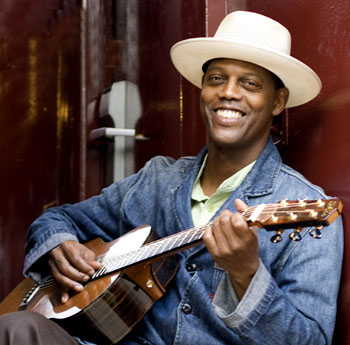
Eric Bibb (see "Tell Old Bill" below)


Altan: "The Jug Of Punch"
- 12/31/08


Ladysmith Black Mambazo: "Wimoweh/Mbube" - 1/15/09


Dolly Parton: "Deportee" - 4/10/09


CooolJazzz: "The First Time Ever I Saw Your Face" - 4/24/09


The Bar D Wranglers: "The Colorado Trail" - 5/15/09


Roy Rogers: "Get Along, Little Dogies" - 7/03/09


Eric Bibb: "Tell Old Bill" - 9/18/09


Judy Collins, Eric Andersen, Arlo Guthrie, Tom Rush: "Thirsty Boots" - 12/4/09

Thursday, December 24, 2009

For The Season #2: "All Through The Night/Ar Hyd Y Nos"

Holiday albums seem to run the gamut from the utterly banal to the truly inspired. There are classics of the genre, among which I would nominate the London Symphony for orchestral perfection at rendering traditional carols; any of several Mormon Tabernacle Choir recordings for choral versions of the same; and perhaps Andy Williams' album from the 1960s for smooth pop vocals of many more recent compositions.

One of the most original and ultimately satisfying holiday efforts was the Kingston Trio's 1960 album The Last Month of the Year. Unlike many other pop artists, some of whom in their holiday albums got way out of their depths in attempting songs that they could not do or crassly altered carols to fit into their pop or rock styles, the KT stayed squarely within their power zone of folk-type music and created a classic album by both presenting genuine folk carols like "Somerset-Gloucestershire Wassail" and "We Wish You A Merry Christmas" (link to last year's Christmas post with some comments on carols in general) and presenting less familiar (to U.S. audiences) folk carols from our country and around the world, often with unusual instruments like the bouzouki. I loved these, especially the spiritual "Go Where I Send Thee," "Follow Now, O Shepherds" from Spain, "Sing We Now Noel" from France, and most especially "All Through The Night" from Wales.

This lovely song is one of several numbers from the Welsh language that have broken through the language barrier to become in translation part of the folkways of English-speaking peoples ("Men of Harlech" would be my nominee for #2 in this category). The Welsh, of course, are an ancient and fiercely independent Celtic group, the last remnant of the ancient Brythons who were driven from their country by the invading Saxons fifteen hundred years ago - and in all that time, they have never given up their national flag, identity or language. Or, I might add, their music - one of the most common remarks I noted on YouTube versions of "All Through The Night" was the plea "Nice, but can't you sing it in Welsh?"

The air to the song known originally as "Ar Hyd Y Nos" is a very old harper's tune that dates back hundreds of years and was published as early as the mid-1700s. But the lyrics with the Christmas theme were added in the nineteenth century by beloved Welsh poet John Ceiriog Hughes, and the English words that we know were rendered apparently very loosely from Hughes.

The KT's version demonstrates their skill with genuine three part harmony, and its fidelity to the original and no-frills instrumentation belie the critics who said that the group could not deliver traditional songs in an authentic and meaningful manner:


Now, back to the source song. Here's the Men's Choir of Wales singing Hughes' words - the number (like "Harlech") is a standard for groups like this:


Welsh-born tenor pop star Aled Jones gives it a go with full chorus in 2002 - ruggedly masculine and beautiful:


The great American baritone Paul Robeson brought his operatically-trained voice to bear in this stately version:


Next, a different take on the song from jazz/blues/pop legend Nancy Wilson - this is non-traditional but somehow works for me:


By way of contrast, Olivia Newton-John (with Michael McDonald) gives the song that breathy treatment we hear so much on American Idol - not my cup of tea at all, but McDonald's harmony partially redeems this version:


Finally, an informal, almost home video of current British pop and folk singer Meinir Gwilym singing in a pub with Anwen Jones - this intimate version is just so right:


So a Merry Christmas to all, remembering the spirit of the season from the man who expressed it best, Charles Dickens - "It was always said of him, that he knew how to keep Christmas well, if any man alive possessed the knowledge. May that be truly said of us, and all of us! And so, as Tiny Tim observed, God Bless Us, Every One!"

Friday, December 18, 2009

"Three Jolly Coachmen"


Every Kingston Trio  album was structured like one of their concert sets - a strong opener followed by a change-of-pace, heading toward a high-profile big number (not necessarily uptempo - maybe a single or familiar hit or promoted song from a new album), and then repeating that pattern leading to the high-energy finale.

The Kingstons to this day proclaim with pride on their press releases that they "emerged from the clubs of San Francisco's North Beach," and it is as a nightclub act for which their early sets were designed. As great as they proved to be in concert halls, the intimacy of the upscale clubs always seemed to me to be the natural habitat for the group and their music, and "...from the Hungry i" gives plenty of evidence for that thought. When they played for, say, five thousand people, a barn-burner opener like "Hard Travelin" or "Hard Ain't It Hard" was almost compulsory - but in the smaller and quieter clubs, they could and did open with songs like "Three Jolly Coachmen."

And a fine opening for Capitol T996 it was, being a re-arranged (and, ahem, cleaned up) version of a traditional song, with all the hallmarks of the Kingston Trio style - great energy, strong interpretive dynamics, some humor, and solid if not spectacular musicianship.The root song was known as "Landlord, Fill The Flowing Bowl" and appears in a play by Shakespeare collaborator John Fletcher about 1630; it's said to be either Scots or English in its origin. The unexpurgated (and very funny) lyrics are here:

The Original Bawdy Coachmen Song

So return with us now to those thrilling days of yesteryear, June 1st, 1958 (my eighth birthday, in fact) for the very first cut on that legendary first record album:


And courtesy of our Mallorcan Swedish friend Bo Wennstam - fly with us back to last August in Scottsdale to see the combination of fidelity to the original and musical innovation with which today's Trio performs the number:


The most interesting other version that I found on YouTube is from the Husky Singers from Bloomsburg University in Pennsylvania, a fine choral adaptation that includes both some of the more risque lyrics and an excellent satiric last verse:


Adding a delightful feminine touch to the song are Molly and Sonny Boy from Minnesota - this is a traditional version I've seen in songbooks that truncates the verses somewhat:


For a talented amateur group - a garage Trio of Chilly Winds/County Line Trio vintage - the Tungsten Trio from Pennsylvania:


I have a feeling that renditions of the song from, say, two hundred years ago may have looked something like this tavern version from what appears to be a Renaissance fair group of enthusiasts:


Finally, and continuing the costume/re-enactor theme - a Madrigals group from Hiram College in Ohio:


Next week - a special Christmas song from one of the great holiday albums of all time...

Friday, December 4, 2009

"Dancing Cliffed Shattered Sills" - Eric Andersen's "Thirsty Boots"

John Stewart almost certainly snags the award for Most Under-Appreciated Songwriter/Artist of the last half century - but he's not alone in that regard. There is a cluster of other singer-songwriters whose bodies of work go neglected in the odoriferous cesspool that American mass popular culture has become. Steve Goodman always comes to my mind first - had he written only "The City of New Orleans" he would still be a minor deity of the art, but the whole of his work is so much more than that one song. Jim Croce is largely forgotten, and Phil Ochs wrote some of the loveliest tunes of the 60s with lyrics that could be trenchant, satirical, or powerfully emotional. Even Leonard Cohen is a name unknown to most folks under thirty, whose only contact with the musical artists of our youth seems to be with the prodigiously talented Bob Dylan - a rare artist indeed, but not the only one, and I'm not even sure the best one.

Had Eric Andersen written only "Violets of Dawn" and "Thirsty Boots," he would be accounted a fine songsmith. But Andersen has released dozens of albums since his Greenwich Village debut in the early 1960s, and like Stewart, Andersen has produced dozens of really outstanding songs on those albums that have been heard sadly only by the few thousand fans who have stayed faithful to him and continued to buy his recordings. The list of artists who have played with him on those albums is as much of a Who's Who of folk royalty as is the list of artists who have recorded his songs. The latest crapola contestant on American Idol becomes universally if temporarily recognizable by millions while a genuine artist like Andersen labors in the shadows of small venues. At age 66, he's still on the job.

"Thirsty Boots" is a song that I believe will long outlive Andersen just because it is so damned beautiful. Its roots, of course, are in the civil rights protests and demonstrations of the 60s, and Andersen himself has said that he wrote the song for a friend of his who had actually gone down to Mississippi while Andersen had stayed in the relative safety of New York City. But whatever flood of guilt or bright moment of epiphany prompted Andersen to write the song - what he came up with is a song for the ages, one that celebrates all youthful sacrifice and idealism - and he did so with a lyrical beauty that for my money even Dylan never bested.

This first version from the Kingston Trio is not the more polished version released in 2008 on Twice Upon A Time. Rather, this is the bootleg tape from a 1966 concert that I've downloaded from Rick Daly's FolkUSA that for many years was the only recording available of one of the Trio's best performances from late in their initial run:


Here is a clearer and more recent upload of the KT doing the tune, from their final concert at San Francisco's Hungry i in 1967:


Hearing the original artist do his own work is always revealing, and here we have a wonderfully clear video of Andersen performing his masterpiece in New York in 2012.


The closest anyone ever got to a hit with the song was probably Judy Collins, with whom the number is most identified. In 2002, Collins sponsored the Wildflowers Festival (named after what's likely her best-known album) and is joined on the song by (left to right) Tom Rush, Arlo Guthrie, and Andersen, who takes the second verse. This version is masterful:


Unless you happen to be a major John Denver fan - and there are many of us on this board who are- you may not have known that on his first three or four RCA albums, Denver did largely covers of other writers' work, almost always to wonderful effect. Listening to this recording is yet another pull of nostalgia for me - I miss Denver's voice, his writing, his concerts.


Finally - the recording that with Nick Reynolds 70th birthday prompted me finally to go to Fantasy Camp 4 in 2003. I had talked to Paul Rybolt on the phone about signing up, and Paul was good enough to send me the DVD from the 2002 camp - loads of fun with a great amount of talent among the campers. But it was this number by my now friends Pete Bentley, Michelle Stevens, and Bob Kozma (who sings the lead) that really really made me want to go. It was a life-altering decision in every possible good way:


A sublime treatment of one of the great songs of the era.