Thursday, July 21, 2011

Stand And Deliver! - "Brennan On The Moor"

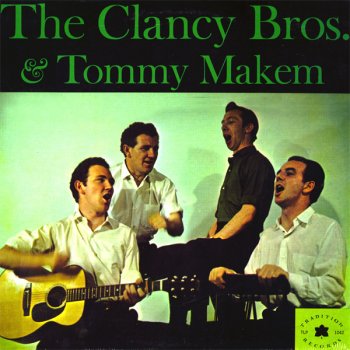
The album pictured here is one of the treasures of my youth and to this day one of my favorite of all collections of traditional songs, the first recording to be released under the group name of The Clancy Brothers and Tommy Makem. Recorded largely on a reel-to-reel recorder in the kitchen of eldest brother Paddy Clancy's Greenwich Village apartment (good acoustics, but not great), the recording possesses the raw energy and arrestingly different sound that many other groups' first albums also demonstrate. Hard as it may be to imagine today as the airwaves and music vendors are awash in Celtic-flavored groups and soloists - this 1959 release on the Clancy-owned Tradition Records was the first that many Americans had ever heard of something akin to real Irish folk music. And the song that they chose to lead off this landmark recording - the song that subsequently and consequently became their opening number in concerts for decades to come - was "Brennan on the Moor."

Like many another highwayman and robber who came to be immortalized in a folk song, Willie Brennan was a very real person who was hanged for his crimes in 1804 in Clonmel, County Tipperary. In those days, following close upon the heels of the Great Rising of 1798, many extra-legal activities were punishable by death, worth mentioning perhaps because young Willie apparently never "sullied himself with blood," according to some of his contemporary admirers - however bold Brennan may be in the song, he is not a sociopathic and murderous thief of the stripe of Jesse James and other American bad guy killers. The mere act of theft, however, was itself a capital crime until well into the 19th century in Europe in general an England in particular. There are indications that there were hangings of children as young as eight for stealing loaves of bread in the 1730s, and the dark underpinning of the narrative of Dickens' Oliver Twist (and hence the musical Oliver!) is that a noose awaits those delightful pickpocketing boys should they be caught - the fate that finally befalls their handler Fagin. So Willie Brennan's apparently non-violent career of Robin-Hood-like plundering of the wealthy for the support of his dear old ma and her friends was destined to end in a painful strangulation in any event, murderer or not and rebel or not.

The song was likely penned as a broadside ballad very soon after Willie's gallows dance. But broadsides were printed on cheap newsprint and sold for a penny; few originals survive. The first printed versions of Willie Brennan's tune that we have today appeared in both Ireland and England in 1859 - long after the song had entered the folk tradition because, as we shall see, it was popular with immigrant Irish soldiers in the American Civil War. In Ireland, there are a couple of major variants and all of the versions feature eight or nine verses (with a subplot encounter with a peddler) as opposed to the five or six verse version we usually hear in the U.S.

The Clancy version has become the template for nearly every other group's adaptations and performances of the song. There is a bit of irony there because, as Liam Clancy noted in his memoir The Mountain of the Women and elsewhere, the "Brennan" song that they had first heard as youngsters was a moderately slow, mournful fiddle tune. The brothers and Makem felt that the lyric demanded more energy, and that is what they gave it. The beauty of that very first recording, however (unavailable as yet on YouTube) is that they started the song very quietly and built to a rousing climax; most live performances were largely climax with little build-up (and you may blame the banjo for that, which was not part of the original instrumentation that consisted only of Liam whacking away on a 00028 Martin guitar with nylon strings).

Our first version here is as close in time as we can get to that 1959 recording,* a live performance of the CB&TM from a 1962 Chicago PBS video:


The fully-realized performance by the group, complete with a last verse from one of the variant versions, is here from the group's 1984 reunion concert from Belfast:


Now for something a little different. I have learned of and come to admire the work of the 97th Regimental String Band while doing these articles. It's a group that specializes in authentic replications of Civil War-era tunes - I have included their version of "Goober Peas" in my piece on the song. Here is how "Brennan" might have sounded in a camp somewhere in Virginia in 1862:


Quite a resemblance here in the modified tune to a number of other Civil War melodies, notably "The Bonnie Blue Flag."

Most of the contemporary award-wining Celtic bands sound little like the Clancys, moving the acoustic folk sound more toward what we called folk-rock in the 60s. The Killigans, for example, identify themselves as "folk-punk," and the Dropkick Murphys and Pogues also go generally for the loud and electric. The band of the moment in this field is the Sligo Rags, a southern California group that has been making waves nationally. This is definitely a fresh interpretation of "Brennan":


Sort of a blues/reggae take on it - not sure exactly what I think of this. Interesting at the very least.

Courtesy of Folkways Records, we have a really interesting alternate version from Canadian-Irish folksinger and folklorist Tom Kines (1922-1994):


Lastly - Bob Dylan has been open about his admiration for the Clancys (Liam especially) since he first arrived in New York in 1961. Imitation being the sincerest form of flattery, of course, young Mr. Zimmerman appropriated perhaps half a dozen of the Clancys tunes for his own songs, including this "Brennan" rewrite that he titled "Ramblin' Gamblin' Willie" and that the Clancys called "Ride Willie Ride" - the circle completes itself as the inspirers sing the composition of the inspiree:


This is from one of the last albums by the group from the 90s. Tom Clancy has died, replaced by Bobbie Clancy on banjo; Tommy Makem has gone solo to be replaced by cousin Robbie O'Connell.

For a final thought, I turn to my brother Rick, whose Rightwing Nuthouse blog is a delightfully literate and provocative site whose politics rile me even as I'm smiling. No disagreement between us four years ago, though, when Rick published a marvelous essay called "Death, Be Not Proud" following the passing of Tommy Makem. He wrote in part:

For me, their music inspired a far more personal journey than the great issues being illuminated by the Pete Seegers or Peter, Paul, and Mary’s of the folk music scene. The Clancy Brothers and Tommy Makem’s music opened the door to discovering my family’s Irish heritage and helped us all take enormous pride in who we were and where we came from....For the Moran family, The Clancy Brothers and Tommy Makem opened up an entirely new world, a means of discovering our past. Their music was not at all like the melodramatic “American” Irish music we were all familiar with. Their songs were of the real Ireland – a place of pain and suffering, of oppression, and a kind of fatalism that seems to me unique to the Irish people.

...and of "Brennan on the Moor," the song that started that journey for all of us.

____________________________________________________

Addendum, March 2017 Due to arrangements that YouTube has made with thousands of content providers over the last few years, hundreds of thousands of original recordings are now available on the site - so here it is, the opening track from the 1959 album pictured above, the first version of "Brennan that I ever heard - and for my money never surpassed.

Thursday, July 7, 2011

When The Whale Gets Strike: "Greenland Whale Fisheries"

Hard to believe that it has taken me more than three years to get around to discussing "Greenland Whale Fisheries," since for more than fifty years it has been likely my favorite of all folk songs, in large part because of the memories that hearing it stirs - more on that at the end. But it's just a damned fine song any way you look at it, and a very old one at that - which of course means, as we'll see shortly, that it has lent itself to a greater-than-usual variety of interpretations.

Almost two years ago, I did a piece here on "Blow Ye Winds In The Morning" - another fine 19th century whaling song, but one that differs fundamentally in its intent and affect from "Greenland." "Blow ye Winds" is a commercial, a recruiting poster - "they say you'll take five hundred whales/Before you're six months out..." and hence make quite a bit of money from the shares of the profit, all while having a very good time, if you look at the rest of the lyric. But "Greenland" is a song that is much older, harder, and tougher - more of a commentary on what kind of adventures actually faced the whalemen out there (and there is more about that in the "Blow Ye Winds" article linked above). The portrait of the whaling life in this song is grim at best, and the minor chords in the accompaniment serve to underscore the melancholy tale being told.

"Greenland Whale Fisheries" has, as noted, many variant versions, but there are several common motifs that go back to the very earliest published arrangement of the song from about 1725. Oxford University's Bodelian Library has a later copy from about 1840 here:


Every version features a month, day and year specified early in the song, a whaling ship bound for the "Greenland ground," a brave captain and an eagle-eyed lookout, a chase, the whale's "flunder" capsizing a boat and killing several men, the captain's regret (though over what varies interestingly), the seamen's bitter desire to leave the "dreadful place" forever. It is a compelling narrative, one derived from the terrible conditions and dangerous circumstances in which the men lived and worked.

As usual, The Weavers and Burl Ives are most responsible for giving this song a second life in the mid-20th century, and The Weavers arrangement is the first one that I heard, around 1961. I'd love to present it here, but YouTube has been getting a bit hinky with me over all of my uploads for this series - so with a great deal of temerity, a bit of hesitation, and a gulp, I will present my own version first. It is almost word-for-word and chord-for-chord replication of what The Weavers did with the song, though needless to say without the superb professionalism that characterized their work. What I have especially emphasized is a) the moderate pace of the Weavers version, and b) the Seeger/Hellerman idea of framing the basic song with a part of a slower lament that they learned from collector Alan Lomax, who found it in Barbados (not a great whaling area, oddly). This is an analog recording done on a Korg 4 track tape machine, recorded in one take per track with no digital ability to fix the mistakes - it's not The Weavers, but who is?


Now, The Weavers had the captain mourning the loss of the men more than the whale - I changed it because I liked the way that Theo Bikel did the song, with the heartless captain grieving over his lost profits. Heartless captains are rather more the rule than the exception in sea folk songs anyway. Here is Bikel with Judy Collins at the 1963 Newport Folk Festival:


Note that Collins and Bikel are following the Seeger/Hellerman arrangement but presenting the first go around of the Barbadian fragment as an instrumental.

Paul Clayton, profiled here a couple of weeks ago, also maintains a fairly moderate pace in his simple but effective treatment of the tune:


But "Greenland Whale Fisheries" has also been performed over the years as a very quick, high-energy, rollicking chantey, and for me the prototype of that version is this recording from the Chad Mitchell Trio:


Canadian-Irish Ryan's Fancy tried something similar but with two distinct disadvantages - they didn't have the trained vocalists Mitchell, Kobluk, and Frazier of the CMT, and they didn't have the Mitchell group's Paul Prestopino on banjo. They gave it a good go, though:


"Greenland" is still covered widely today, though unfortunately IMHO in the ragged and rocking version popularized by the Pogues, here from 1984:


There is an absolute tribe of other so-called Celtic groups who riff off of this arrangement for reasons beyond me. The raggedness doesn't make it more authentic; traditional English ballads like this were nearly always performed at a very moderate pace.

For me, other artists have far more interesting approaches - like eclectic genius Van Dyke Parks, who did an album of sea chanteys in 2006 and provides instruction in how you can update and rockify a trad folk song with sensitivity and skill:


Or AnnaLee Rockinsquirrel on harp:


Or Scotland's legendary Corries, who sound like three Tommy Clancys with a burr instead of a brogue:


"Greenland Whale Fisheries" was one of the first songs I learned to play on the guitar - I could add that it was one of the songs that influenced me to want to play guitar. It became a standard part of spontaneous family singalongs going back to the early '60s - singalongs that originated out of necessity. My family rented a place in a remote area of northern Michigan for a few weeks each summer. We were beyond the reach there of anything that had to be transmitted over radio and microwaves, and in that pre-digital epoch before cable and satellite we had to create whatever entertainment we wanted to enjoy. All ten of the Moran children were musical to some degree or other - but it was in the heart of the folk boom, and even in my early adolescent desire To Be Alone, I could not start playing songs for myself anywhere inside or outside without attracting a sibling or two - and eventually the whole passel of them with the parents to boot. We always seemed to close those sessions with the melancholy version of "Greenland" at the head of this essay - very Irish of us, I suppose. Fast forward to 2001, forty years down the road. Our mother has died, leaving us finally in middle age, orphans. The ten of us are assembled in the library of the house most of us had grown up in, a house to be put on the market the next day. We spend a long evening of drinks and laughs and songs and reflection - and as two o'clock hour approaches, with most of the "younger" ones ready to go to bed, the four or five oldest of us spontaneously begin to sing "Greenland Whale Fisheries." It is our last act as a family in the family home. That, after all, is the kind of thing folk songs are all about - and "Greenland Whale Fisheries" served the purpose handsomely. _________________________________________________________________

Addendum, September 2013

A couple of months ago, YouTuber AuntNessie posted a version of "Greenland" by The Weavers. This is not the studio recording from their album Traveling On, which as I note above is the first one I heard and my favorite. Rather, it is a live performance from the group's 1963 reunion concert that featured all eight of the musicians who had constituted the quartet at one time or another. The personnel on this track - Pete Seeger, Fred Hellerman, Ronnie Gilbert, and Lee Hays, the originals - are the same as on the earlier album, and the rendition is very close, if not quite exactly the same.


_____________________________________________________________

And further.....December 2014

I recently ran across this excellent live performance by Peter, Paul and Mary from their 25th anniversary concert. They are following the general drift of The Weavers' version, complete with the intro and conclusion of the Barbadian fragment.


And finally, May 2017....

...Thanks to the deals struck by Google/YouTube with many of the "content providers," we finally have a decent and copy-right approved upload of The Weavers 1959 rendition, the one that largely inspired many of the other versions on this page.

Friday, July 1, 2011

Tom Paxton's "Bottle Of Wine"

Back in January, I was delighted to be able to see Tom Paxton in concert at one of the great small venues on the West Coast, McCabe's Guitar Shop in Santa Monica, CA. Paxton is a hale and energetic 75 years old, still writing great songs ("The Bravest" about the firefighters of 9/11 and the very recent "What If, No Matter" about the Gabrielle Giffords shooting), and still puts on about as good a folk show as you can see. I have profiled three of TP's best-known and most-often-covered songs here on CompVid101 - "The Last Thing On My Mind, "My Ramblin' Boy", and "Can't Help But Wonder Where I'm Bound", and I've outlined in those posts why I regard him as the best of the modern folk-type songwriters.

Coincidentally, a few weeks ago I had the pleasure of meeting Milt Okun at a book singing, and Okun's Cherry Lane Music Co. has been Paxton's sole publisher for the more than five decades of his career. Reading Okun's book was illuminating about a wide variety of topics, most especially how an artist like Paxton, who has had steady but unspectacular album sales and virtually no singles sales, could have made a good living in music through all these years. Answer: the nine cents per unit sold that goes to the songwriter/copyright holder of the composition. Think about how many millions of albums have been sold with Paxton's songs on them - by the Chad Mitchell Trio (really the first high-profile group to do TP's songs), the Kingston Trio, Peter Paul and Mary, Ian and Sylvia, and many more - and you begin to understand how even in lean performing times that a songwriter of Paxton's caliber can prosper. It also explains why publishing income frequently becomes a bone of contention within bands and why the issues of copyright with sharing sites such as Napster of ancient memory and YouTube today remain so controversial.

For all of Paxton's songwriting success, only one composition of his ever became a bona fide singles hit, and that was "Bottle of Wine," a celebration of the joys of a rootless life spent drinking cheap wine - clearly a younger man's composition. The Fireballs' version of Paxton's tune sold over a million copies, which in 1968 dollars would have given Tom enough coin to buy a really nice house and car - not to mention the ongoing income from royalties and licensing every time anyone wants to use the song and every time an oldies radio station wants to play it.

"Bottle of Wine" is an innocent bit of fluff - not a sermon against the very real evils of alcoholism against which the "preacher will preach and the teacher will teach." Paxton's own approach to the song has always been as lighthearted as his lyric - here is from last January in San Diego, the night after I saw him at McCabe's:


The Kingston Trio did a fine job with the tune in 1964 - John Stewart's banjo part lends exactly the right kind of rollicking touch, and the little key change at the end is nice:


Forty plus years after the '68 hit, here are Jimmy Gilmer and the Fireballs in 2009:


I think that the Harris Brothers here capture just about the right mellowed-out feeling with the song - where the Fireballs sing it as if they'd had a few bottles, the Harrises sound like most of us feel after a few glasses:


Finally - Madacoustic braved the family rec room and the drunken friends to deliver a fine amateur performance in just the right setting:


Not much more to be said after that. Hoping that everyone safely enjoys quite a few bottles of wine over the coming holiday weekend. I certainly intend to.

Wednesday, June 22, 2011

Paul Clayton, John Steinbeck, The Open Road, And "Gotta Travel On"

John Steinbeck's Of Mice and Men is a minor American classic - brief, poignant, and deceptive in its apparent simplicity. After all, what's so tough about it? One hundred pages of big print, two guys, a dog or two, a really bad villain, and a tragically inevitable conclusion.* Just right for the seventh through ninth graders who are usually required to read it, no?

Well, no. Like most of Steinbeck's novels, Of Mice and Men expresses the writer's deeply progressive and socialist political beliefs, his anger toward rapacious capitalism (always personified in his books by an authority figure like a bank or [as here] a Boss), and his fundamental faith in the redemptive power of loyalty and love. In stark contrast to the novel's other characters, George and Lenny have hope through much of the book because they have each other; their interdependent friendship is profoundly affecting, even though the bad guys seem finally to win. George is as isolated at the end of the novel as any of the other hopeless souls on the ranch, a point visualized in two of the three film versions (1981 with Robert Blake and Randy Quaid and 1992 with Gary Sinise and John Malkovich) by a brief scene (not in Steinbeck's book but certainly implied by it) depicting George on the road again, this time alone.

And it is that lonely road that is the subject of this week's song, "I Feel Like I Gotta Travel On," attributed to Paul Clayton,** a seminal but today largely-forgotten figure of the folk revival years. Like Lou Gottlieb, Clayton (1931-1967) came to professional folk music with some pretty hefty academic credentials - a B.A. in English Literature from the University of Virginia and a masters from the same university in folklore studies. He had taught himself guitar, banjo, and dulcimer while in high school, and had even had his own folk radio show during those same years. At Virginia, prominent folklorist Arthur Kyle Davis was so impressed by Clayton's knowledge of traditional songs that he made the young scholar his research assistant (along with a grad student named Matthew J. Bruccoli, who would become one of the nation's leading professor/scholars on F. Scott Fitzgerald) and took him on folksong collecting expeditions throughout the Appalachian mountains. Clayton had recorded professionally as part of a group for the Stinson label as early as 1952; he eventually abandoned academic life in favor of collecting, performing, and writing about folk music. Naturally, he moved to Greenwich Village around 1954 and recorded dozens of albums for Tradition (where he met and worked with Liam Clancy), Elektra, Folkways, and more. Clayton was about as successful as any traditionalist singer expected to be in the pre-folk boom days; he had a lovely, mellow voice reminiscent of Pete Seeger or Bob Gibson and a simple but effective guitar accompaniment style.*** Clayton's career nosedived with the whole folk movement, and feeling abandoned by performers whom he had mentored (including Bob Dylan, who has always acknowledged Clayton's influence) and depressed by drug use, legal troubles, and his closeted homosexuality, he took his own life in 1967.

Clayton left behind a truly remarkable discography and his copyrights for his widely-covered arrangements of some traditional songs. Chief among these is his "I Feel Like I Gotta Travel On," about the origins of which Clayton was always mysterious. The likeliest reason is that he had heard the basic words of the chorus in a traditional song and had incorporated them into an old W.C. Handy melody, probably "Harlem Blues." The other verses were likewise adopted from other earlier songs, making Clayton's piece one that was rather more assembled from earlier sources than actually composed.

The original copyrighted lyrics that Clayton himself recorded reflect that Steinbeckian ambivalence toward the road, which in American folklore can be the portal to a new life or the desperate means of escape from an old one. Clayton's lyric quite clearly expresses the latter, as reflected in our first rendition by the Kingston Trio from 1964:


The KT was the only major group to catch some of the melancholy that Clayton had invested in the song. The Weavers' version that predates the Kingstons by about five years catches the wistfulness but at the expense of substantially re-writing (and re-copyrighting) the lyrics as Clayton wrote them:


The extent to which the KT was indebted to the Weavers is clear here, at least as far as musical stylings went. The Weavers' lyric re-write, possible because of Clayton's use of a public domain tune, enabled the group to retain all publishing royalties for themselves, and the BMI website lists Weavers Seeger, Hays, and Gilbert as copyright holders as well as Clayton. That was something that the Kingstons also learned from the Weavers, though while there are people who still deride the former group for pulling that little trick, very few people today recall how thoroughly the Weavers protected and profited from their own repertoire in exactly the same manner.

I wonder if any of Clayton's depression emanated from what happened next when country singers got wind of Clayton's work. The prototype for that was the country hit by Billy Grammer in 1959:


Grammer is using Clayton's words but charges through them as if blissfully unaware of what he is singing about. In his hands and those of some of the other country performers below, all the affect and sadness disappear from the song and it becomes a kind of "Happy Wanderer"(you know, "Val-der-ee, val-der-ah") with slide guitar and requisite twang added. Consider a guitar-less Glenn Campbell from the 1970s:


Ditto Boxcar Willie, who sound positively cheerful:


The always-cheerful Seekers:


I have to confess to a great deal of disappointment here - the Seekers are doing the Weavers lyric, not Clayton's - and they could have done so much better.

Chet Atkins provides momentary relief - slower, if not exactly reflective:


The nadir may well be here - archetypal kitsch from The Lawrence Welk Show from 1972:


Looking at the different versions of this song reminded me sharply of my article on Steve Goodman's "City of New Orleans", where similarly most of the artists ignore the implications of the lyric and just charge full speed ahead - you know, a train song, riding the rails, the Song of the Open Road and all. Clayton was trying to reflect on something very different - on the feelings of sadness and abandonment of the rootless and disaffected. As Clayton conceived it, this is the song that George Milton might well have been singing to himself as he had to hit that never-ending road alone right after the end of Of Mice and Men.

Appendix

*If you have forgotten the plot, Wikipedia has a decent short summary HERE.

**As of 2015, YouTube has apparently entered an arrangement with music publisher watchdogs and is now allowing a lot more copyrighted material - and uploading its own, as below. Finally, Clayton's beautiful version of his own song joins this article.


***Here is Clayton from an album of sea chanties singing "Spanish Ladies," which film buffs will recognize as the fragment sung repeatedly by deranged shark hunter Quint (played by Robert Shaw) in 1975's Jaws:

Friday, June 17, 2011

Among The Leaves So Green-O: "The Keeper" / "The Hunter"

This week's song has been one of my favorite traditional tunes since I first heard Burl Ives' version of it rather more than fifty years ago. The most common name for it is "The Keeper Did A-Hunting Go," but it has also appeared in publications as "The Hunter," "Among The Leaves So Green-O," and "Derry Derry Down." It is clearly and unmistakably English in origin, and from what I can gather occupies the same place in U.K. music education that perhaps "Oh! Susanna!" does in the U.S., meaning that for a very long time just about everyone learned to sing it in primary school. Most versions sport an antiphonal chorus - one in which one singer or group alternates responses with another, like "Jackie Boy - Master" here - and is consequently a delight for little children to learn. Or it was, at least when most of us were children. I'm not sure how much basic education in the joys of singing is left in schools today in either Britain or here - and I am even more uncertain that Stephen Foster or "The Hunter" would be included today in any event.

Too bad, because the song is a delight on several levels. Most versions sung today are derived from the rather sanitized version published in 1909 by legendary British folk song collector Cecil Sharp in School Songs. Sharp's rendering makes the song a literal deer hunt, and the tune works just fine on that level:

The keeper did a-hunting go
And under his cloak he carried a bow
All for to shoot a merry little doe
Amongst the leaves so green-O.

The first doe that he shot at he missed,
And the second doe he trimmed he kissed,
And the third ran away in a young man's breast,
She's amongst the leaves of the green O.

The fourth doe then she crossed the plain,
The keeper fetched her back again.
O and he tickled her in a merry vein,
She's amongst the leaves of the green O.


Now, unless you're ten years old, you might well look at that lyric and suspect that something else is afoot here, since most hunters as far as I know neither kiss nor tickle their prey. If you further consider the soft and supple coat of a doe, its fetchingly luminescent brown eyes, its skittish temperament, its elusiveness - well, you don't have to be Freud to figure that the deer might well be a kind of folk code for a supple, luminescent, and elusive female of our own species. (One of my all-time favorite poems is from about 1530, "Whoso list to hunt, I know where is an hind" by Sir Thomas Wyatt where the connection is clear and intentional, a hind being a female red deer.)

In fact, Sharp was presenting a 19th century cleaned-up lyric of a much older song, one that was first printed in the 1500s and has long been thought to date back to the 13th century, the time of Robin Hood. The 1600s version was called "The Huntsman's Delight; or the Forester's Pleasure" and included stanzas like:

The third Doe she made great moan,
Because that she was big with Fawn,
Which made her to go weeping home,
From 'mongst the leaves so green a:
Hey down, &c.

The fourth Doe could no longer stay,
But she must be gone her way,
For fear that the Keepers should her lay
Amongst the leaves so green a:
Hey down, &c.

The fifth Doe leapt over the stile,
But the Keeper he got her by the heel,
And there he did both kiss and feel,
Amongst the leaves so green a.
Hey down, &c.

That's pretty clear, I'd say. Whatever the quarry is, however, the song is just plain tuneful fun, as our videos will show. First, an instrumental version done with overdubbed pennywhistles by Edinburgh's Gordon Hudson. Lest that sound too weird, give it a listen - it's a delight:


Warms the cockles of my Irish heart, it does.

Now you would think that the Weavers would deliver a creative but straight-up traditional version of the song, as I did when I got the Travelling On album in about 1960. You would be wrong:


The group ultimately cannot blame this travesty on their Decca Records producer Gordon Jenkins and his insistence on orchestrations for folk numbers in the quartet's 1950 recordings; this dates to 1959, though since Seeger had left the group by then over disagreements about the commercialization of material (you think?) and the fact that the other three compelled him to sing on a cigarette commercial that he really objected to, the recording cannot be later than April of 1958. Even if the cut is a refugee from the Decca vaults that somehow found its way onto this otherwise excellent Vanguard album, the group still had to sign off on its inclusion. Big mistake.

That version simply enables me to attempt to drive yet another stake through the heart of the casual misperception of pop folk groups, because the Kingston Trio does exactly what the Weavers should have done - which was to deliver a sophisticated arrangement that respects the song's musical roots:


A truly marvelous arrangement indeed, as Jeremy Raven notes below in my post about Nick Reynolds: " 'The Hunter' is one the Kingston Trio didn't write or significantly rewrite...But probably the harmonic spin was their own. Listen to the quiet verse and chorus, starting with "'Tis merry we are"...The modality of the harmony evokes madrigal-singing or even Gregorian chants , even more so than 'Riu Riu Chiu /Guardo El Lobo'. It's a perfect example of the kind of thing Dave Guard wanted them to start being able to accomplish by learning to read music!" It also exemplifies what I think was the genius of the original group - the ability to present legitimate folk material in a modern setting that does not ultimately distort the integrity of the number. My thanks to Jeremy R. for the comment (part of what made me want to do the song this week) and to Dave Long's marvelous upload. (Dave is saving me a lot of work these days!)

For more creative interpretations - first, a fine a capella version from The Futureheads, recorded appropriately over a few beers in a bar:


From the UK again, Chris with a kind of new-age arrangement done on a 12 string guitar in what sounds like an open tuning (but actually is not, since Chris forms a perfectly normal-looking B minor chord at the end of each verse), slightly reminiscent of John Denver's take on "The Bells of Rhymney":


Youngsters Colin on lead with Mary and Dickon in an adaptation as part of a dramatic version of The Secret Garden:


And finally - because the fantasy camp is coming up soon, because I have been thinking a lot recently about our late friend Bo Wennstam, whose video this is, and because I always like to include in these articles amateurs having fun with folk songs in informal settings, here are Triofan John Lee, Zurich's Tom O'Donnell, and I making up in volume and enthusiasm for what we lack in rehearsal time. It's a jam, after all:


And that is an example of what goes on at the KT Fantasy Camp, pretty much 24 hours a day somewhere or other. The late John Stewart used to remark at the camp that the only way that songs like this and folk music in general would ever survive the onslaught of music biz-American Idol pop culture would be if people just got together and sang their lungs out on these tunes. This last one's for you, John.

Tuesday, June 14, 2011

On The Shoulders Of A Giant: Milt Okun's New Memoir "Along The Cherry Lane"

Every mature fan of popular folk music and in fact popular music in general probably already knows who Milt Okun is - one of the most influential figures in American pop music history, of the same weight and significance as the likes of Gordon Jenkins and John Hammond and Voyle Gilmore and Quincy Jones. A classical musician by training and a music teacher early in life, Okun spent decades shaping and influencing the careers of artists like Harry Belafonte, Peter, Paul and Mary , the Chad Mitchell Trio, an alum of that group named John Denver, Tom Paxton, Laura Nyro, The Brothers Four, opera superstar Placido Domingo, and many, many more. Okun was a literal jack-of-all-trades for these artists, by turns producing their recordings, arranging their music, influencing their artistic choices and musical directions, and providing them with rehearsal space and a place to lay their weary burdens down in the home he shared with Rosemary, his wife of now more than fifty years.

Okun has had a long and colorful career (he is today a hale and active eighty-seven years old) but one that clearly defies easy categorization. Like Hammond and Gilmore, he is a producer par excellence with an innate sense of how to get a recording to sound right for each artist he has worked with; like Jones and Jenkins, he has created complex and beautiful arrangements across a number of musical genres. Okun has also conducted orchestras, recorded his own folk albums, provided creative criticism, suggested material, discovered artists and songs, and shepherded temperamental musicians through some rough spots in their careers. There is not a single term that can encapsulate such a richly complex professional life.

PhotobucketIt is a testament to the quality of what Okun (R.in the photo) and co-author (and son-in-law) Richard Sparks (L. - at a book signing in Santa Monica, CA) have accomplished in Along The Cherry Lane, Okun's memoir published this week by Classical Music Today, LLC, that that career emerges in all its aforementioned complexity as the expression of a single, clear passion - Okun's love for music in nearly all of its forms, which in turn has driven him to work unflaggingly to help other musicians, from children in New York City's public schools to major international stars, to realize most completely their own potential as musicians. It is equally to the credit of Okun and Sparks that the liveliness and color of that career do not expire when they reach the pages of a book that cannot present the music itself of which it speaks so clearly and warmly.

Much of the credit for that latter point must go to Sparks, who is himself a record producer, lyricist and playwright of note and the author of a number of other books on everything from music to poker. Sparks has chosen to eschew a simple chronological narrative in favor of letting Okun tell his own story in his own way, and most of the book is the record of conversations between Sparks and Okun, with the former pitching questions to the latter. Interpolated at key points are comments from many of the musicians who benefited from Okun's work, and Along The Cherry Lane derives its structure rather more from the creations of the musicians themselves than from a simple autobiography of the subject. It works nicely, not least because Okun's involvement in the careers of the artists usually occurred at a point when they were most in need of musical direction - Peter, Paul and Mary's learning to sing harmonies, for example, or Placido Domingo's decision to attempt a crossover into popular music by recording an album of non-classical songs, most notably his duet with Okun client John Denver on the latter's composition "Perhaps Love."

Okun and Sparks also reward the reader with significant insights into the often Byzantine workings of the "music publishing" industry, and nowhere else will you find a more succinct description of what that term means than in this book. Just as Okun speaks most glowingly in Along The Cherry Lane about musicians (Denver and Domingo especially), the con artists of the business side of music who attempt to chisel away at the money earned by the songwriters and performers (or just flat out steal it) come in for his sharpest barbs. Okun is especially critical of the way royalties and licensing of songs have been handled by the major recording companies, which often deprive the artists of significant income due to incompetence, dishonesty, or neglect. Okun speaks most proudly of the way that his own publishing company, Cherry Lane Music (named for an off-Broadway theater near his original office, and quite coincidentally a line from the "Puff, The Magic Dragon" song that Okun helped to arrange) managed to rectify some of those errors, and the consequent loyalty of songwriters like Denver and Paxton to the company as a result.

Thanks to current technology, we can get a glimpse into some of Okun's genius today by looking at and listening to some of what he wrought. Two examples here should serve nicely. First, though impresario, club owner, and antic character Albert Grossman is listed as the producer on Peter, Paul and Mary's albums, the actual musical force behind them was Okun. Grossman was a businessman who fancied he understood "the biz," but he knew little about music and had assembled the three Greenwich Village soloists Peter Yarrow, Noel Stookey, and Mary Travers into a vocal group to create what he called "a hipper version of the Kingston Trio" and thus tap into the rivers of cash flowing into record company coffers from the early '60s version of folk music. But the three singers had had little experience singing in harmony and almost no idea of how to create and blend three vocal parts - so in stepped Okun, who rehearsed the trio for nine months at his home before getting them into a studio. It paid off, literally and handsomely. The group's eponymous first album hit the number one spot on the Billboard Magazine charts and stayed there for a month - but more impressively remained in the top ten for an unbelievable eighty-four weeks, ultimately selling almost two million units. The group's next half dozen albums enjoyed comparable success, and all the months of drilling the vocalists in harmony singing and working out arrangements that their voices and instrumental skills could handle are on display in the quality and professionalism of those records, still among the best of the entire decade in any genre of music. Take, for example, what Peter, Paul and Mary did with the then-unknown Bob Dylan's "Blowin' In The Wind" from their third album:


The arrangement is perfect for the skills of the musicians, with voices brought into the mix simply, as on the second verse where a solo vocal blends into duo unison and then flowers into three perfectly integrated parts. It is complex enough to be interesting but simple enough to execute for the self-taught musicians that all three group members were.

Another example, and one in which Okun expresses great pride in Along The Cherry Lane, is the duet by John Denver and Placido Domingo on Denver's "Perhaps Love." Except for the songwriting itself and the actual vocals, this is an Okun production all the way, and one that he could midwife into existence because of the much greater musical sophistication of both the operatic tenor and the country boy singer-songwriter. Grainy video notwithstanding, this is an inspired arrangement:


The mix here is nearly perfect. As fine a singer as Denver was, he could not match Domingo's volume, so Okun chose to have the singers alternate lines for the most part, keeping moments of actual harmony to a minimum and influencing Domingo to moderate his vocals so as not to overwhelm Denver. Once again - it worked, and Okun and Sparks relate the story of how it came to be thoroughly and engagingly.

Along The Cherry Lane is a significant and welcome addition to the growing number of books that have tried to deal with the popular folk revival of the late 1950s and early 1960s. Some of those books are pedantic and unfocused; some are scurrilous and gossipy; a few are inspired and highly readable. Okun's and Sparks' effort belongs in that last category, and it is in every way worthy of the career that inspired it.

Along The Cherry Lane By Milton Okun as told to Richard Sparks. Classical Music Today, LLC. $24.99 at Amazon.com