Friday, November 22, 2013
JFK 50 Years Later: Songs Of November 22, 1963
- Leonard Bernstein, November 25, 1963
Friday, November 22, 1963 was the only day I missed during my freshman year of high school because I was in bed with a left ear severely infected from early-season practice for the school swimming team. I had been hospitalized briefly two years before for mastoiditis in the same ear, a potentially very serious ailment, so my parents insisted I stay home that day (really against my wishes since I was terrified of falling behind in algebra) and allow the antibiotics prescribed by Dr. McMahon after his house call the day before to take their effect.
Not long after 12:30pm in Chicago, my mother came into the room I shared with my older brother, her face ashen and serious. "Mrs. Schroeder just called," she said. "She heard on television that several shots had been fired at President Kennedy's car in Texas. They don't know if he was hurt or not. I know how important history is to you, and today may be a day that people will remember for a long time." With that, she helped me bundle up and go downstairs to the family room and turn on the television, the television that was absolutely never on during the day except on weekends for sports - which is why Mrs. Schroeder, a devotee of the classic soap opera As The World Turns (which began in the Midwest at 12:30) and a good friend and neighbor who knew of the blanket of electronic silence that enveloped the Moran home during the daylight hours, thought it important to call my mother with the news.
My two youngest brothers, the only ones of the nine of us at the time (the tenth was gestating at that point) who were not in school yet, were already down for their afternoon naps, so my mother and I watched the events of the afternoon unfold as they happened, largely in undisturbed silence, broken only by my mother several times after the 1pm death announcement with "Those poor little children! Those poor, poor children!" in reference to Kennedy's daughter and son, both younger than seven and now fatherless. In the midst of the earliest hours of a developing national cataclysm, this was exactly the aspect of the event that for me was quite understandably what affected my mother most deeply.
But she knew also her many children well, and she was exactly right about my preoccupation with all things historical - at that point, primarily the day-to-day remembrances of the events of the American Civil War a hundred years earlier. The centennial of the delivery of Lincoln's Gettysburg Address had just passed on November 19th, and the memorials of that event were fittingly quiet and sober, in memory now almost a prelude to the darkness to come upon the nation so swiftly and so soon after.
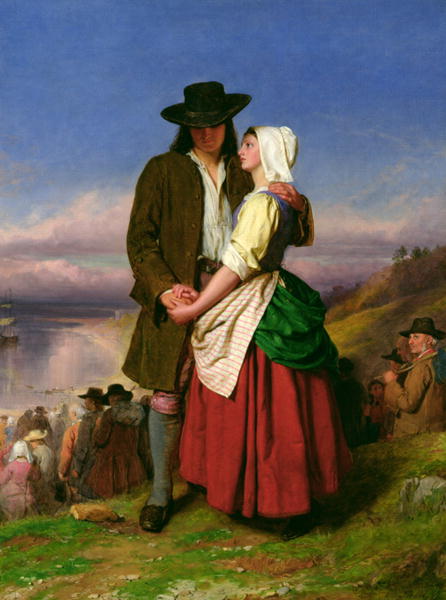
For me, history was never a dry compendium of names and dates. It was rather a set of vivid stories of people and events and conflicts, much more like a great and engrossing novel or an epic film than a subject fit only for school time boredom and resentment. I can trace much of my love of folk music to my love of history, or perhaps I could better explain them as twin children born of the same colorful childhood imagination. Robert Rogers of Rogers' Rangers, for example, was not for me merely a minor footnote in colonial history but was rather a giant figure of daring romance whom I had met in the 700 pages of Kenneth Roberts' wonderful Northwest Passage, still among my all-time favorite novels. Similarly, "The Escape Of Old John Webb" was more than just a song that I enjoyed hearing and singing; it was an adventure of which I was a part, a tale in which it was I who was breaking locks and bolts to free old John, if only in fantasy.
Hence my mother's concern that since I was home, by chance or by an act of providence, I should be able to see what was happening on a day that indeed people have remembered for a long time.
I cannot say that I was thinking of songs or music during the dark weekend that followed the assassination - but others were. The producers and crew of the UK's satirical Saturday evening revue That Was The Week That Was hosted by David Frost, a show already familiar to many Americans from excerpts broadcast on U.S. network variety shows, quickly re-tooled the program to become a memorial to JFK. At the center of the shortened and somber broadcast was a song written that day by Herb Kretzmer and David Lee that they titled "The Summer Of His Years." It was sung on the show by regular cast member Millicent Martin. While no video of the actual show is currently available (even though it was broadcast on Sunday the 24th on American networks), Martin reprised her performance a month later on TW3's year-end review. The song begins at about 2:05.
I remember being stunned by this performance. I could not conceive that a song so articulate, so appropriate, and so complete could be composed, arranged, rehearsed, and performed so quickly after the event.
Across the continent from me in California, Beach Boys Brian Wilson and Mike Love were working on songs for a new album on November 22nd. Years later, Love remembered that
"The Warmth of the Sun" was started in the early morning hours of the same morning that President Kennedy was killed in Dallas. The melody was so haunting, sad, melancholy, that the only thing that I could think of lyrically was the loss of love, when interest slips and feelings aren't reciprocated... though I wanted to have a silver lining on that cumulus nimbus cloud so I wrote the lyrics from the perspective of, 'Yes, things have changed and love is no longer there, but the memory of it lingers like the warmth of the sun.'
Love's commentary notwithstanding, I never saw much of a connection between the teen angst of "The Warmth of the Sun" and Kennedy's death - but others have, and the date and circumstances of its composition make it a necessary inclusion here.
Also in California on the same Friday, the Kingston Trio was in San Francisco working on its own new album, an uncharacteristically sober group of songs for an LP to be titled Time To Think. The news of Kennedy's assassination struck Trio member and songwriter John Stewart especially hard, and on Friday evening he tried to come to terms with his emotions by writing "Song For A Friend." When the album was released a few months later, the liner notes reported that the song was recorded on November 25, 1963, the day of JFK's funeral.
Stewart would go on to a long and distinguished if under-appreciated career as a singer-songwriter, but here at the age of 24 he is clearly still a journeyman learning his craft."Song For A Friend" has utter sincerity and some fine if sentimental imagery going for it, but it is a far cry from the sophisticated imagistic lyrics that would characterize much of Stewart's later work, including more than a dozen songs that referenced the assassination in one way or another. Compare "Friend," for example, to the recently-profiled "Dreamers On The Rise" from the 1980s, which though growing more directly out of Robert Kennedy's death also makes at least oblique reference to JFK's - and is a far better song.
In fact, all of these first three selections are probably of more interest as historical artifacts than they are as representations of great songwriting. I would not put either the Wilson/Love tune or Stewart's composition in the top 25 of the best songs of either of them.
"The Summer Of His Years" may be a bit of a different story, though as a topical song addressing a specific event it has probably outlived its ability to have the same kind of impact that it did at the point of its initial performance. Pop singer Connie Francis had a somewhat successful single with it in early 1964, but I thought that a far better recording was released by the Chad Mitchell Trio later that same year on its album Reflecting:
The CMT fused "Summer" with George F. Root's Civil War classic "The Battle Cry of Freedom," and if the former song does not rise to the same level of excellence that the latter does, the trio's medley works well as an expression of hope and the need to go on - and "Summer" bears up well while occupying the same track as "Battle Cry."
Roger McGuinn, who had cut his teeth professionally backing up the Chad Mitchel Trio under his real name of Jim, also reacted quickly to Kennedy's murder. He took an old public domain song that had been popularized around Greenwich Village in the 1950s by Dave van Ronk and Erc Von Schmidt called "He Was A Friend Of Mine" and according to McGuinn "[re]wrote the song the night John F. Kennedy was assassinated. I suppose you could say it's one of the earliest Byrds songs. The arrangement used was as I'd always sung it." McGuinn's lyrics point directly to the assassination:
The formation of The Byrds was a year in McGuinn's future when he completed his adaptation; the band waxed it in November of 1965.
That same month, singer-songwriter Phil Ochs, whose work is currently enjoying a long-overdue renascence, was touring England and wrote the first draft of what might be regarded as his magnum opus, "The Crucifixion." Where Ochs' previous best-known and best songs had been pointed, pithy, and often by turns uproariously satirical or prophetically angry, "The Crucifixion" is a long and sometimes rambling meditation that uses the Passion of the Christ as a metaphor for the contemporary propensity to sacrifice society's heroes.
While Ochs' larger point might have been philosophical, he also made clear that the parallels to Kennedy's death were intentional. "The Kennedy assassination," said Ochs, "in a way was destroying our best in some kind of ritual. People say they really love the reformer, they love the radical, but they want to see him killed. It's a certain part of the human psyche..." Robert F. Kennedy reportedly teared up when Ochs sang the song for him, sensing immediately the connection to his brother, whose death even a mere two years later had begun to assume the mantle of a martyrdom.
Probably the highest profile song to grow out of the assassination trauma appeared three years later in 1968. Again and like Stewart's "Dreamers" primarily a reaction to the murders that year of Martin Luther King and Robert Kennedy, Dick Holler's "Abraham, Martin, and John" continued the mythologization of the three title figures, and as recorded by former teen heartthrob Dion DiMucci reached #4 of American singles charts late in the year:
The commercial success of the recording resuscitated Dion's flagging career, and the overt and unapologetic sentimentality of the number seemed perfectly attuned to the needs of an American public that had grown understandably weary of the senseless and seemingly unending sequence of horrendous, violent shocks - the murders and riots and bitter, divisive civil strife - that assaulted the nation's consciousness through the decade and shook its self-perception to its very heart. It was far more comforting to picture four men who had died pointless, brutal, and bloody deaths "walking up over the hill" than it was to confront the awful truth that a republic of ideas had become, as it sometimes had at prior points in its history, a shooting gallery for the psychotic, the alienated, and the disaffected. Leonard Bernstein's "triumph of the mind" quoted above seemed a distant dream at best and mendacious and fraudulent lie at worst. Transgressions born in blood just could not be redeemed in song.
Yet through the decades since 11/22/63, songwriters have kept on trying to do so - or at least to come to terms with what did or did not happen that day. A number of websites have attempted to develop comprehensive lists of tunes that have touched on that event, the most nearly complete of which seems to me at be at TurnMeOnDeadMan.com (the site's name being an allusion to the "death of Paul McCartney" flap around 1970). Scores of songs and versions of songs are listed here, including quite a few from punk and indie and alternative rock bands ranging from major artists to the deservedly anonymous. Some of the selections there and on other lists border on the silly. Paul Simon's "Sounds of Silence" may have been written in 1964, for example, but Simon is concerned with urban alienation, with how Walt Whitman's beautiful and vibrant 19th century "Mannahatta" - "The beautiful city, the city of hurried and sparkling waters! the city of spires and masts!" - could have degenerated into the lonely dark alleys and mean streets of his later "The Boxer" - and neither Kennedy nor his assassination had anything to do with that.
That list also omits some of the songs and some of the renditions included here - not surprisingly, I would say. Most of the selections in this post emerged from the pop folk era, and the impact and importance of that style of music has been largely forgotten, however extensively its DNA remains in the American pop bloodstream. Could I add but one song to the list, I think it well might be this one - an obscure John Stewart number written around 1990 that expresses a sense of all that has been lost since that day in Dallas:
I am not sure that I have ever fully endorsed the sentiment of Stewart's last line, much as I have a visceral recognition of what he is trying to say. The world changed on that day, and something was lost that has never been fully recovered. To suggest as many have that our "innocence" perished in Dealey Plaza that day would be to ignore the reality of an American history filled with awful experiences as recent as the Second World War or as remote as slavery and the Civil War it spawned. We could hardly have been termed "innocent" in 1963, whatever else we were. And two generations of Americans - my students, many of them - have been born and come of age in the five decades since the assassination. Each has grown to maturity with its own sense of itself, of its country, of what the promise of America has meant to it.
I have thought long and hard as this anniversary approached about what it meant to me and to my country, and I have no simple or easy answers. I was not, as my friend Mike Peterson observed in his excellent posts on 11/20 and 11/22 in his popular Comic Strip of the Day website, personally traumatized by the assassination, though I remember being fearful and disoriented for some time afterward, and I wept unabashedly during the broadcast of the funeral on Monday the 25th - not at the rehearsed salute of JFK's son but rather at the sight of his two grief-stricken brothers standing in despairing silence at the eternal flame. Something was lost indeed - but what? Simplicity? Security? my own childhood? I cannot say in clear and uncertain terms.
But for me the answer may well exist somewhere in the pairing of these last two videos. In 1993 at a John Stewart show I picked up a CD called The Trio Years in which Stewart in the late 1980s had re-recorded some of the songs he had written when he was a member of the Kingston Trio 25 years earlier. One track hit me with overwhelming force, a song called "New Frontier" that had been the title song of a KT album released in early 1963 and that in its first incarnation had been the youthful Stewart's ebulliently optimistic response to the ebullient optimism of the early Kennedy years:
Twenty-five years later, Stewart heard his own song this way:
The forward-looking voice of the young man has evolved into the retrospective voice of the old, a progress from unquestioning idealism to, perhaps, a wisdom tempered by experience. The man who died in Dallas exactly fifty years ago as I write this - 12:30pm CST - left behind a promise unfulfilled, a promise touched upon to one degree or another in many of the songs here. The imperative to fulfill as much of one's own promise in that time allotted to us may be the one lonely, solitary meaning to take away from the otherwise pointless tragedy of a half century ago.
Monday, August 20, 2012
"Seasons In The Sun"
I have to say at the outset that it took me more years than I'd care to admit to appreciate the Kingston Trio's version of "Seasons In The Sun." I wasn't at first a huge fan of the Time To Think, the album on which it appeared, because I felt that the Kingston Trio for once was trying to catch somebody else's coattails - in this case, Dylan and Peter, Paul and Mary - rather than be the step ahead of everyone else that they always had been. Additionally, if the Trio actually had a "dark" album, it was this one and not Make Way, especially when it is contrasted with the thematic and aural brightness of New Frontier (which remains probably my personal favorite album of the Shane-Reynolds-Stewart years of the KT from '61 to '67- it still just sounds so good).Further, by the career point of Time To Think, the Trio was in full retreat from what folk music had been both traditionally and in terms of what they themselves had shaped it into. What TTT gives us is a mix of the trenchant ("If You Don't Look Around," "Coal Tattoo"), the wistful (Hobo's Lullaby," "No One To Talk My Troubles To"), and the sentimental ("Turn Around," "These Seven Men"). But nowhere on the album is a song that even remotely would have been termed "folk" a half dozen years earlier, and this is absolutely the first Trio album of which that was true.
What emerges from the record - and what "Seasons In The Sun" most effectively represents - is the group turning toward a broadening of its repertoire and an attempt not to be pigeonholed as a kind of feel-good, banjo-ringing frat party act that was fiddling while Rome burned. As an album whose entire playlist was original songs penned by professional singer-songwriters, it put an emphatic punctuation mark at the end of the group's continual rejection of the label "folksingers."
"Seasons In The Sun" is an Americanized attempt to tap into the rich vein of music that came out of French cabarets and [the real and original] Paris coffee houses of most of the last century and that gave rise to legendary singers like Edith Piaf, Charles Aznavour (the French Sinatra and a tremendous vocalist) - and Jacques Brel himself.
Introduce into this milieu (and I feel a lot of French working its way into this post) San Francisco dilettante and Beat poet wannabe Rod McKuen, a hanger-on to the fringes of genuine iconoclasts (sorry - Greek)like Allen Ginsberg, Jack Kerouac, Kenneth Rexroth, Lawrence Ferlinghetti, and more - who, like them or not, are the major American poetic voices of their era. McKuen didn't fit in with them - his verse was too light, too transparent, too simple in thought and composition, and he seemed to lack some of the Beats' self-destructiveness. So like any good lost artist, McKuen went to France around 1959 and ran into the cafe society, Brel's songs, and eventually Brel himself. The two became collaborators and fast friends; Brel seems to have approved even of McKuen's extremely free-hand and Americanized translations of Brel's very Gallic compositions, like "Seasons."
I believe it was the Kingstons' roots in San Francisco that acquainted them with McKuen, and the Trio's recording of "Seasons" is the first English language version of the song after McKuen's himself. The excellent production values of this cut are self-evident - the wonderful and subtle nylon guitar lead (John Steuber?), the likely John Stewart 12 string main accompaniment - and a superb lead vocal by Bob Shane, whose husky baritone is fully mature and in peak form:
The song is actually titled "Le Moribond" - "The Dying Man" - and though McKuen sticks to that general theme, Brel's actual sentiments are radically different. But whatever McKuen's shortcomings as a poet may be, he is an innovative and sensitive lyricist, and his live performance of this song is as close as you'll get in English to an authentic French cabaret effect:
This is real French cabaret stuff - the savoir faire, the je ne sais quoi, the inimitable French shrug of the shoulders in the face of catastrophe. I think McKuen's words capture some of that effectively, but - well, the French are the French.
I'm sure that we were all chagrined when an amiable musical lightweight named Terry Jacks took the Trio's recording in 1974 and turned it into a monster hit -
Overlooking for a moment the really thin and affect-less nature of the vocal - much of the musical accompaniment seems to be a riff off of the Steuber-Stewart-Shane-Reynolds work of the first recording.
After Jacks, a host of other artists tried their hand at imitating him instead of the Trio (as they should have):
The Beach Boys (Jacks should just have let them do it)
Nirvana (possibly a joke, and Cobain sounds stoned)
Westlife (really pleasant)
I like Westlife's version myself, the rest....
The studio recording by Brel gives us the song in its original production concept. In the best cafe tradition, Brel pulls a fast one here - the drumming background rhythm is similar to a bolero (think Ravel and Dudley Moore's movie 10), a truly erotic style used here to underscore a song about death. Sex and death - you don't get much more French than that:
We are at the very least a very long way from "Tom Dooley" here, on unfamiliar ground, breaking away from the roots that sustained the group's original and unprecedented popularity.
Appendix, 6/11
I just ran across a fine version of the song from Arizona's Joe Bethancourt, one of the leading performers and musicians in that folk-rich state (Dolan Ellis, Bill Zorn, the late Travis Edmonson at whose memorial this clip was recorded). Joe is both a traditionalist musician and a songwriter with an iconoclastic bent to his politics - and one of the most brilliant banjoists I've ever heard. I spent a pleasant hour with him and Greg Deering (of Deering Banjos) in August of 2010 in Scottsdale, AZ and had previously included his rendition of "South Coast" in my 2010 article on that song. Joe does a very authentic cabaret approach to the song here:
Friday, March 23, 2012
Look Away, Over Yandro: "He's Gone Away"
I think that there must be a sentimental afterglow suffusing my spirit this spring in the wake of St.Patrick's Day and my "Molly Malone" post last week. Were that not sufficient to induce a kind of tempus fugit melancholy, then my attendance at a 70th anniversary screening of the piercingly romantic Casablanca in an event sponsored in selected theaters by Turner Classic Movies a couple of days ago surely did the trick - because I have found this week's song, a very old North Carolina ballad, haunting both my conscious thoughts and my dreams for the last several days. Not a problem at all, because "He's Gone Away" ranks with "Shenandoah" and "The Water Is Wide" as among the loveliest airs ever to grace a nation's traditional music.I say "North Carolina ballad," but not surprisingly the song may have its roots in the British Isles, though exactly where is a matter of predictable dispute, with England garnering the most support, though I have always thought that the general tune sounded more Scots or Irish or even Welsh than English. The problem is that there are no close variants musically in Britain or Ireland (though some scholars maintain that the melody is derived from a Child ballad known as either "Lord Gregory" or "The Lass of Loch Royal") - and the hallmark lyric about returning even if the singer goes 10,000 miles appears in a number of songs in each country. Even if there is a foreign origin for "He's Gone Away," the chord accompaniment in the versions we know today has a distinctively Appalachian twist to it at the end of the chorus - instead of switching from the I chord or tonic ("But I'll be coming back") to the expected V7, the melody walks down a step on the "ten thousand," as from a G to an F, before resolving into the seventh chord on "miles." If that point seems just incomprehensible, as writing about music often does, simply think about the chord progression in mountain classics "Little Maggie" or "Darlin' Corey" where the same kind of shift occurs.
"He's Gone Away" appears in musical archives across America, with some very old printed copies stored in state libraries in Kansas and Missouri as well as in Appalachia. It has several variant titles as well - "The Railroad Man," "Over Yonder," and "Yandro" among others. Some people claim it to be a song from a Confederate volunteer leaving his intended to go off and fight in the war, others that it is the plaint of a runaway slave. It seems likely that the tune is much older than the Civil War, and just as I associate the haunting loveliness of the tune with "The Water Is Wide," the parting lovers motif strikes me as of the same nature as "The Wagoner's Lad", which goes back to 1790 or earlier.
Unlike "Water" and "Shenandoah," however, "He's Gone Away" survives in performances today in choral, orchestral, and jazz versions rather more than it does in guitar-based folk repertoires. I find that disappointing because the song is ideal for a single voice and one instrument, as it might have been done by, say, Judy Collins. So to get a kind of base version from which to start, I had to select a fine, simple choral rendition from the "WJMS Choir":
For the life of me I cannot find out the full name, location, or age of this chorale despite a really extensive search. However - after watching scores of YouTube videos in search of the answer, I think it likely that the "MS" in the YT name stands for "middle school" - which means that that wonderful rendition was executed by a group of 13- and 14-year-old girls. Stunning. Repeated queries via email, telephone, and YouTube email have failed to turn up the artists here - I called school districts in Georgia, Tennessee, and Texas to no avail - so for the moment we'll just have to appreciate the lovely performance without knowing who presented it.
Better luck here with another middle school chorus in a slightly more ornate arrangement with a rather larger ensemble:
I'm surmising that TMEA is the Texas Music Educators Association. This rendition is by their Region 8 All-Region Middle School Treble Choir, recorded on January 31st, 2009 at Midway Middle School in Hewitt, Texas.
Rather less surprising is the quality of the performance turned in here by operatic couple Charles H. and the late Mary Elizabeth Wagner, from 1987 in Chicago:
Folk fans will have already noted the lyrical similarity to both "Hard, Ain't Hard" and "Who's Gonna Shoe Your Pretty Little Foot?" with the plaint by the singer wondering who will care for her in her lover's absence.
American classical composer Roy Harris used the melody as the fourth movement of his 1941 "Folk Song Symphony," and while there is no recording of that currently on YT, contemporary composer Rick Kirby has created a similarly moving and thoughtful piece from the musical theme:
Composer Robert Beaser also created an instrumental from the song, originally as a duo for guitar and flute. Matthew Slotkin and Craig Butterfield changed the instrumentation to guitar and double bass to a satisfying effect:
One of the greatest of 20th century American poets was Carl Sandburg, and he has appeared frequently in the articles on this site because he was also one of the great collectors of traditional folk songs in this country and one of the genre's greatest promoters. Late in his life, Sandburg retired from poetry, political activism, and his native Midwest to move to North Carolina, where he devoted all of his energies to folk singing for about a decade until his death in 1967. Here is his simple, unaffected take on the song, with a final chorus that I have heard before but which appears in no other versions on this page:
The surprise of the day is the legendary pop/jazz star Peggy Lee translating a folk number into a bluesy cabaret show-stopper:
Perhaps the best-known version in recent years is from 1997 by master jazz instrumentalists Pat Metheny of Missouri (guitar) and Charlie Haden (bass) from Iowa, both of whom recalled the tune from their country-bred parents and grandparents:
While several major folk stars of the revival era attempted "He's Gone Away," curiously the only version that I found on YouTube (going thirty pages into the search, I'll have you know), is a rewrite from the Kingston Trio that recasts the lyrics as a paean of admiration for the original seven American space explorers, the Mercury program astronauts - this is titled "These Seven Men":
Equally curiously - this rewrite was not done as I had thought for years by Trio member John Stewart but rather by his brother Michael, later one of the founding members of the folk-rock group "We Five" of "You Were On My Mind" fame. The excitement surrounding the original astronauts is, I think, captured well in the adulation and very Kennedy-era idealism of the lyrics.
The sheer and quiet beauty of this song has kept it a favorite of mine for decades, and I am disappointed that there are not more folk versions available to listen to. On the other hand, it is a testament to the evocative power of "He's Gone Away" - of lovers separated by time and space but with the yearning hope of reunion - that it has morphed into so many differing styles. If nothing else, that last fact has shaped this into the most musically unusual and eclectic of the 158 articles I've posted on this site.
...And Further...
Courtesy of the comment below from KingKilter, here is a lovely recording from 1947 by the great Jo Stafford, a versatile star performer who in addition to her signature jazz and pop vocals recorded a significant number of folk and folk-styled songs as well. This video wasn't posted to YouTube until 6 months after the publication of this article, which is why it wasn't included in the first place. Thanks to KingKilter!:
And Further Yet....
Thanks to reader Judy Dreis for suggesting the inclusion of this version by the great operatic soprano Marilyn Horne, which became available on YouTube a few months ago:
Friday, May 14, 2010
1964, Billy Edd Wheeler, And "Coal Tattoo"
1964 seldom gets credit for being as pivotal a year in American folk and pop music history as it was - seems as though '65 gets all the props. The latter year, of course was the flowering of Beatlemania with the second album and A Hard Day's Night and the explosion of folk-rock with the Byrds, the Mamas and Papas, and finally Dylan plugging in at Newport. American rock was also enjoying a renascence with the continued singles success of the Everly Brothers, the rise of the Beach Boys as likely the U.S. all-time greatest rock band, the growth of Motown, Phil Spector's "wall of sound," solo artists like Roy Orbison and Elvis, and more.
But the roots of much of this are in 1964 - the Beatles coming to the U.S., the break-up of the original Journeymen that sent John Phillips and Scott McKenzie to LA to work their folk-rock vocal magic while the Big Three with Doherty and Elliott was floundering - and the re-direction of popular folk music represented by the emergence of Bob Dylan and the continued and thoroughgoing dominance of the more politically-oriented Peter, Paul and Mary, whose self-titled debut album was still in the process of spending a astounding 84 weeks in Billboard's Top Ten, with their next two albums joining that elite level during the year.
What this meant, of course, was that the more good-timey pop folk groups like the Kingston Trio and their immediate competitors from the late 1950s, the Limeliters and the Brothers Four, went into a decline that proved irreversible, as none of those three or their lesser imitators every approached the levels of their early album sales again.
A sure sign of the decline was the KT album Time To Think. In terms simply of sales, the album made a bit of money for all concerned, as it sold 100,000 copies, which would have been respectable for anyone other than the former leader of the pack. The peak Billboard ranking of 18 was the lowest of any album released to date by the group, including the poorly selling Stereo Concert and holiday album. More seriously, though, it was the first time that the Kingston Trio was following a trend rather than initiating one, and trying to cash in on a style that was alien to their own "mission statement" and that was being pursued with huge success by their competitors. That is a simple but melancholy fact.
What that obscures, though, is just how good many of the performances on the album are - a decent if derivative "Patriot Game", perhaps the best recorded versions of "Seasons in the Sun" and "Deportee", and more.
One of the best cuts on the album is the rendition of another outstanding songwriting effort by Billy Edd Wheeler, Nashville Songwriters Hall of Fame inductee, successful playwright and artist, and composer of two previous KT hits, "The Rev. Mr. Black" and "Desert Pete." That song, of course, is "Coal Tattoo," said to be Wheeler's favorite among his compositions because of his own deep connections to West Virginia and its coal mines.
"Coal Tattoo" is a pointed observation on the hardships of the lives of American miners, but "The Times They Are A-Changin'" it's not. It has a lot more in common with Fred Hellerman's "Poverty Hill" and similar songs in its implied compassion. It reflects rather than prescribes, as do many of the other songs on this themed album - but that fact explains largely why the record never caught on. PP&M were doing Dylan and Ochs songs with a far more overtly political message and call to action - and that was what was selling. It is noteworthy that the Trio never tried another theme album again, or one with even distant and remote political messages. The Kingstons do, however, present "Coal Tattoo" with their trademark energy:
Lead singer John Stewart delivers a powerful and impassioned vocal here, but Voyle Gilmore's legendary production skills seem to fail him a bit in the mix , which has too much reverb and in which the instrumental blend is muddy rather than crystal clear, as 90% of the group's earlier cuts were.
Sadly perhaps, few of the song's many fans know it as a KT song. The best-known version is by West Virginia's alt-country star Kathy Mattea:
Mattea's version has the ring of authenticity to it, though with a fairly conventional country instrumental accompaniment.
Shawn Phillips has had a John Stewart-type of career, with a singular success with the title role on Broadway in Jesus Christ, Superstar and more than twenty folk albums that have a devoted but small following. He's a powerful performer, still with us at age 67:
The most recent version I found is by a younger ensemble that I featured in the "Darlin' Corey" post, Red Molly:
This is from a few days ago at Merlefest, one of the biggest remaining folk festivals in the US. I love the ladies' vocal and instrumental blends here.
The song is thought to be referring to a kind of atherosclerosis resulting in miners from black lung disease. But the "tattoo" was often just that - marks of coal dust embedded under exposed or cut skin, sometimes large, sometimes small. Look at the hands, arms, and necks of any log-time coal miners and you'll see the tattoos to which Wheeler makes reference.
Finally, our Xroads and FC friend Steve Cottrell has an excellent version on YouTube as well:
Steve's slower tempo brings out the melancholy of the lyric, and his distinctive three finger picking on the 12 string is an innovative and unique sound for the song.
"Coal Tattoo" is one of several genuinely enduring songs that Wheeler penned, and American pop music would be in better shape today if there were more younger generation writers of his ability.
Plus - Billy Edd Himself and Denver, Boise and Johnson - 11/18/12
A note from my fellow folkie Ron Wilburne prompted me to look on YouTube again, and I was delighted to find Billy Edd Wheeler singing his own song - a fine version in a sweet country tenor:
Also popping up was a recording by Denver, Boise, and Johnson - the last troupe of what had started out as the Chad Mitchell Trio. The Denver, of course, was John; the Johnson was Michael, later of "Bluer Than Blue" fame and a number of other hits in the '70s and '80s. This version, though, is a solo by David Boise, whom I got to know some months after this 1968 recording. The killer banjo part is by stringed instrument legend Paul Prestopino:
And a rousing version from bluegrass legend and "Union Maid" Hazel Dickens:
And Finally At Long Last - 10/16/17....
.....Judy Collins, whose rendition is the favorite of many folk revival music aficionados. I've always loved it, but it wasn't available on YT when I wrote this article seven years ago. Oversight rectified:
Thursday, February 18, 2010
Ed McCurdy And "Last Night I Had The Strangest Dream"
Before the Weavers, before Belafonte, or the Kingston Trio, or Bob Gibson, or the Clancys, or any of the pre-1960 icons of pop folk music, there was Ed McCurdy. And before "Blowin' In The Wind" and "The Times They Are A-Changin'" and "Wasn't That A Time" - there was the gentler, more whimsical, and quite possibly longer-enduring "Last Night I Had The Strangest Dream," a song that has survived even when McCurdy's name and fame have not.I knew of Ed McCurdy before I knew of the KT because we had some of his records in our house - 45 rpms - and they were stacked appropriately with those of his contemporary and friend whose career paralleled his, Burl Ives. Like Ives and the unfortunately less famous Cisco Houston, McCurdy had a voice that many of the same purists who later blasted the Kingston Trio and other pop folk groups regarded as "too good" for folk music. Houston, Ives, and McCurdy were all big, barrel-chested men with deep baritones and natural vibratos that just leapt out at you off of those monaural 45s they recorded.
I had read and always thought that McCurdy was a Canadian - he was identified as such on the liner notes of Vanguard's Newport Folk Festival 1960 releases. But he was a native Pennsylvanian with an Ives-like career that varied from folk music to acting to early TV to commercials to show music. He did in fact spend much of the latter part of his life in Toronto and Vancouver, where he had popular CBC radio shows, and his songs were covered by scores of folk artists who never quite knew who he was.
McCurdy's most famous album was titled When Dalliance Was In Flower (And Maidens Lost Their Heads), a collection of ribald and bawdy folk numbers. At Newport, he was recorded in two hilarious performances of "Blood On The Saddle", a mockery of Hollywood-style Western bad man songs, and "The Lavender Cowboy," a politically incorrect joke about an effeminate cowboy.
Clearly, McCurdy's most lasting contribution is "Last Night I Had The Strangest Dream," and it endures because it manages to be a forceful message song without being abrasive or confrontational and because it neither espouses nor condemns any political view, left or right. It is simply a slightly ironic ("strangest" dream) plea for peace. Written around 1950 in the shadow of the most cataclysmic conflict the world had ever known, the song was quickly adopted by "one-world" progressives and socialists (of which McCurdy was not really a card-carrying adherent), and the first version I heard was from the Weavers, followed by the Chad Mitchell Trio as the closing song on their At The Bitter End live album. But like Guthrie's "This Land Is Your Land," and the American flag, "Dream" exists on a plane above politics. You sing it if you think that a world without war would be a nice place to live. The Kingston Trio did, and no group was in its very conception more apolitical than they were.
So we start today's all-star line-up with the first version I heard, the Weavers from their Carnegie Hall concert in 1960:
The lead voice here is the vastly under-appreciated Fred Hellerman, the nice guy of the group whose even temper and tasteful guitar work tamed the more volatile Pete Seeger and Lee Hays.
The Chad Mitchell Trio recorded the song in 1961, performed it at their mid-1980s reunion concert with John Denver - and did it again to close their show when I saw them 2 months ago. They sound exactly as they always have - smoothly trained and professional singers with great arrangements:
Paul Prestopino plays banjo and our FC friend Bob Hefferan is on guitar.
One good Denver deserves another - so here is JD live from a 1971 peace rally:
The Kingston Trio gives the song a straight up, respectful reading - but one that rises to their trademark energetic crescendo:
You really appreciate both what a well-played banjo can do for a song - and just how valuable that tenor of Nick Reynolds was.
And now for the remaining star-studded cast.
Simon and Garfunkel
Pete Seeger
Johnny Cash
Our Good Friend Steve Cottrell, Whose Version Stands Up With These Others
What a statement it is that so simple a song of peace should attract so distinguished a group of artists to perform it.
Finally, July 2018 - Ed McCurdy Himself
At about the same time I was explaining in 2015 to jackaro in the comments below why McCurdy himself was not included in this piece, Smithsonian Folkways posted its own copyrighted version to YouTube. As an officially sanctioned posting, it can't be taken down for copyvio. While I was reviewing this essay and several others of the 230 on this site to be sure that the videos were still available and playing, it occurred to me to look for Ed McCurdy's version, and here it is. I believe that this is a version rather later than the 1950 original.
Thursday, September 24, 2009
Malvina Reynolds' "Turn Around"
It would be hard to find a song writer of the 1960s with better folkie bona fides than Malvina Reynolds (1900 - 1978), who penned three classic folk-type songs of that decade: "Little Boxes" as sung by Pete Seeger, a minor singles hit about the "ticky-tacky" life of modern suburbia, "What Have They Done To The Rain?", a pretty big hit by the Seekers, and "Turn Around," which provided the audio for one of the most widely-seen, warmly-remembered, and financially successful commercials in U.S. television history.
"Turn Around" is just a flat out oddity. Reynolds created melodic but forceful protest songs like those above for most of her musical career - her husband had been a communist party organizer, and she herself was a socialist and a close ally of Pete Seeger, who brought her to national attention with his recording and promotion of the "Boxes" song. Reynolds performed both with Seeger and on the same stage as a soloist in a number of civil rights and antiwar protest rallies. She had a nice if ironic touch with lyrics, but you just didn't expect the outright sentiment of "Turn Around" from her.
Further, as with the off-Broadway "Try To Remember", "Turn Around" has been preserved largely by folk-type groups, including the Kingston Trio. There again, though, an oddity - it appears on the KT's Time To Think album, a record full of otherwise serious, often political songs. "Turn Around" just sticks out there as well.
First this week, a video of Reynolds herself from Seeger's Rainbow Quest, a fine singer who started as a violinist and didn't come to folk singing and writing til her late 40s.
(So the web sheriff and CopyrightCops bagged Malvina - until she returns, here is a fragment of her doing the song with a strange video:)
Snow Day #2
Interestingly, as with "Scarlet Ribbons", partial copyright is claimed for this song by Harry Belafonte, who also did a fine job with it.* The lasting impression of the song, though, comes from Paul Arnold (not as I had thought from the marvelous baritone of Ed Ames), who supplied the vocal for the Kodak commercial that took the country by storm around 1962:
The KT recorded it in November of 1963, apparently just prior to the JFK assassination. I would have thought that this number might have been more effective with a Bob Shane solo treatment:
Interestingly, it was a duo named Dick and DeeDee whose version of the song hit #1 on the Billboard singles chart the week of the JFK murder, which means that the KT was in process with this song while it was climbing the charts. The original Dick died in 2002, but DeeDee continues to soldier on with a replacement - here from 2009:
Where the KT went in mellow-land, the Brothers Four were sure to follow, as they do effectively here. Only Bob Flick on bass is an original, but they have that same mellow sound and spot-on harmonies as the original group had - here from Japan last year -
The current KT gives the Brothers more than a run for their money, here from this year's Kingston Trio Fantasy Camp - video courtesy of Bo Wennstam:
Finally, a lovely home-made instrumental on the harp by Harpist Dan:
So we are reminded by this unabashedly emotional and sentimental song of some of the goodness that is the real antidote to all that is sordid....
*Some time after this article was written, an upload of Belafonte's recording on vinyl popped up on YouTube:
Thursday, April 16, 2009
"Hobo's Lullaby"
But "Hobo's Lullaby" was actually written by an obscure early folk singer named Goebbel Reeves, known as "The Texas Drifter," born in 1899 in Texas and died fifty years ago here in southern California. "Half-written" might better describe the composition. Wikipedia attributes the melody to an earlier Carter Family song (though Reeves was clearly a contemporary of the Carters and not a later artist), but somebody over there just didn't do his or her homework (so I added a little bit to the article, including a KT reference).
Reeves, whose life seemed to rotate among stints in the armed services, flirtation with commercial success (he did a good number of early recordings and was part of the cast at the Grand Ol' Opry for a time), and long stretches as a real hobo, clearly and cleverly re-worked the melody line of one of the greatest songs to come out of the American Civil War and one of the most popular during it (especially for Union troopers), George F. Root's "Just Before The Battle, Mother." [You'd also know of Root for his most famous and stirring march, "The Battle Cry of Freedom," sometimes called "Rally 'Round The Flag, Boys." Yes, as I've said here before, I am a complete Civil War nerd, down to the music.]
Just to see where Reeves got the melody - and because any excuse to post a quality artist will do for me - here is the great Marty Robbins doing a superb version of Root's song:
Reeves had great material to work from, and his lyrics do his effort justice. Woody Guthrie just didn't cover that many songs by other writers, and it has been said by son Arlo and others that "Hobo's Lullaby" was WG's favorite of all songs. The gentle, almost romantic rhythm, the little indictment of the Establishment, the compassion for simple people fallen on hard times - pure Woody Guthrie - and my don't we need him today! So Goebbel Reeves wrote a great song, but one boosted to a wider audience by the popularity of Woody, much as last week's Tom Paxton owed much to the Chad Mitchell Trio's covering of his songs.
For what may be the most sensitive recorded interpretation, we turn to Nick Reynolds, whose solo leads on quieter songs are among the most memorable in the entire catalog of the group. This upload, of course, is from the 1989 video An Evening With The Kingston Trio:
Nick Reynolds' self-effacing nature allowed his enormous talent, here on display as a supremely tasteful guitarist as well as an outstanding vocalist, to seem at times overshadowed by the easy and apparently effortless natural ability of Bob Shane, the fiery artistic temperament of John Stewart, and the witty intellectual brilliance of Dave Guard. But Nick's #1 fan was Shane himself, who described Nick at KingstonTrio.com last October not only as his "best, best friend" but also as "pure genius." And Stewart remarked at nearly every Fantasy Camp that Nick's playing was "the real rhythm of the Kingston Trio" and echoed a comment that he made in his essay in The Kingston Trio On Record - that a roomful of trained musicians could study for a lifetime and never acquire the talent that Nick Reynolds had to entertain people and perform music.
For some other versions now - the voice of an angel sojourning here on earth for an era that we are blessed to be living in - Emmylou Harris:
Arlo Guthrie changes the words slightly, and his voice has a richer and more mellifluous timbre than his dad's - he, too, has always been a great singer:
For a pure folk sound, absolutely nothing tops Pete Seeger, vocal and banjo only:
Michael Jonathon, the host of the Woodsongs Old Time Radio Hour, which has archives on the site that include shows with John Stewart and Ian Tyson among scores of others, is also an accomplished folk musician and here does a fine duet with fiddler Gabriel Witcher:
Finally - Mark Knopfler of Dire Straits will go down in rock history as the writer of one of the great opening guitar riffs in history (with Clapton's "Layla" and Keith Richards' "Satisfaction" among others) in "Money For Nothing," - but like Clapton is a protean guitarist who can play damn near anything on the instrument. Here Knopfler adds a tasteful guitar wash behind the blues-flavored vocals of one of his bandmates,* not identified in the video:
The joy for me of doing these weekly articles is finding great and unexpected performances of songs I've always loved. This week - well, nothing great by Emmylou Harris or Marty Robbins could ever be said to be unexpected - but what a joy to find them nonetheless.
*note stgermain's comment below for information on the other musicians in the Knopfler video - thanks stgermain!
-JKM
Friday, April 10, 2009
And Justice For All: Woody Guthrie/Martin Hoffman's "Deportee"
I'm not sure that Woody Guthrie ever wrote a piece more direct and powerful than "Plane Wreck Over Los Gatos," more commonly known by the more succinct "Deportee." I say "piece" deliberately because I learned via email a couple of years back from our good friend and too-occasional Xroads poster Peter Overly that Guthrie penned this and published it as a poem in the months following the incident, a January 28, 1948 plane crash in Fresno County, CA that killed 32 people, 4 American crew members and 28 Mexican farm laborers who were being returned to their country. It wasn't until nearly 10 years later that a Martin Hoffman (a teacher and someone I believe that Peter knows) put the words to music.The incident is as described in the lyric, and I think most of us of a certain age are well aware of the braceros program of the 1940s through the 60s that set the stage for the disaster. The braceros (from the Spanish "brazos" or arms - Gregory Nava's powerful 1980s film El Norte makes an ironic comment on the word) were legal laborers who today would be termed "guest workers," though the use of "guest" obscures both the desperation of the people driven to this most extreme expedient to stay alive and the often harsh and dishonest treatment afforded them by the "hosts." A common trick of the time was to bring the low-paid workers over the border from Mexico with contracts that were intentionally flawed (in English) so that they would have no legal force. Following a season of backbreaking work in California's orchards and fruit fields, the braceros would at times be rounded up as illegals because of the invalid contracts and deported without being paid at all.
Even when the farm owners were just and humane - which I suspect they were far more often than they are credited for being - the wages were so low that the braceros would need to spend much of their money as a fee to a labor contractor to secure work for the next year's harvest.
But it wasn't that fundamental injustice that angered Guthrie the most, again as the song attests. Newspapers across the country reported the incident by naming the four members of the flight crew but listing the others as "deportees" - who were buried in a mass grave near Coalinga and only 12 of the 28 of whom were ever identified by name. (Until 2013, that is; please see the note below the post.)*
It was this dehumanization of flesh and blood people that stirred Guthrie to write his most directly polemical piece. I can think of no other Guthrie song so visibly angry or as direct as the last verse here is - "Is this the best way we can harvest our orchards?" His point remains well-taken, and whatever side of the ongoing and likely eternal and international dispute that you find yourself on, Guthrie's implicit plea for basic decency and humanity transcends the politics and is hard to deny.
We are fortunate to have recordings here of some of the major artists of our time performing the song, each in a style unique to their own form of music.
The Kingston Trio's arrangement from their themed Time To Think album is IMHO the best of their later years and one of the best of the whole initial ten year run. What makes it so, I think, are unique contributions from each member. John Stewart's lead vocal demonstrates the same youthfully idealistic passion that also characterizes another great cut on the album, Stewart's own "If You Don't Look Around." Nick Reynolds had a certain intonation in his upper register - a kind of wail, almost - that could sound impassioned and tragic (think of his marvelous vocal on "The Wanderer"). And Bob Shane's rhythm strumming (as well as the use of sixth and minor chords instead of the major chords of the original) is wonderful, creating the only recorded version of a song about Mexican people that actually sounds similar to a Mexican song:
Capitol Records Studio B never sounded better than it does here.
I suppose it might seem odd to follow this impassioned performance up with a version by Dolly Parton. But her diminutive size, kewpie doll looks, good humor, and decades of Johnny Carson jokes about her figure all may make us forget what a powerful singer and great performing artist that she is. She does the lyric here with a great artist's passion:
Arlo Guthrie here has his usual interesting take on one of his father's song - similar to dad's but still very much his own:
Now I don't know who Michael Pickett is - clearly a blue-eyed bluesman. But he does a flat-out sensational and mesmerizing blues version of the song, here from 2007:
At the dawn of his mega-popularity in 1981, Bruce Springsteen foreshadowed his later-developing interest in folk music leading to the 2006 "Seeger Sessions" CD and tour with this emotional (but truncated) bootleg from a Los Angeles concert:
Now for another duet, more musical - Arlo again with the angelic Emmylou Harris with the incredible Sam Bush on mandolin. This is how harmony is supposed to sound:
The Good Book asserts that "The poor ye have always with ye," and I suppose you could add immigration problems to that as well. But I don't think that the Biblical verse is a simple statement of fact - it's more of an indictment, and admonition, a call to action. In this song, using his own tools and talents, Woody Guthrie stepped up and answered that call.
*Note 7/15/13
In the four years since this post first appeared, ongoing research has finally established the names of all 28 of the Mexican workers who perished in the crash. They were -
Miguel Negrete Álvarez. Tomás Aviña de Gracia. Francisco Llamas Durán. Santiago García Elizondo. Rosalio Padilla Estrada. Tomás Padilla Márquez. Bernabé López Garcia. Salvador Sandoval Hernández. Severo Medina Lára. Elías Trujillo Macias. José Rodriguez Macias. Luis López Medina. Manuel Calderón Merino. Luis Cuevas Miranda. Martin Razo Navarro. Ignacio Pérez Navarro. Román Ochoa Ochoa. Ramón Paredes Gonzalez. Guadalupe Ramírez Lára. Apolonio Ramírez Placencia. Alberto Carlos Raygoza. Guadalupe Hernández Rodríguez. Maria Santana Rodríguez. Juan Valenzuela Ruiz. Wenceslao Flores Ruiz. José Valdívia Sánchez. Jesús Meza Santos. Baldomero Marcas Torres.
The full story from The Los Angeles Times: "Names Emerge From The Shadows"
Addendum, August 2015
Certainly one of the most affecting and moving renditions of the song was recorded by one of our American masters and national treasures, Judy Collins. When I wrote this piece six years ago, Collins' version was not yet on YouTube, an oversight corrected in 2013. With thanks for the timely reminder of this marvelous version to my French friend M. Fanchbrezoneg:
Saturday, April 4, 2009
A Bitter Legacy: Dominic Behan's "The Patriot Game"
A warning here at the outset is, I think, appropriate. Two of this week's videos are graphically and disturbingly violent, one with scenes from the Liam Neeson biopic Michael Collins and another with actual footage of the IRA in action. Newscasts always post such a warning, and I think it's a good idea.A few weeks ago, something remarkable happened in Northern Ireland. On March 11th, crowds of thousands in several cities rallied in silence to protest the killings in previous days of a policeman and two British soldiers by splinter groups of the militant Irish Republican Army (IRA). Demonstrations and protests are not uncommon in that still-troubled land - but protests in which Catholics and Protestants, Unionists and Nationalists unite, embrace, and weep together are all but unprecedented. And that's what happened on March 11th in Belfast, Derry, Lisburn, and elsewhere.
The events inevitably bring to mind what is probably the most famous song composed about what they have called in Ireland for nearly a century "The Troubles," Dominic Behan's "The Patriot Game." Behan, whose brother Brendan was one of the most celebrated Irish playwrights of the century, was commemorating the deaths of two very young IRA volunteers, Fergal O'Hanlon and Sean South, who were killed on New Year's Eve of 1956 while trying to blow up a barracks of the Royal Ulster Constabulary, a police force that itself has been accused over the decades of brutality and extra-legal violence in attempting to suppress Nationalist sentiment in the North.
Few of the scores of artists who have recorded this song sing the full lyric, which includes a verse about the execution in 1916 of labor leader and poet James Connolly following the Easter rebellion, Connolly having been wounded so badly in the battle at the Post Office that he could not stand to be shot and consequently was strapped to a chair -
They told me how Connolly was shot in his chair,
His wounds from the fighting all bloody and bare.
His fine body twisted, all battered and lame;
They soon made me part of the patriot game
or the verse condoning the killing of policemen -
I don't mind a bit if I shoot down police
They are lackeys for war, never guardians of peace
And yet at deserters I'm never let aim
The rebels who sold out the patriot game.
or the half verse condemning Ireland's first president Eamonn de Valera for permitting the partition of the country -
This Ireland of ours has too long been half free;
Six counties lie under John Bull's tyranny.
But still De Valera is greatly to blame
For shirking his part in the patriot game.
Behan's song came to the U.S. in the late 50s, as many Irish songs did, with the Clancy Brothers and Tommy Makem. That's ironic, because Behan hated that group's rendition because they left out the verses above, transforming the piece from an Irish Nationalist anthem into a more generalized lamentation over the sorrow of war. And when Bob Dylan, influenced strongly as he has always acknowledged in his early days by all the Clancys but especially sole surviving brother Liam (whose signature song this became) borrowed the melody for his own anti-war reflection "With God On Our Side," Behan was further enraged by Bobby D.'s supposed failure to acknowledge "The Patriot Game" as his inspiration (even more ironic because Behan had himself adapted an existing folk song, one that may well have originated in the US).
Today's first video is the aforementioned Liam Clancy's solo from the 1963 Columbia album In Person At Carnegie Hall. This is pretty much the benchmark version, the one that inspired Dylan and the Kingston Trio and Judy Collins and many more:
Here is my simple upload of the Trio's version from their landmark 1964 album Time To Think:
This is a fine and pretty straightforward rendition. I'm not a big fan of the choice to narrate John Stewart's verse because I think it over-dramatizes an already intense lyric, not unlike the KT's drumming on "Roddy McCorley." But the passion and sincerity of the Trio's performance is beyond dispute.
Every one of the scores of versions on YouTube that I checked out for this weekend's selection has dozens to hundreds of flaming comments both pro- and anti-IRA - including this masterful rendition by the The Wolfe Tones, ardent supporters of the IRA through their nearly 50 years of existence:
The artist is likewise unidentified (it may be Ralph McTell) in this powerful version of most of the song, used as a score for real life video of masked IRA gunmen in action shooting at British soldiers and blowing up cars:
A more modern-sounding version is next by Harvey Andrews, whose lovely singing voice seems to me influenced simultaneously by Liam Clancy and the various "Idol" shows.
No discussion of the song would be complete without a version by the Dubliners, here singing it after Luke Kelly's premature death in 1984. The lead is taken by Bobby Lynch, and a fine version it is:
Finally - regarding the March 11th silent memorial in which Northern Irish citizens of both persuasions joined together to protest any attempt at renewing the violence that has cost 4,000 lives since 1969 - maybe, just maybe, we are witnessing the emergence of a consensus for peace that will someday render this fine song as dated and quaint as a madrigal. Maybe not. But I'd like to think so, or at least as Winston Churchill remarked in another context, "This is not the end. It is not the beginning of the end. But it is,perhaps, the end of the beginning."
Appendix - 5/16/09
Courtesy of Bobcat08, whose comment appears below, here is Dominic Behan himself performing his own song, in fine voice and with a powerful reading: