Thursday, August 25, 2011

"Parchman Farm," Mose Allison, And The Real Blues

It seems a bit odd (to me at least) that I am nearly three and a half years into this blog and haven't yet even begun to plumb the depths of the great American catalogue of blues songs. That isn't because I don't have an appreciation for that tradition; it is rather more that I have very particular tastes in it, and those tastes seldom find much play in the recording industry, having been washed away by the red tide of electrified pseudo-blues purveyed by everyone from British Invasion rockers to contemporary "roots" groups.

Are my prejudices showing a bit here? Allow me to explain. My first childhood exposure to anything like the blues came from my parents' love of blues-infused jazz, especially Louis Armstrong and Ella Fitzgerald. While both are always more particularly and properly identified as jazz artists, you're going to hear a lot more of the roots of real Delta blues in their work than you will in much of what is marketed as blues today. Armstrong especially seems to capture the essence of it all and often slyly underpins his jazz riffs with some trumpet lines that Robert Johnson would have appreciated.

My young adult interest in folk music led me (through my oft-cited in this blog love of Vanguard's Newport Folk Festival, 1960 records) to the great John Lee Hooker - who with Robert Johnson epitomizes for me the real sound of American blues. One of the songs that Hooker performed at Newport was his classic "Tupelo," presented here in a TV performance from roughly the same era. Watch his left hand:


Segovia or Carlos Montoya could appreciate that left hand work.

One good Hooker cut deserves another - "Serves Me Right To Suffer":


The harder edge of the Delta blues is personified in the great Robert Johnson, dead at 27, largely unknown in his lifetime, and resurrected with a series of 1961 reissues of the few recordings he made in 1936-37. As a point of comparison - the original blues as opposed to the popped-up, modified contemporary version, here is Johnson's often-adapted "Crossroad":


Now, modern audiences tend to think of blues as sounding something rather more like this - Eric Clapton and Cream's 1960s rockification of Johnson's classic:


That is a great, great cut - worth another listen just to hear what Clapton is doing on guitar and Jack Bruce's amazing bass line.

But it's not what I'd call blues. It's white-guy blues as imagined by British Invasion musicians - meaning, finally, that it's rock. Nothing at all wrong with that - my own propensity to like commercial folk groups suggests that I have a high degree of tolerance for adaptation - but it has morphed far afield from what it originally was.

There has been a kind of intermediate group of musicians whose adaptations have been perhaps truer to the music's roots, white musicians like Elvis Presley and today's composer Mose Allison, who grew up with the music, imbibed it with their mothers' milk, and learned to play it naturally and not as a respectful study of someone else's music. Presley grew up in Hooker's Tupelo and Allison in Tippo, Mississippi where both heard black musicians everywhere except perhaps in church. Their free-hand adaptations of the music originated because they were trying to sound like the singers whom they had actually heard growing up - singers virtually unknown to the larger mass white audience because of the segregation that existed in radio station programming and in the records carried in music stores. The earliest Presley recordings show perhaps the greatest influence - for Allison, the blues burst out of him after he had made a name for himself as a jazz musician, playing with greats like Stan Getz and Gerry Mulligan. When Allison began recording with his own trio in 1957, he began to write in blues style and sing what he had written. Here is his '57 original recording of his "Parchman Farm":


Don't know about you, but I hear a lot of Hooker's vocal style in what Allison is doing here, and a lot of Hooker's uptempo guitar work in the piano accompaniment to the verses (but with a full-on jazz instrumental break).

Parchman Farm was the correctional facility that evolved into the Mississippi State Penitentiary - and temporary home to great bluesmen-to-be Bukka White (who wrote the original but different song "Parchman Farm Blues") and Son House. There is a bit more on prison farms and the music that came out of them in my article on "Ain't No More Cane On This Brazos".

Probably the best-known version of Allison's tune was waxed by British Invasion blues legend John Mayall in 1966:


Mayall may not be imitating Allison here, but he isn't going all Clapton on us either. I hate to sound like a broken record (ask your parents if you don't know what that means) - but this has strong elements of Hooker's style in it too.

Another great white blues-rock performer also gave "Parchman Farm" his own distinctive treatment, the Texas Tornado himself, Johnny Winter:


Winter and his contemporary John Fogerty of Creedence Clearwater Revival were clearly listening to the same records when they were growing up.

Popped-up blues were the specialty of Baton Rouge's Johnny Rivers, who presents the song with that distinctive cool Whisky-A-Go-Go Sunset Strip mid-60s sound:


Rivers does an entirely creditable job here, keeping the vocals well within the range of his own style - which brings us to our final and most curious cut, that of the Kingston Trio. By 1965 the KT, which had for a time in the late 50s and early 60s been the top record sellers and most popular act in U.S. music, had been pushed aside in sales and popularity by the British Invasion, folk-rock, and more politically-oriented folk performers. In an unsuccessful attempt to stay relevant, the group recorded a folk-rock styled album called "Somethin' Else" for Decca Records, the group's third on that label and 24th original LP overall. The record was a dismal failure commercially, becoming the first KT album not to hit the "Billboard Magazine" charts, and a serious misstep according to critics as well - the group's upbeat, clean-cut image and sound just did not morph easily into the newer styles. Judge for yourself:


Taken by itself, it's not a bad cut at all, and as a single it reached #30 on Billboard's easy listening charts. The Trio's Nick Reynolds often observed that the group had made the conscious decision, like Rivers maybe, to sound like who they were - suburban white college guys, not sharecroppers or sailors or convicts. So far, so good - the Trio isn't trying to be John Lee Hooker here. What they sound as if they are trying to be, though, is Bob Dylan - and they ain't he, babe.

I have always absolutely loved Clapton and Rivers and the KT, which may seem contradictory to the thesis of this article presented at the outset. Not so. I love them - but I wouldn't call what any of them are doing the blues. Maybe because of politics and mass media and a hundred other factors we have failed to realize just how debased our use of language has become, where things are what we say they are because we say them (a form of solipsism for you philosophy majors). But again - not so. Words have meanings - meanings that always morph and change but that also have an original and primal integrity. Or as Hooker was once quoted as saying - "The blues is just the blues. Ain't nothing else."

Thursday, August 18, 2011

"Who's Gonna Shoe Your Pretty Little Foot?"

"The fastest train I ever did ride,
Was a hundred coaches long,
And the only woman I ever did love,
Was on that train and gone."

"Who's Gonna Shoe Your Pretty Little Foot?" is a typical American lost love folk ballad, generally similar to and possibly derived from its sister songs, the rather older "I Never Will Marry" and "The Butcher Boy/In Tarrytown I Did Dwell," both of which boast pedigrees that go back to the British Isles. "Pretty Little Foot," though, is in its present form attributed to and copyrighted by Woody Guthrie, who typically and honestly notes in the copyright "Words and Music Adaptation by Woody Guthrie."

Both lyrics and melody indicate why Guthrie did so. The "who's gonna shoe your foot/hold your hand/be your man" sequence appears in several Appalachian ballads and reels; "the only girl/boy I ever loved is gone" on some train or other likewise keeps popping up, most prominently in the first verse of the closely-related "I Never Will Marry," whose melody has the same structure as Guthrie's. No one better to present that one than a very young Joan Baez, from early in her career when her repertoire consisted primarily of traditional songs:


Baez is still learning to play guitar at this stage, and she is having some difficulty making her modified Travis-style picking fit with the 3/4 time that "Marry" and "Shoe Your Foot" share. That's a "waltz" tempo, a 1-2-3 1-2-3 rhythm that is clearer and audible in Guthrie's own recording of "Shoe Your Foot":


Guthrie is likely drawing on the older "There's More Pretty Girls Than One," a 19th century song recorded early in the 20th by both the duos Alton Delmore and Fiddlin' Arthur Smith and Rutherford & Foster, whose version is here:


A more contemporary take on "Pretty Girls" by Lyle Lovett with Alison Krause:


Both "Marry" and "Shoe Your Foot" have evolved into gender-neutral songs, performed with slight lyric alterations by performers of both sexes - though if I were a betting man, I'd wager that the root song of "Foot" was from a masculine perspective and feminine for "Marry" even though early published versions of both were male-oriented.

The Browns had a number of folk-oriented hits in the 1950s, one of which is this combined m/f vocal:


Largely Guthrie's arrangement, with that clear 3/4 time.

The Weavers also combine the male/female voices to good effect, and the instrumental skills of Pete Seeger and Fred Hellerman are on display as well:


Great harmonies here, and note that the Weavers are combining "Pretty Girls" with Guthrie's "Shoe Your Foot" to come up with a new song - and a new copyright.

One good theft deserves another, which is pretty much what the Kingston Trio's Bob Shane and his friend and songwriting partner Tom Drake did to create "Who's Gonna Hold Her Hand?". The Kingstons always acknowledged the primary influence of the Weavers, and note that this KT number follows the Weavers tune almost exactly, significant because the latter group clearly made minor changes in the line length from the older songs:


Musically interesting for the seventh chord that the group adds to the end of the fourth line of each verse and chorus, the cut also represents what enraged traditionalists about KT adaptations. The new lyric explores pretty much the same emotional geography of the original songs, but the "oooh" background vocals violate traditional standards and identify this effort as the 1950s pop ballad that it really is.

Interestingly, pop vocal harmonizers extraordinaire Phil and Don Everly present a version much closer to the traditional, accompanied by a single guitar:


Of course, the Everly's alteration of the last line to "I'm gonna kiss your ruby red lips" takes the melancholy out of the song and stands it next to the KT in the 1950s ballad folder of the American musical archives.

One more pop version to close with - Guthrie's fellow Oklahoman and 50s superstar singer Patti Page:


This would seem to be the inspiration for the Everlys. The arrangement Page is using here combines a touch of the old-timey with the harmonica but otherwise goes for the full-on 50s pop orchestra and chorus - nice version nonetheless from 1965.

"Who's Gonna Shoe Your Pretty Little Foot?" and its associated songs represent much of what I like about folk music and explains why this blog just keeps going and going. The variations are all interesting musically entertaining, even the 50s pop versions. I could wish that more of today's acoustic songwriters would more frequently mine the rich and largely untouched veins of American folk gold for some of their melodies and themes.

Friday, August 5, 2011

"Blue-Eyed Gal/Fly Around My Pretty Little Miss"

The ascendancy of the now-ubiquitous guitar in its many incarnations as the primary instrument of American folk music is actually a rather recent phenomenon. It wasn't until 1960 (likely thanks to the combined popularity of Elvis Presley and the Kingston Trio) that guitars actually outsold pianos in the U.S. Think about that one - relative cost, size, and difficulty to master. The mass media of recordings and radio pushed the guitar past the piano, and it has never looked back, the former now outselling the latter by factors of ten.

So what did our eighteenth and nineteenth century forbears use to make music while the guitar was still in the childhood of its development and played largely by refined urban young ladies in parlors? Harmonicas, of course, and the ever-present concertina - even the banjo was beginning to break out of its segregation as a slave instrument by the 1830s. But the granddaddy of all American folk instruments is the humble fiddle, simply a slightly smaller and cruder version of its more august sibling, the violin. Compact, light, and portable - but capable of producing a great volume of sweet sound when played well - the fiddle was perfect for accompanying either voice or dance, as a solo instrument or in tandem with just about anything else that could make music. "Turkey In The Straw," "Flop-Eared Mule," "Old Dan Tucker," "Devil's Dream" - there is an entire repertoire of American folk songs, many that we now think of as banjo tunes, that first saw the light of day two centuries ago in rural American hoedowns and square dances and camp meetings, played on the fiddle.

This week's song, which has dozens of names and variants, generally starts with a short fiddle riff, with a clawhammered banjo coming in at the second bar. It is a very old song, learned by legendary country-folk performer Bascom Lamar Lunsford from one Fletch Rymer in 1898 - and Rymer was a really old man at the time. Lunsford was one of the first to record it, along with Sarah Bumgarner as "Fly Around My Pretty Little Miss" in 1924, the same title used in the same year by Frank Blevins and his group. In this remarkably well-remastered 1931 recording with yet again the same name, The Skillet Lickers gave the tune genuine national exposure on radio:


I am not sure of the personnel of the group here - Britain's folk site Mudcat.org identifies the lead singer as Riley Puckett - but I'm going to hope that Chicago musician and old-time music devotee Jeremy Raven will fill us in a bit on this. It is to Jeremy that many of us owe any knowledge of this group at all, whose bang-up version here certainly sounds like a 1930 edition of the Kingston Trio in their energy and the fun they are clearly having with the tune. I am also reminded here of Lindsay Buckingham's remark to John Stewart that a good recording should be "simple, repetitive, and hypnotic." I think Buckingham may have meant "simple-sounding," because the sophistication of the instrumentation on this recording is amazing.

The Kingston Trio in 1960 didn't have a fiddle player handy - but their version of the song as "Blue-Eyed Gal" gave them an opportunity to showcase the impressive development of Dave Guard as a banjoist and vocal arranger of the lyrics adapted by KT's Bob Shane with Tom Drake and Miriam Stafford:


Guard is blending different banjo styles here, much as he would do a year later in his tour-de-force "Coast of California." It is not exactly a traditional rendering of the song - but definitely one that respects the origins and roots of the piece.

The New Lost City Ramblers" made a career out of presenting authentic readings of old mountain tunes, as they do here:


I always get a kick out of talented non-professionals, especially when they are young. Here is the Short Mountain String Band in Frostburg MD two years ago - a fine toe-tapping instrumental once they get going:


Another great instrumental, this one by Julie Duggan on clawhammer banjo:


Duggan's right hand work here is mind-blowing.

For a more contemporary reading - indie rock group Built to Spill (now almost 20 years old) updated the lyric and electrified the accompaniment on an album appropriately named Ancient Melodies of the Future:


I actually rather like this, though it clearly uses the root song as a starting point only, as for instance the Kingston Trio did with "A Worried Man." But for sheer repetitive and hypnotic exuberance, I'll take the Skillet Lickers any day - or the Kingston Trio.

Thursday, July 21, 2011

Stand And Deliver! - "Brennan On The Moor"

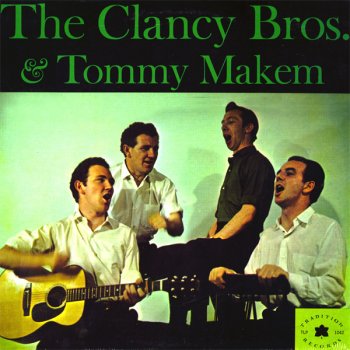
The album pictured here is one of the treasures of my youth and to this day one of my favorite of all collections of traditional songs, the first recording to be released under the group name of The Clancy Brothers and Tommy Makem. Recorded largely on a reel-to-reel recorder in the kitchen of eldest brother Paddy Clancy's Greenwich Village apartment (good acoustics, but not great), the recording possesses the raw energy and arrestingly different sound that many other groups' first albums also demonstrate. Hard as it may be to imagine today as the airwaves and music vendors are awash in Celtic-flavored groups and soloists - this 1959 release on the Clancy-owned Tradition Records was the first that many Americans had ever heard of something akin to real Irish folk music. And the song that they chose to lead off this landmark recording - the song that subsequently and consequently became their opening number in concerts for decades to come - was "Brennan on the Moor."

Like many another highwayman and robber who came to be immortalized in a folk song, Willie Brennan was a very real person who was hanged for his crimes in 1804 in Clonmel, County Tipperary. In those days, following close upon the heels of the Great Rising of 1798, many extra-legal activities were punishable by death, worth mentioning perhaps because young Willie apparently never "sullied himself with blood," according to some of his contemporary admirers - however bold Brennan may be in the song, he is not a sociopathic and murderous thief of the stripe of Jesse James and other American bad guy killers. The mere act of theft, however, was itself a capital crime until well into the 19th century in Europe in general an England in particular. There are indications that there were hangings of children as young as eight for stealing loaves of bread in the 1730s, and the dark underpinning of the narrative of Dickens' Oliver Twist (and hence the musical Oliver!) is that a noose awaits those delightful pickpocketing boys should they be caught - the fate that finally befalls their handler Fagin. So Willie Brennan's apparently non-violent career of Robin-Hood-like plundering of the wealthy for the support of his dear old ma and her friends was destined to end in a painful strangulation in any event, murderer or not and rebel or not.

The song was likely penned as a broadside ballad very soon after Willie's gallows dance. But broadsides were printed on cheap newsprint and sold for a penny; few originals survive. The first printed versions of Willie Brennan's tune that we have today appeared in both Ireland and England in 1859 - long after the song had entered the folk tradition because, as we shall see, it was popular with immigrant Irish soldiers in the American Civil War. In Ireland, there are a couple of major variants and all of the versions feature eight or nine verses (with a subplot encounter with a peddler) as opposed to the five or six verse version we usually hear in the U.S.

The Clancy version has become the template for nearly every other group's adaptations and performances of the song. There is a bit of irony there because, as Liam Clancy noted in his memoir The Mountain of the Women and elsewhere, the "Brennan" song that they had first heard as youngsters was a moderately slow, mournful fiddle tune. The brothers and Makem felt that the lyric demanded more energy, and that is what they gave it. The beauty of that very first recording, however (unavailable as yet on YouTube) is that they started the song very quietly and built to a rousing climax; most live performances were largely climax with little build-up (and you may blame the banjo for that, which was not part of the original instrumentation that consisted only of Liam whacking away on a 00028 Martin guitar with nylon strings).

Our first version here is as close in time as we can get to that 1959 recording,* a live performance of the CB&TM from a 1962 Chicago PBS video:


The fully-realized performance by the group, complete with a last verse from one of the variant versions, is here from the group's 1984 reunion concert from Belfast:


Now for something a little different. I have learned of and come to admire the work of the 97th Regimental String Band while doing these articles. It's a group that specializes in authentic replications of Civil War-era tunes - I have included their version of "Goober Peas" in my piece on the song. Here is how "Brennan" might have sounded in a camp somewhere in Virginia in 1862:


Quite a resemblance here in the modified tune to a number of other Civil War melodies, notably "The Bonnie Blue Flag."

Most of the contemporary award-wining Celtic bands sound little like the Clancys, moving the acoustic folk sound more toward what we called folk-rock in the 60s. The Killigans, for example, identify themselves as "folk-punk," and the Dropkick Murphys and Pogues also go generally for the loud and electric. The band of the moment in this field is the Sligo Rags, a southern California group that has been making waves nationally. This is definitely a fresh interpretation of "Brennan":


Sort of a blues/reggae take on it - not sure exactly what I think of this. Interesting at the very least.

Courtesy of Folkways Records, we have a really interesting alternate version from Canadian-Irish folksinger and folklorist Tom Kines (1922-1994):


Lastly - Bob Dylan has been open about his admiration for the Clancys (Liam especially) since he first arrived in New York in 1961. Imitation being the sincerest form of flattery, of course, young Mr. Zimmerman appropriated perhaps half a dozen of the Clancys tunes for his own songs, including this "Brennan" rewrite that he titled "Ramblin' Gamblin' Willie" and that the Clancys called "Ride Willie Ride" - the circle completes itself as the inspirers sing the composition of the inspiree:


This is from one of the last albums by the group from the 90s. Tom Clancy has died, replaced by Bobbie Clancy on banjo; Tommy Makem has gone solo to be replaced by cousin Robbie O'Connell.

For a final thought, I turn to my brother Rick, whose Rightwing Nuthouse blog is a delightfully literate and provocative site whose politics rile me even as I'm smiling. No disagreement between us four years ago, though, when Rick published a marvelous essay called "Death, Be Not Proud" following the passing of Tommy Makem. He wrote in part:

For me, their music inspired a far more personal journey than the great issues being illuminated by the Pete Seegers or Peter, Paul, and Mary’s of the folk music scene. The Clancy Brothers and Tommy Makem’s music opened the door to discovering my family’s Irish heritage and helped us all take enormous pride in who we were and where we came from....For the Moran family, The Clancy Brothers and Tommy Makem opened up an entirely new world, a means of discovering our past. Their music was not at all like the melodramatic “American” Irish music we were all familiar with. Their songs were of the real Ireland – a place of pain and suffering, of oppression, and a kind of fatalism that seems to me unique to the Irish people.

...and of "Brennan on the Moor," the song that started that journey for all of us.

____________________________________________________

Addendum, March 2017 Due to arrangements that YouTube has made with thousands of content providers over the last few years, hundreds of thousands of original recordings are now available on the site - so here it is, the opening track from the 1959 album pictured above, the first version of "Brennan that I ever heard - and for my money never surpassed.

Thursday, July 7, 2011

When The Whale Gets Strike: "Greenland Whale Fisheries"

Hard to believe that it has taken me more than three years to get around to discussing "Greenland Whale Fisheries," since for more than fifty years it has been likely my favorite of all folk songs, in large part because of the memories that hearing it stirs - more on that at the end. But it's just a damned fine song any way you look at it, and a very old one at that - which of course means, as we'll see shortly, that it has lent itself to a greater-than-usual variety of interpretations.

Almost two years ago, I did a piece here on "Blow Ye Winds In The Morning" - another fine 19th century whaling song, but one that differs fundamentally in its intent and affect from "Greenland." "Blow ye Winds" is a commercial, a recruiting poster - "they say you'll take five hundred whales/Before you're six months out..." and hence make quite a bit of money from the shares of the profit, all while having a very good time, if you look at the rest of the lyric. But "Greenland" is a song that is much older, harder, and tougher - more of a commentary on what kind of adventures actually faced the whalemen out there (and there is more about that in the "Blow Ye Winds" article linked above). The portrait of the whaling life in this song is grim at best, and the minor chords in the accompaniment serve to underscore the melancholy tale being told.

"Greenland Whale Fisheries" has, as noted, many variant versions, but there are several common motifs that go back to the very earliest published arrangement of the song from about 1725. Oxford University's Bodelian Library has a later copy from about 1840 here:


Every version features a month, day and year specified early in the song, a whaling ship bound for the "Greenland ground," a brave captain and an eagle-eyed lookout, a chase, the whale's "flunder" capsizing a boat and killing several men, the captain's regret (though over what varies interestingly), the seamen's bitter desire to leave the "dreadful place" forever. It is a compelling narrative, one derived from the terrible conditions and dangerous circumstances in which the men lived and worked.

As usual, The Weavers and Burl Ives are most responsible for giving this song a second life in the mid-20th century, and The Weavers arrangement is the first one that I heard, around 1961. I'd love to present it here, but YouTube has been getting a bit hinky with me over all of my uploads for this series - so with a great deal of temerity, a bit of hesitation, and a gulp, I will present my own version first. It is almost word-for-word and chord-for-chord replication of what The Weavers did with the song, though needless to say without the superb professionalism that characterized their work. What I have especially emphasized is a) the moderate pace of the Weavers version, and b) the Seeger/Hellerman idea of framing the basic song with a part of a slower lament that they learned from collector Alan Lomax, who found it in Barbados (not a great whaling area, oddly). This is an analog recording done on a Korg 4 track tape machine, recorded in one take per track with no digital ability to fix the mistakes - it's not The Weavers, but who is?


Now, The Weavers had the captain mourning the loss of the men more than the whale - I changed it because I liked the way that Theo Bikel did the song, with the heartless captain grieving over his lost profits. Heartless captains are rather more the rule than the exception in sea folk songs anyway. Here is Bikel with Judy Collins at the 1963 Newport Folk Festival:


Note that Collins and Bikel are following the Seeger/Hellerman arrangement but presenting the first go around of the Barbadian fragment as an instrumental.

Paul Clayton, profiled here a couple of weeks ago, also maintains a fairly moderate pace in his simple but effective treatment of the tune:


But "Greenland Whale Fisheries" has also been performed over the years as a very quick, high-energy, rollicking chantey, and for me the prototype of that version is this recording from the Chad Mitchell Trio:


Canadian-Irish Ryan's Fancy tried something similar but with two distinct disadvantages - they didn't have the trained vocalists Mitchell, Kobluk, and Frazier of the CMT, and they didn't have the Mitchell group's Paul Prestopino on banjo. They gave it a good go, though:


"Greenland" is still covered widely today, though unfortunately IMHO in the ragged and rocking version popularized by the Pogues, here from 1984:


There is an absolute tribe of other so-called Celtic groups who riff off of this arrangement for reasons beyond me. The raggedness doesn't make it more authentic; traditional English ballads like this were nearly always performed at a very moderate pace.

For me, other artists have far more interesting approaches - like eclectic genius Van Dyke Parks, who did an album of sea chanteys in 2006 and provides instruction in how you can update and rockify a trad folk song with sensitivity and skill:


Or AnnaLee Rockinsquirrel on harp:


Or Scotland's legendary Corries, who sound like three Tommy Clancys with a burr instead of a brogue:


"Greenland Whale Fisheries" was one of the first songs I learned to play on the guitar - I could add that it was one of the songs that influenced me to want to play guitar. It became a standard part of spontaneous family singalongs going back to the early '60s - singalongs that originated out of necessity. My family rented a place in a remote area of northern Michigan for a few weeks each summer. We were beyond the reach there of anything that had to be transmitted over radio and microwaves, and in that pre-digital epoch before cable and satellite we had to create whatever entertainment we wanted to enjoy. All ten of the Moran children were musical to some degree or other - but it was in the heart of the folk boom, and even in my early adolescent desire To Be Alone, I could not start playing songs for myself anywhere inside or outside without attracting a sibling or two - and eventually the whole passel of them with the parents to boot. We always seemed to close those sessions with the melancholy version of "Greenland" at the head of this essay - very Irish of us, I suppose. Fast forward to 2001, forty years down the road. Our mother has died, leaving us finally in middle age, orphans. The ten of us are assembled in the library of the house most of us had grown up in, a house to be put on the market the next day. We spend a long evening of drinks and laughs and songs and reflection - and as two o'clock hour approaches, with most of the "younger" ones ready to go to bed, the four or five oldest of us spontaneously begin to sing "Greenland Whale Fisheries." It is our last act as a family in the family home. That, after all, is the kind of thing folk songs are all about - and "Greenland Whale Fisheries" served the purpose handsomely. _________________________________________________________________

Addendum, September 2013

A couple of months ago, YouTuber AuntNessie posted a version of "Greenland" by The Weavers. This is not the studio recording from their album Traveling On, which as I note above is the first one I heard and my favorite. Rather, it is a live performance from the group's 1963 reunion concert that featured all eight of the musicians who had constituted the quartet at one time or another. The personnel on this track - Pete Seeger, Fred Hellerman, Ronnie Gilbert, and Lee Hays, the originals - are the same as on the earlier album, and the rendition is very close, if not quite exactly the same.


_____________________________________________________________

And further.....December 2014

I recently ran across this excellent live performance by Peter, Paul and Mary from their 25th anniversary concert. They are following the general drift of The Weavers' version, complete with the intro and conclusion of the Barbadian fragment.


And finally, May 2017....

...Thanks to the deals struck by Google/YouTube with many of the "content providers," we finally have a decent and copy-right approved upload of The Weavers 1959 rendition, the one that largely inspired many of the other versions on this page.

Friday, July 1, 2011

Tom Paxton's "Bottle Of Wine"

Back in January, I was delighted to be able to see Tom Paxton in concert at one of the great small venues on the West Coast, McCabe's Guitar Shop in Santa Monica, CA. Paxton is a hale and energetic 75 years old, still writing great songs ("The Bravest" about the firefighters of 9/11 and the very recent "What If, No Matter" about the Gabrielle Giffords shooting), and still puts on about as good a folk show as you can see. I have profiled three of TP's best-known and most-often-covered songs here on CompVid101 - "The Last Thing On My Mind, "My Ramblin' Boy", and "Can't Help But Wonder Where I'm Bound", and I've outlined in those posts why I regard him as the best of the modern folk-type songwriters.

Coincidentally, a few weeks ago I had the pleasure of meeting Milt Okun at a book singing, and Okun's Cherry Lane Music Co. has been Paxton's sole publisher for the more than five decades of his career. Reading Okun's book was illuminating about a wide variety of topics, most especially how an artist like Paxton, who has had steady but unspectacular album sales and virtually no singles sales, could have made a good living in music through all these years. Answer: the nine cents per unit sold that goes to the songwriter/copyright holder of the composition. Think about how many millions of albums have been sold with Paxton's songs on them - by the Chad Mitchell Trio (really the first high-profile group to do TP's songs), the Kingston Trio, Peter Paul and Mary, Ian and Sylvia, and many more - and you begin to understand how even in lean performing times that a songwriter of Paxton's caliber can prosper. It also explains why publishing income frequently becomes a bone of contention within bands and why the issues of copyright with sharing sites such as Napster of ancient memory and YouTube today remain so controversial.

For all of Paxton's songwriting success, only one composition of his ever became a bona fide singles hit, and that was "Bottle of Wine," a celebration of the joys of a rootless life spent drinking cheap wine - clearly a younger man's composition. The Fireballs' version of Paxton's tune sold over a million copies, which in 1968 dollars would have given Tom enough coin to buy a really nice house and car - not to mention the ongoing income from royalties and licensing every time anyone wants to use the song and every time an oldies radio station wants to play it.

"Bottle of Wine" is an innocent bit of fluff - not a sermon against the very real evils of alcoholism against which the "preacher will preach and the teacher will teach." Paxton's own approach to the song has always been as lighthearted as his lyric - here is from last January in San Diego, the night after I saw him at McCabe's:


The Kingston Trio did a fine job with the tune in 1964 - John Stewart's banjo part lends exactly the right kind of rollicking touch, and the little key change at the end is nice:


Forty plus years after the '68 hit, here are Jimmy Gilmer and the Fireballs in 2009:


I think that the Harris Brothers here capture just about the right mellowed-out feeling with the song - where the Fireballs sing it as if they'd had a few bottles, the Harrises sound like most of us feel after a few glasses:


Finally - Madacoustic braved the family rec room and the drunken friends to deliver a fine amateur performance in just the right setting:


Not much more to be said after that. Hoping that everyone safely enjoys quite a few bottles of wine over the coming holiday weekend. I certainly intend to.