Friday, May 24, 2013

Bob Dylan's "Mama, You've Been On My Mind"

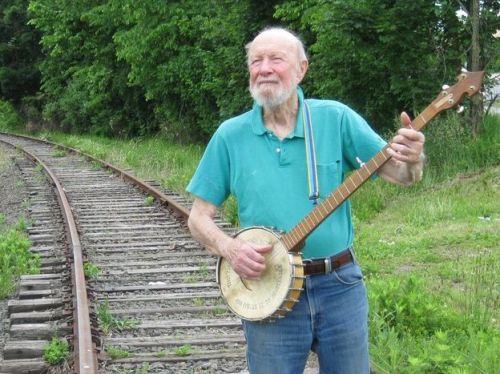
Bob Dylan turns 72 today, a fairly unremarkable fact, certainly not on the order of wonderment of, say, the notoriously self-abusive Keith Richards looking forward to birthday #70 in a few months following yet another extensive and strenuous Rolling Stones concert tour, or Pete Seeger's continuing vitality in his twin roles of musician and activist at the age of 94 - and as the godfather of American folk and roots music through most of the 20th century. Dylan remains simply Dylan, soldiering on doing his Dylan things, writing, touring, and performing, and now reaping accolade after accolade and award after award as cultural institutions around the world trip over each other in a mad rush to acknowledge his genius while he is still around. To any real Dylan fan, and I would guess to Bob himself, the recognition is fine, but it belabors the obvious - that in the words of the special 2008 Pulitzer citation he has had a "profound impact on popular music and American culture, marked by lyrical compositions of extraordinary poetic power." Time Magazine included Dylan in its controversial and typically idiosyncratic list of the most important people of the 20th century, and there is an international coalition of college professors who have organized and mounted a campaign to have Dylan named as a Nobel Laureate in literature.

That last may be a bit of a stretch - or not, depending on what you think literature and poetry are, just as one's reaction to the "singer" part of Dylan's role as a singer-songwriter depends very much on what one values in singing. A polished pop vocalist like Frank Sinatra (a towering figure in 20th century popular music, every bit as significant as BD in overall impact) he is not, but it is beyond serious question that his evolving vocal styles have shaped the sound of rock music throughout the world, and a recording in that genre that does not demonstrate Dylan's influence is as rare a bird as a pop vocal that does not have Sinatra's fingerprints all over it.

I have almost from the start enjoyed Dylan's vocals - almost, since on his first album he was affecting a kind of Woody-Guthrie-reheated singing style that just didn't come close to matching the easy, homespun sincerity of Guthrie's own. Traces of that remained in some of the performances on the second album pictured above, but the fact that The Freewheelin' featured mostly original compositions, including several that became folk/rock standards like "Blowin' In The Wind" and "A Hard Rain's A-Gonna Fall," overshadowed the actual renditions themselves as the quality of the lyrics essentially proclaimed the arrival of a new and very accomplished writer of folk-styled music. Still, the vocals here are merely a foreshadowing of the explosively original approach that Dylan seemed to perfect in the landmark 1965 recordings for Highway 61 Revisited, especially "Like A Rollin' Stone."

Of course, not everyone is as enamored of Dylan's vocals as most folks seem to be of his writing. Alec Macpherson, for example - a younger music reviewer for Britain's The Guardian - took a sledgehammer to the icon's singing in his review of Dylan's 2012 album The Tempest (a recording I thoroughly enjoyed, by the way). Macpherson commented that

For all the reverence Bob Dylan attracts in certain circles, it's been surprisingly easy to live life, as first an obsessive music fan and then a professional music critic, thoroughly untroubled by him. A sole ill-fated attempt to get into him....ended two-and-a-half songs into a best-of compilation with me flinging the CD out of the window, outraged that anyone could have the temerity to sing like that and call it art.

And further -

Dylan's lyrics don't come to life because he doesn't bring them to life. His voice is famously divisive – but, as horrible a rasp as it is, the problem is more about what he fails to do with it. He colours between the lines performatively, almost wilfully avoiding any element of spontaneity or surprise....lyrics in pop, rock and rap are not poetry: they're performance. The best exist not in a dry textual vacuum but are inextricably connected to the nuanced vocal inflections, the rush of notes, the tempo shift. A line that appears banal on paper can be – not seem, be – profound in the mouth of a talented vocalist. Words that look like nonsense can sound intensely meaningful if delivered as though there's something important at stake. And music can breathe vitality into cliches...

...which Macpherson maintains that Dylan never quite achieves, even when the words demonstrate the sublime lyricism for which Dylan has become so celebrated.

While I salute Macpherson's apt and usually-overlooked distinction between poetry and song lyrics, I can't quite go along with so total a diss on Mr. Zimmerman's melodizing, and my Exhibit #1 for the defense is Dylan's work on one of his best love songs, 1964's "Mama, You've Been On My Mind," a studio recording that inexplicably was never released as an official Columbia track until 1991, though bootlegs of it and of live performances had been circulating almost since it was written. The song is said to be about the break-up of Dylan's relationship with the late Suze Rotolo (the young woman pictured above, of course), and the June 9, 1964 recording is a classic of the kind of folk simplicity that Dylan was soon to abandon.


At his best in his early years, Dylan's singing could express both rage (as in many of the political songs) and pain, as here. "Spontaneity and surprise"? Maybe not - but both or either would be utterly out of keeping with the nature of the lyrics, and the fact that Dylan avoids them is a credit both to the performance and to his understanding of the nuances of his own verses.

Joan Baez provided Dylan with the biggest early boost to his career (along with Peter, Paul and Mary) - Baez was already a folk superstar and the subject of a Time Magazine cover story before Dylan even arrived in New York City. Her formal studio recording (as "Daddy, You've Been On My Mind" to make the lyric gender-appropriate) appeared in 1965, almost a year after she began performing the song live, often with Dylan in tow as an opening act who would join her on this number.


The purity of the young Baez's soprano and the more conventionally-understood excellence of her singing puts a different spin on the tune - and makes it rather more commercially palatable than BD's rendition above.

Johnny Cash's signature rockabilly-influenced sound also lent itself to an interestingly different take on the song:


Note that in deference to censors and the standards of the more conservative country radio stations which at first gave Cash his greatest airplay, he tames the lyric a bit in the third verse from the original "I don't even mind who you'll be waking with tomorrow" to "It don't matter to me where you'll be waking up tomorrow..." Cash, of course, helped to bring Dylan's writing to country audiences as much as Baez did to the folkies.

Beatle George Harrison also loved Dylan's whole musical approach - the band's 1967 Sgt. Pepper's Lonely Hearts Club Band was directly influenced by BD, and Harrison covered a number of Dylan's songs in live performance. This is a studio recording from Harrison's Living In The Material World album from 1973:


I find it interesting that on this track Harrison is affecting a Dylanesque tenor to his singing, unusual because in most of his solo work George H. had a quite distinctive and pleasing vocal style all his own, one that sounded nothing like this. Think "My Sweet Lord" or "Give Me Love."

The Kingston Trio came a bit late to the Dylan party, likely because their chief competitors at the top of the pop-folk heap were Peter, Paul and Mary, who had scored two top 15 singles hits with Dylan tunes before the Trio had recorded even one and who seemed to have a lock on the reputation as interpreters of BD. The KT had been used to setting trends in folk, not following them, though the group eventually recorded a number of BD songs toward the end of its first cycle. This rendition (as "Babe, You've Been On My Mind") was not released until 1969, two years after the group broke up and a bit before KT's Bob Shane re-formed the band with different partners as The New Kingston Trio.


The lead vocal and 12-string guitar work here are by John Stewart, who was shortly to embark on his own career as a singer-songwriter. Stewart's voice has the perfect tinge of loneliness and longing appropriate to the lyric, though it's worth noting as well the as-always supremely tasteful and understated harmonies provided by Nick Reynolds on the latter verses.

There have been scores of covers of the song over the decades, and it has continued to find its way into the repertoires of younger artists to this day. One of the better recent versions is from the Swedish duo Mando Diao, here from a live performance from 2005:


Sounds to me as if the guys had been listening to Johnny Cash and Simon&Garfunkel and fused their styles into this track.

Lastly, Jack Johnson has been a favorite of my high school and college students for over a decade now, and he has a distinctive approach to the songs he covers - here, slowing the tune to a more reflective pace:


Johnson uses a range of musical tools here, including bringing in more instruments as the recording builds to its climax. Good stuff.

Not surprisingly for a blog about folk music such as this one is, Bob Dylan's name crops up scores of times in the more than 180 articles here. How could it not? Though I have issues with the mawkish adoration and hagiography that have become attached to a very real person and artist, and though a realistic and balanced understanding of both the extent of his achievement and its very nature is likely decades and perhaps generations away, I do like a remark made by critic J. Hoberman in The Village Voice a few years back because it gets at the essence of Dylan at the same time that it expresses the problematic nature of his relationship with folk music. Hoberman says "Elvis might never have been born, but someone else would surely have brought the world rock 'n' roll. No such logic accounts for Bob Dylan. No iron law of history demanded that a would-be Elvis from Hibbing, Minnesota, would swerve through the Greenwich Village folk revival to become the world's first and greatest rock 'n' roll beatnik bard and then — having achieved fame and adoration beyond reckoning — vanish into a folk tradition of his own making." It can't be summarized better than that.

So a happy birthday to Robert Zimmerman, wherever you may be. Long may you run.

Addendum

I can't believe that this version did not appear in my YouTube search - or rather, I do believe it, since the YT search protocols reek and are a disgrace to its corporate master Google. In any event, Linda Ronstadt was one of the great singers of the era, and this version - ferreted out of YT obscurity by my longtime friend from back in the day Mike Peterson, to whom I tip my cap and pull my forelock - has the distinct folk rock sound she helped popularize, with more than a bit of the Stone Poneys[sic] sound, the band she had just left to record the solo album this is from.

Friday, May 3, 2013

A Pete Seeger VideoFest On His 94th Birthday

In honor of the 94th birthday of America's arch-druid of folk music, here are videos of some of the songs that are the gift of of this master performer to his land and people.

Even granting the enormous importance of countless others - the Lomaxes, Leadbelly, Woody Guthrie, and so many more - without Seeger's tireless energy and 70+ years of performing and activism, all those ballads and songs and hummable folk tunes would likely be gathering dust in obscure corners of university libraries or on crackling recordings on small record labels instead of being the significant element of our cultural fabric that they have become.

Virtually every performer in the pop-folk world during the revival era acknowledged Seeger as a major influence and inspiration.

I might well title this post "Songs We Owe To Pete Seeger."

"If I Had A Hammer" - Original Weavers Version 
Seeger later acknowledged that he thought Peter, Paul and Mary improved his song.


"Wimoweh" and "Flowers"
From the Smothers Brothers show. Seeger discovered Solomon Linda's "Mbube" in a stack of discarded 78rpms given to him by Alan Lomax and transliterated the title into what he thought he heard on the recording.


"Turn! Turn! Turn!"
Of the dozens of video versions of Seeger performing the song, this one from the mid-1960s Rainbow Connection show with Pete supporting Judy Collins is my favorite.


"We Shall Overcome"
A song in whose dissemination Seeger was an important element, as he explains below. From the 1963 Carnegie Hall Concert.


"Guantanamera" 
That Carnegie concert LP was one of the treasures of my boyhood, and this was my favorite track on that fabulous record. As with many, many other songs - most Anglophone Americans had never heard this surpassingly beautiful song in both words and music until Seeger introduced it. Pop music fans may note that the massive commercial hit by The Sandpipers simply adapted Pete here word for word, down to and including the narration and translation.


And....

Seeger in 2006 With The History Of "We Shall Overcome"


Seeger in 2009 Talking About "Turn! Turn! Turn!"


Jim/Roger McGuinn Performs "Turn! Turn! Turn!" At The Kennedy Center Honors For Seeger" (1994)

Thursday, April 4, 2013

The Folk Process And "Buddy Won't You Roll Down The Line"

A little over two years ago, I posted here some thoughts on The First Grammy For Folk And Why It Matters Today, which though mostly a discussion of the Kingston Trio's second studio album At Large enabled me to ruminate on a now long-forgotten controversy about what constituted authenticity in folk and roots music and how our sense of that has changed over the decades since 1959. Half of the population of the U.S. today was born after 1970, and for them, music like that which is purveyed by, say, the Avett Brothers or Mumford and Sons (worthy and talented musicians all) or on the soundtrack of Oh Brother, Where Art Thou? surely does sound "authentic," what with the banjos and Appalachian accents and all. Yet had the recordings of that soundtrack or those artists, any of them, appeared in 1955 or 1960, I guarantee that they would have been as excoriated with the same vehemence as "commercial" and "tawdry" and "tinselly" as were the similarly polished and professional recordings of the pop folk artists of the great revival era, spearheaded in terms of sales by but in no way limited to the LPs of the Kingston Trio. Just a few years ago, major urban traditionalist and banjo master extraordinaire Billy Faier revisited what he thought might have been a youthful prejudice against the KT and similar groups when he reviewed a Trio compilation disc. Faier's review was thoughtful and considered, but even 45 years after the heyday of pop folk music, Faier found little to like in what he heard. He sensed "very little respect for the folk genre here" and came to the overall conclusion that the KT's output (and by extension that of many other pop folk groups) consisted of "a mishmash of twisted arrangements that not only obscure the true beauty of the folk songs from which they derive, but give them a meaning they never had."

Faier was one of the most dedicated of the participants in the early 1950s spontaneous folk gatherings in Washington Square in New York City, and he has spent a lifetime performing and teaching traditional music and instrumental skills. Agree with it or not, his opinion matters; it carries with it the weight of an expertise in the folk field that very few others in the 20th century could match - the Lomaxes and Pete Seeger, Cecil Sharp, Jean Ritchie, Izzy Young, a few others perhaps. And it is not that his critique is without foundation - there are plenty of songs on the CD he was reviewing that demonstrate exactly what he says they do: a transformation, in some cases even a vulgarization, of tunes that began their existences somewhere in the hazy past of tradition and seemed to have been preserved intact through decades or even centuries of oral transmission.

What troubles me about the review, however, is not that Faier dislikes music that I like, but rather that anyone with as encyclopedic knowledge of traditional songs as he possesses must surely know that his phrasing  - again "that not only obscure the true beauty of the folk songs from which they derive, but give them a meaning they never had" - is a nearly perfect description of what has come to be known as the folk process, the way in which a single melody over time becomes adapted to a wide variety of uses, many of which bear no resemblance to the previous incarnation of the song whatsoever but somehow manage still to be regarded as authentic folk songs. These CompVid101 posts are full of examples of exactly that, even when there is no KT or other pop-folk version in the article. Take, for example, last year's musings on one of my favorite old songs, "Over The Hills And Far Away", which began as a Scots lullaby or children's song rather more than three hundred years ago, was turned into a musical comedy love song by one of England's great dramatists in the early 1700s, was purloined from thence to become a military recruiting song for more than a century, and today remains as a regimental march for several units in the UK's armed forces. Quite a journey for a single song, I would say, though I have yet to see a folk song scholar criticize any of the vastly different uses to which a simple ditty for children has been put.

Another example comes from the Roots Music and Beyond radio program that I co-host with the redoubtable Art Podell. For our St. Patrick's Day show a few weeks back, I paralleled songs from Ireland that had been transformed into quite different tunes when they reached our own sunny shores. A number of our listeners remarked that they had never noted that "The Old Orange Flute" from Ulster appears in the American west as "Sweet Betsy From Pike." Here is Tommy Makem with "Flute":


...and Roy Rogers and The Sons of the Pioneers with "Betsy":


The "Flute" song predates "Betsy" by a number of decades, and about the only point in common between the lyrics of the two is a certain mordant humor. Yet no one suggests that "Betsy" perverts "Flute" by giving it a "meaning it never had," nor would anyone seriously deny that both tunes are authentic folk songs. Thus with dozens of other tunes profiled on this blog over the last five years. Those very permutations and adaptations are, in fact,  why this blog exists and all - and what give folk music its unique character and enduring interest.

All of which takes us to Uncle Dave Macon's "Buddy Won't You Roll Down The Line." Macon's original (and he may well be the sole composer of the piece) is an entertaining but odd combination of a labor protest tune that brackets a more conventional prisoner's lament - as if "The Midnight Special" met "We Shall Overcome." The song grew out of the Coal Creek War in Tennessee in the early 1890s, when Macon was yet a young man.  The point of dispute was that two large coal companies, the Knoxville Iron Company and the Cumberland Coal Company, had decided to reduce their labor costs by contracting with the state of Tennessee to use convicts who had been sentenced to hard labor in the companies' mines, thus disemploying thousands and thousands of miners who had been working at near-starvation wages anyway. The miners organized and resisted, destroying company facilities and blocking convicts from entering mines; the companies retaliated by burning miners' homes and villages and organizing mass arrests and trials. There were a number of armed confrontations as well between the miners and company goons and later the state militia - in both cases, men were killed and wounded.

Macon opens his song with a summary of the situation:

Way back yonder in Tennessee, they leased the convicts out.
They worked 'em in the coal mines against free labor stout;
Free labor rebelled against it. To win it took some time.
But while the lease was in effect, they made 'em rise and shine


...but then shifts to the prisoners lament:

The beans they are half done, the bread is not so well.
The meat it is as burnt up and the coffee's black as heck.
But when you get your task done, you'll gladly come to call.
Anything you'd get to eat it taste good, done or raw.


...with the humorous avoidance of singing "hell," before returning to a political comment (and another slickly humorous avoidance of the same word):

The bank boss is a hard man, a man you all know well.
And if you don't get your task done, he's gonna give you hallelujah!
Carry you to the stockade, and it's on the floor you'll fall.
Very next time they call on you, you bet you'll have your coal.


The "Buddy won't you roll down the line" chorus seems to be akin to the "let the Midnight Special/Shine its ever-loving light on me" articulated hope for eventual freedom, the "line" being the tracks that will lead the singer away from captivity and into the arms of "my darlin," much as the singer in "Midnight Special" looks forward to the embrace of "Miss Rosie." Here is Macon on 5 string banjo, with Sam McGee backing him on something called a 6-string guitar/banjo as well as harmony on the chorus:


Here with a perfect replication of the instrumentation on Macon's recording, the very much lamented Mike Seeger taking Macon's part with Bruce Molsky doing McGee's accompaniment - on a 6-string guitar/banjo:


The video is from The Old Time Banjo Festival 2009 at The Birchmere in Virginia, a matter of weeks before Seeger's death from cancer at age 76. Like Billy Faier, Mike Seeger spent a productive life nurturing, performing, and teaching the trad music that he loved.

Around 1960, however, Texas songwriter Jane Bowers collaborated with Kingston Trio founder/arranger Dave Guard to create a very different song, one that changes the labor/prison tune into an apolitical wanderer/hobo/traveling number. In the past, I would have just created a simple video of the KT version, posted it to YouTube, and used it here - but of late, the good folks at Capitol/EMI have been looking askance at my efforts in that regard and blocking many of my videos from playing, so my days of creating such videos for this blog are at an end. You can, however, for a mere 89 cents purchase a copy of that track from Amazon here, and it would be well worth the pennies to do so, as it is one of the original Trio's best arrangements.

Update, June 2013: The change in Capitol's policy regarding the Kingston Trio videos, discussed in the margin note on the left, now allows me to post the original KT arrangement here:


We also have a creditable version of the KT arrangement to offer.

A new posting of the tune (as of summer 2014) comes from a KT tribute band called In-Folk-Us, doing a fine job with the harmonies and adding both a train whistle and Nick-Reynolds-style conga part not found on the Kingston recording:


Another recent upload comes from Gigatimes - a unique and completely successful brief re-thinking of the tiune as a jazz number, with John Renz on baritone sax and brother Ed on drums:


In the 1980s, singer-songwriter John Stewart, formerly Guard's replacement in the Kingston Trio, re-wrote "Buddy" yet again, this time as a kind of "life on the edge" number:


This is from Stewart's EP Revenge of the Budgie, the Budgie being Stewart's former Triomate Nick Reynolds, heard here on high harmony and on the second verse. Reynolds had sung on the Kingston Trio's original track (Stewart was not in the group at that time), and he tips his musical cap at the end of his verse with the "get on down the line" substitution. This is just a bit of folk-rockish tuneful fun. I recall a reviewer at the time making a point along that line, remarking that "Buddy" was the only song with KT roots that the two chose to do on that EP - which the reviewer also noted was reminiscent of the band A Flock of Seagulls but more melodic and interesting. Note, though, that in a kind of "full-circle" moment Stewart returns to Macon's original chorus.

As I noted in the first Grammy for folk piece, the whole controversy over what music and artists have a rightful claim to be termed "authentic" or "folk" has largely disappeared, except perhaps in a dwindling number of academic circles. I have worked quite a bit on a fair number of Wikipedia articles on folk music and folk artists and folk revivals and more, and the understanding of what the term means to the aforementioned half of the country that was not yet born when the disputes were raging (and which forms the bulk of Wikipedia editors) is very different from that of the urban traditionalists and commercial folksters who are now fading away and passing on. On the whole, that is probably a positive development, since pigeonholes are for, well, pigeons, and good music is always just that, whatever its source. I may myself mourn the passing of a certain respect for and understanding of tradition, though I would never have gone as far as Billy Faier did above. I suppose I can get used to Bruce Springsteen morphing into a "roots" performer and all the Celtic What-Have-Yous becoming the current face of Irish music, even as the mention of The New Lost City Ramblers or the Clancy Brothers will elicit nothing but a blank and uncomprehending stare from the younger generation. That's the way the world wags on. Folk process, you know.

Friday, March 29, 2013

Dino Valenti's "Let's Get Together"

For western Christianity, today is Maundy Thursday, which in my Catholic childhood was called simply "Holy Thursday," and it is the beginning of the Passiontide, which gives way at dawn on Sunday morning to Eastertide. For Christians, this is the most sacred and significant phase of the nearly 2,000-year-old liturgical year, observing as it does Thursday's Last Supper, Good Friday's Crucifixion, Holy Saturday's quiet entombment (and for those who really know their traditional theology, the Harrowing of Hell), and Easter Sunday's Feast of the Resurrection. All of the mysteries and core beliefs of the religion coalesce into the three day observance (again for traditionalists, the Triduum or "Three Days" is the official name) - the incarnation of the son of God as a human being, the point of which was to redeem humanity from its sins through a sacrificial death (symbolized by the eucharistic elements of Thursday's Last Supper) followed by a triumphant resurrection that solidified the possibility of redemption for all of us wretchedly flawed and miserably sinful people.

Yet another odd opening for an article on a folk song, it might seem at first, but I would suggest that it is the perfect context in which to understand why Dino Valenti's (pictured) "Let's Get Together" attained such popularity when it was written and recorded almost fifty years ago,  and why it remains relevant today, this week, now - even, perhaps especially, for those many of us who do not profess any such beliefs as described.  Valenti's lyric makes a clear if slightly oblique reference to mainstream Christian theology ("When the one who left us here/Returns for us at last," alluding to the belief in the second coming of Christ), but I would suggest that in the aggressively irreligious and secularist zeitgeist of the late 1960s when the tune became a major chart hit for The Youngbloods, its popularity with the record-buying youth of the day had nothing to do with conventional religion or theology whatsoever.  Rather, it is the way that the lyric expresses the universal desire for peace and love of nearly all the segments of that era's youth culture - the hippies and war protesters and Hare Krishnas and Transcendental Meditators and Flower Children and all their attendant wannabees and fellow-travelers - that propelled Valenti's composition to high-profile popularity and embedded it in the consciousness of the time.

Those last two sentences are, I suppose, some sort of heresy at best and apostasy at worst, and the good nuns of St. Raymond's School in my native Illinois are undoubtedly spinning in their graves even as I write this. Yet rest easy, good sisters - your lessons were not completely lost on this errant child. Beyond the theology, beyond the religious trappings of today, there remains at the core of the Holy Thursday story a transcendent moment, one of genuine historical significance whatever attitude one has toward  religion itself. In the Gospel of John, after the Passover Seder, Jesus is imparting a final lesson to his followers, which he begins by saying, "A new commandment I give to you, that you love one another, even as I have loved you..." - a corollary of sorts to the golden rule of doing unto others as you would have others do unto you. Taken together, the commandment and rule are enough to warm the hearts of even the flintiest and most committed of non-believers, including such luminaries as Thomas Jefferson and Benjamin Franklin, both of whom revered Jesus as a great teacher without adhering at all to conventional beliefs in his divinity or in any traditional theology. Mahatma Gandhi also noted the significance of the imperative to "love one another" as the foundation of any society with pretensions to justice.

Whatever  Valenti's  intentions were initially, the song owes its popularity to the idealism of the young five decades ago - the plea of his chorus to "love one another right now," written in late 1963, expresses an urgency that seems poignant now that we know of the darkness that was settling over the land at just that time. Valenti (who was born with the name Chet Powers) recorded the song for his debut solo album on Elektra Records in January of 1964:


This beautifully clear recording is a digital remastering from 2007, significant in that Elektra (now a subsidiary of Warner Music Group) felt that despite
Valenti's spotty career, frequent legal troubles resulting from drug use, and early death at 57 in 1994, that there was still enough of a market for his music to validate the expense of upconverting the original analog tapes to a digital format. If their confidence proved justified, it was on the basis of this song.

Cover versions began to appear even before
Valenti's album was released, likely due to the small and close-knit community of folk and rock musicians (and the soon-to-be fusion of the two) in the San Francisco Bay area to which Valenti had moved, where everyone knew everyone else and traded and stole songs from each other. Kingston Trio manager Frank Werber apparently heard Valenti performing the song in a San Francisco nightclub, liked the tune, and brought it to his group, who also liked it and recorded it a mere two months after the release of Powers' record. This is from the Trio's eighteenth original and final LP for Capitol Records - Back In Town, recorded live at SF's Hungry i, from which the group had rocketed to fame six years prior:


Pop country legend Glen Campbell sat in on many of the tracks on the album, uncredited, and it may well be Campbell playing the 12 string guitar here. Though the album itself was of only middling success in terms of performances, sales, and recording quality, several of its tracks received favorable critical response. Just a few years ago, prominent Allmusic critic Bruce Eder remarked that "'Let's Get Together' might even have put the Trio out in front of the folk-rock pack, had Capitol gotten either this performance or the Trio's studio recording of the same period (which wasn't heard until the mid-'90s) out as a single."

Frank Werber also managed We Five, the Bay Area folk-rock group headed by KT member John Stewart's younger brother Mike. We Five had had an international smash hit early in 1965 with their rendition of Sylvia Tyson's "You Were On My Mind," and Werber believed that the follow-up release in late '65 should be the group's arrangement of "Get Together":


We Five's arrangement seems to have been a cross between
Valenti's original and the Kingstons' cover. Like the KT, We Five re-ordered the lines in the song's chorus and added an element of drama to their version that anticipates the Youngbloods. This recording reached a respectable #30 on the national singles charts, but it was the last of the group's 45s to make the Hot 100.

Folk superstar Judy Collins was also transitioning away from the accepted perimeter of revival-era folk music when she performed the song on a BBC television show in 1966:


Collins' syncopated take on the song reminds us that Brazilian bossa nova was all the rage in American pop that year, and Collins had the versatility to pull this off. It helps that her accompanying guitarist is the multi-instrumental genius Eric Weissberg, late of mid-50s folk group The Tarriers and a few years later the banjoist on the recording of "Dueling Banjos" that was included in the film Deliverance.

Back in the Bay Area, an assemblage of former folkies had created a folk-rock band that they named The Jefferson Airplane, including "Let's Get Together" on their debut album, which was released in mid-1966:


This is the Airplane pre-psychedelia - and pre-Gracie Slick. Signe Anderson is the female voice here.

Less than a month after Woodstock, in September of 1969, the "Celebration At Big Sur" in California sought to replicate the New York festival's success. It didn't come close, but at least Joni Mitchell was able to make this one - here with Woodstock vets Crosby, Stills, and Nash:


Mitchell was early in her career most successful as a soloist, and this apparently impromptu rendition doesn't reflect the best of what either she or CS&N were capable of. The video itself, however, with its crowd shots and cuts away from the performers, works nicely as a time capsule of sorts.

And that brings us to The Youngbloods, who first waxed "Let's Get Together" in 1967 and released it as a single. It went almost nowhere until '69, when this recording was used in a popular public service announcement for the National Council of Christians and Jews. RCA, the band's recording company, sensed that it was on to something and rushed out the nearly two-year-old track as a single. The suits were right in this case - the record reached #5 on the national charts:


Jesse Colin Young is the lead here, and the arrangement seems to owe a little bit to each of the preceding recordings, Collins perhaps excepted - the emotional crescendo of the Kingston Trio, for example, and the dramatics of We Five, and the guitar stylings of the Airplane. Like the track or not, it's a fine example both of the professionalism of the performers and of the superior technical know-how of the RCA engineers and producers.

Looking at the live performance videos above, it is tempting to relegate "Let's Get Together" to the dustbin of history as a naive and perhaps even shallow manifestation of a time period as fleeting and ephemeral as youth itself. The musicians are mostly in or nearing their seventies if they are alive at all, and many of the fresh-faced kids in the audiences are grandparents today. The Revolution came and went, effecting changes in many areas of American society without fundamentally altering it, and the battles we fight today - political, economic, and moral - are largely reincarnations of the same battles we were fighting with each other back then. The intensity and acrimony generated just this past week by the Supreme Court's consideration of same-sex marriage cases, not to mention the intensity and acrimony of a recently-concluded presidential campaign whose chief issues were economic justice and war and peace, remind me of nothing so much as of the divisive political conflicts of the late 1960s. How, then, has
Valenti's song lost even an iota of relevance? Should not the religionists pay more attention to Maundy Thursday's "new commandment" and demonstrate genuine love of neighbor transcending sectarian prejudices? And should not the humanists act as if they genuinely cared about real people and believed in the worth of individuals, even those whose ideas they find unacceptable? And is this not exactly the urgent plea of Dino Valenti in this song?

Saturday, March 23, 2013

John Stewart's "One More Town"

One of the unfortunate aspects of the unplanned hiatuses that I occasionally take from publishing posts here is that I miss dates and anniversaries that in the past have provided me with an opportunity to highlight topics in which I have had an interest stretching back decades. Last week, for example, was St. Patrick's Day - and in the four previous years I have had great fun profiling several of my favorite Irish songs. For several years I also did a late December retrospective on the best versions of songs that I had discovered in the expiring twelvemonth, but 2012 passed without such an article.

Most poignantly for me, I neglected in January to commemorate the anniversary of the passing of singer-songwriter John Stewart, whose death in 2008 I observed in a number of posts, including articles in 2010 and 2011 discussing two of his best-known songs, "July, You're A Woman" and "Chilly Winds," and what might well be a good introduction to the artist for those not familiar with his work, 2012's John Stewart's America. As a performer, Stewart had begun his career as a member of the Kingston Trio when it was America's most popular folk group, so it is no surprise at all that Stewart and his songs have figured prominently in these articles over the years, including last August's further reflections on his career while discussing his 1969 tune "Armstrong", this following the death of the first man to walk on the moon.

I had quite a bit to say about Stewart and his career in those two articles linked above and I don't want to be redundant here, but I would like to expand on a point that I made in each of those. Stewart's professional career lasted just under fifty years, and a protean career it truly was as Stewart moved from rock to pop-folk to country-folk to country-rock, back to rock and then roots and beyond - every format of  music popular in his lifetime except for disco. He released an album of "songs to run by." He recorded an album released after his death of piano-accompanied renditions of his songs. He anticipated and then god-parented any number of trends in music in this country and is often credited with being one of the first artists of what could truly be called the "Americana" style of music.

What enabled Stewart to have a viable career over all those years, however thin his concert schedule may have become at times, was his ability to write truly memorable songs. While the Monkees' mega-hit of his "Daydream Believer" - a song still heard and covered and performed today, 45 years after it broke through - may have paid the rent and bought the groceries for quite a while, it was the breadth and quality that his compositions evidenced from nearly the beginning of his career that has made him so remarkable if under-appreciated an artist.

I opined in a 2011 article that of Stewart's earliest work, the most professional and fully realized song that he composed was "When My Love Was Here" - but as beautiful as that 1950s-styled four-chord Kingston Trio ballad was, it was also completely atypical of the kind of songs that became his bread and butter, and to my memory he never again ventured into pop balladry. No, I would suggest that Stewart's coming-out party as a writer of top-notch folk-styled songs occurred in his second album with the group, 1962's Something Special, and what is probably the most memorable tune on the LP, "One More Town." Stewart was perhaps 22 when he wrote OMT, and though he had already had more than his share of adventures as a touring musician by that time, the lyric of the song is a forward-looking imagining, a young person's fervent hope that life can fulfill its early promise as an ongoing series of memorable and affecting experiences. Yet embedded in the lyric as well is an uncertainty - "I'm always goin', but I don't know where" that those of us who are four decades older than Stewart was when he wrote the words must find poignant and perhaps a tad melancholy. We may still be always going, but we know where we have been - and where we are headed.

The initial recording of "One More Town" was by the Trio on that aforementioned album, one that included for the first time in the group's history an orchestral background for the tunes, arranged by top-flight pro Jimmie Haskell:


The lead vocal is by the late Nick Reynolds, whose expressive and full-timbred voice is perfect for the song. While many KT fans found Haskell's orchestrations on most of the album's tracks to range from disruptive to wildly inappropriate, the strings work rather nicely here, I'd say, though I do believe they detract to a degree from the "folkiness" of the composition. Stewart delighted to relate in later years that Paul Simon had told him that Simon's "59th Street Bridge Song (Feelin' Groovy") had been inspired by "One More Town," and both the rhythm and general tenor of "Groovy" do bear a striking resemblance to Stewart's work.

As noted in the linked articles above, Stewart could get testy early in his solo career if people asked him to do KT songs, but by the mid-1980s when he was in his 40s, he appeared to have rediscovered his own professional roots, first in an EP with former Triomate Reynolds (The Revenge of the Budgie) and then in a full-length CD titled The Trio Years in which he re-interpreted songs he had written in his Kingston days. All of the tracks are high-quality listening, and "One More Town" is one of the best:


This is the "older and wiser" voice and attitude that Stewart cultivated later in his career. The understated guitar work is for me one of the highlights of the track.

A decade after the KT version, Australia's New World group recorded and released "One More Town." This performance is from a 1971 BBC show called The Two Ronnies:


This is a bit too uptempo and happy for my taste, but the arrangement is professional and the performance creditable. The hair-dos and outfits may give us pause, though. I'm not sure how many of us would like to be reminded that we may have looked that way once. Positively cringeworthy, to cop a term from critic Richard Corliss.

Jeff Hall and Cherokee Road posted this rendition just a few months ago:


It's hard to tell from the video, but I'm going to guess that Jeff and friends are perhaps rather younger than the rest of the artists on this page, and that has got to be encouraging to those of us who want to see folk music in general and quality songs like this survive into the next few generations.

Finally and most interestingly, not to say oddly - "One More Town" as a square dance "call" by Dan Sahlstrom:


I think somehow that John Stewart would have gotten a charge out of this, however strange it may sound. After all, someone thought enough of the composition to adapt it to this use, and that is at least flattering to the tune, however you look at it and whatever you think of the result.

I was a mere wisp of a lad of 12 when I first heard "One More Town." A sensitive and imaginative and sentimental boy I was too, and this song was perfectly attuned to my own dreams of a life of adventure and meaning. But fifty years later, I still think it a wonderful song, and not simply as a measure by which to reflect on how I've lived my life to this point. No, John Stewart gave us a song that as noted above looks forward to and imagines all that life can be, all its possibilities for adventure and achievement. There is no expiration date on dreams, and I believe that we most honor Stewart and this lovely work by holding fast to ours.

Thursday, December 27, 2012

Rise Again! Stan Rogers & "The Mary Ellen Carter"

It is hard to believe that as of next June, thirty years will have passed since an all-too-young Stan Rogers departed this earth at the age of 33 in the inferno of Air Canada 797 on the tarmac at the Greater Cincinnati Airport. Flight 797 reported smoke in the cabin mid-air and made an emergency landing, and during the evacuation of the passengers a flash fire erupted, trapping and killing the 23 souls still on board, of which Rogers was one. He was on his way home to Ontario at the time of his death, returning from a triumphant appearance at the famed Kerrville Folk Festival in Texas, with the consequent promise of wider exposure in the U.S. to supplement his phenomenal popularity in his native Canada. As with any other death of one so young, even decades later there remains a lingering melancholy over all that promise unfulfilled, all those tales and tunes that Rogers might have produced had he had the chance to do so. The composer who left behind him wonderful creations like "Barrett's Privateers" and "Northwest Passage," which were written around the time he was 30, was growing visibly in his songwriting craft album by album, and where that growth might have taken him over the next three decades is something that we can never know. Some of Rogers' more enthusiastic followers have declared him to be Canada's greatest songwriter - sadly, not likely in the nation that has produced Gordon Lightfoot, Neil Young, Joni Mitchell, Ian Tyson, Leonard Cohen, Bruce Cockburn and more. That is not to denigrate Rogers, really, as much as to underscore the aforementioned sense of loss that his death engendered.

It may at first seem odd to make so apparently tragic a story the topic of a post that celebrates the end of one calendar year and looks hopefully toward the next. Not so at all, I would say, because even in his short life and career, Rogers had developed an ability that one finds rarely and only in the most sensitive of artists, the capacity to see and express the dignity and resilience of the human spirit, even or perhaps especially in times of difficulty and travail. The hardscrabble life of the small farmer, for example, seldom finds as noble an expression as it does here in Rogers' "The Field Behind The Plow" - not even in John Steinbeck or James Agee:


All the attributes of a great folk artist are apparent here - the superior vocals of Rogers' rounded baritone, the impeccably supportive instrumental arrangement, the simplicity of story and lyric that makes it sound as though the age of "The Field Behind The Plow" could be measured in centuries rather than decades. And what stands at the center of this wonderful composition is a recognition of the essential and enduring heroism at the core of the what it means to be human. Or as Don McClean put it in another fine contemporary folk song, "Weathered faces lined in pain/Are soothed beneath the artist's loving hand" - which is precisely what Rogers has accomplished here.

I had been dimly aware of Rogers at the time of his death, mainly from hearing the occasional random cut from one of his early albums on FM radio. I thought his voice was pleasant, sort of a more refined and richer version of Tommy Clancy's, but little else about his work leaped out and grabbed me until about fifteen years later. I have always been possessed of a restless and wandering spirit, and from the late 70s through the late 90s, I had seized every possible opportunity to go wandering around the vast stretches of North America's Big Empty, from the Great Basin to the northern Plains to Alaska and to the crown jewel of it all, western Canada from Saskatchewan on the east and south to the Pacific and Arctic coasts, along the few and mostly gravel highways that traverse Alberta and BC and the Yukon and the old Northwest Territories. I have spent months and months and months of my life in the Canadian sub-Arctic and Arctic regions, mostly alone.

Knowing this and having seen a PBS special on Canada that used Rogers' songs as the soundtrack, my brother John bought several of Rogers' albums, copied some songs from them that he thought I would like, and sent the tape to me as a Christmas present. I was transfixed by the first song in the collection, "Northwest Passage," because it seemed almost written for me:


This was something special - the testament of a solitary wanderer who discovers himself in the process of trying to discover his land and its history. It was something I myself had tried to do, both in my own country and in Rogers', but which I think we all have tried to do in our own ways, even if we have traveled widely only in our own imaginations and have spent our lives working the fields behind our own plows.

Which brings us to "The Mary Ellen Carter," which may well prove to be Stan Rogers' most enduring song. The incident described in the lyric is as fictitious as are the events of "Barrett's Privateers," but like the latter number, there is in it a truth that transcends mere facts. The story of a small group of men trying to accomplish a virtually impossible task and succeeding by dint of "arm and heart and brain" though adversity seems to have gotten the best of them - this is Rogers at his uplifting and optimistic best:


Probably nothing else that Rogers has written, nor likely any other lyric written in Canada in the last three decades or so, has become as famous as that wonderful conclusion:

And you, to whom adversity has dealt the final blow 
With smiling bastards lying to you everywhere you go 
Turn to, and put out all your strength of arm and heart and brain 
And like the Mary Ellen Carter, rise again. 

Rise again, rise again - though your heart it be broken 
And life about to end 
No matter what you've lost, be it a home, a love, a friend. 
Like the Mary Ellen Carter, rise again.

And that is precisely what makes "The Mary Ellen Carter" the perfect song with which to look forward to a new year as we try to move past the darkness of the passing one.

After Rogers' own version, I think I like best the effort of the late Dave Guard, co-founder of the Kingston Trio, recorded for his 1988 solo album Up and In, nearly thirty years after he left the group he organized:


Guard had had a rough go of it at times in the decades after he left the Trio, and he was less than three years away from his own terribly premature death at 56 in 1991. I have always thought I heard a special kind of affirmation in the way Guard sings this song, especially in the last verse.

Stan Rogers' singing was clearly influenced by the gusto and energy of the vocal style of The Clancy Brothers and Tommy Makem, so it is no wonder at all that Liam Clancy and Tommy Makem, a successful duo for many years after the original group had broken up, would interpret Rogers' composition with - signature gusto and energy:


I would think that Rogers must have been thrilled to have heard his creation so well interpreted by the progenitors of his own musical style.

Maine's Schooner Fare, originally a trio at the time of this recording before the death of member Tom Rowe, presents the tune a bit more reflectively...


...but hitting the appropriate crescendo at the final verse and chorus.

The last word for this week and year will belong to Stan Rogers himself. There is a story famous among Rogers aficionados about this song and the sinking of the Marine Electric - I was going to summarize it until I found that in this clip from a CBC special on Rogers, the actual sailor involved tells the story himself, immediately before a live performance with a shortened lyric by Rogers. It is a good and inspiring way to end this year, and may we all Rise Again in the coming twelvemonth.