Thursday, March 31, 2011

La Plus Ça Change, Plus C'est La Même Chose - Sheldon Harnick's "The Merry Minuet"

Believe it or not, that ["The Merry Minuet"] was written in the 50s I think, maybe late 40s. Not much has changed!
- Bob Shane, FaceBook, 3/28/11


It is both amusing and disconcerting to find that a song like Sheldon Harnick's "Merry Little Minuet" that was written in 1948 or '49 as a topical comment on those times retains both its humor and its relevance more than six decades later. The vast majority of such songs amuse or rankle (or both) for a few years and then get dumped into the folk "remainder" bin when they lose their relevance as the events and conditions that inspire them fade into newer sorrows, outrages, and idiocies. But the best topical songs seem to acquire lives of their own, or "legs" as they used to say on Broadway. "Blowin' In The Wind" is surely an offspring of the Civil Rights era, and it was the Dust Bowl and Great Depression that engendered "This Land Is Your Land" - but does anyone doubt that those tunes will be loved and sung a century from now? What was originally created to be timely can occasionally become timeless, as with those two classics.

But I doubt that Harnick could have foreseen that his composition would remain as apropos as it has. "This Land" and "Blowin' In The Wind" have a distinct advantage in that regard over "Minuet" because their themes are universal and even more because they are not humorous. Usually nothing has so short a shelf life as topical humor. Vaughn Meader's The First Family was a brilliant and affectionate send-up in 1962 that wouldn't even get a smile (much less a laugh) out of anyone under the age of 60 today. Few comic impressionists were as gifted as was David Frye, and if you look today at videos of his Nixon, LBJ, RFK, William Buckley and more, you'll still probably laugh at how apt his barbs were - but your children will wonder what's so amusing about the guy. So why has "The Merry Minuet" beaten the odds and remained funny through all these years?

Well, for one, it's a well-crafted composition by an expert crafter of lyrics. Harnick would be enshrined in the pantheon of great American lyricists had he never written anything other than his best-known work, Fiddler on The Roof (with music by Harnick's long-time collaborator, Jerry Bock), which is surely one of the best and most enduring classics of Broadway musical theater. But he also wrote the words for the songs in Fiorello! and She Loves Me and the musical play version of The Umbrellas of Cherbourg - and maybe fifteen other profitable shows on The Great White Way. Harnick is a pro's pro, and if his lyrics never quite attain the poetic flavor of Oscar Hammerstein or Alan Jay Lerner, they possess truer emotional depths and a much more wicked and satiric trenchancy - think "Do You Love Me?" for the former and "If I Were A Rich Man" for the latter.

Harnick's "Merry Minuet" was composed for an off-Broadway review, one that also included songs by Michael Brown, whose "Lizzie Borden" and "The John Birch Society" later got the Chad Mitchell Trio off and running in terms of radio airplay. At some point in the mid-1950s, MIT mathematician and general satirical gadabout Tom Lehrer heard the song and began including it in his shows, always careful to credit Harnick from the stage - to little avail because to this day many people assume it to be a Lehrer composition. Lehrer was a regular act at San Francisco's Purple Onion and Hungry i in the mid 50s, along with Mort Sahl and Lenny Bruce and Phyllis Diller and more. The SanFran nightclub audience considered itself more hip and with-it than their counterparts in New York - which is probably part of what motivated the otherwise determinedly apolitical Kingston Trio to add Harnick's topical comment (undoubtedly learned by them from Lehrer) to their shows, which after all began in those same Bay Area night clubs.

But the Kingstons left out two verses* (for time purposes, really - there's nothing especially controversial about them) and made one critical change to the song. Harnick's original lyric calls for "la la la's" between the satiric lines; the KT, however, had an expert whistler in Bob Shane, who with Glenn Yarbrough of the Limeliters was one of the best of the era. The drollery of punctuating the black-comic awfulness of riots and nuclear explosions with a mindless, light-hearted whistle just took the song to another level of humor - and has helped to keep it there. Nearly everyone who does the song today retains the whistle - so for our first version, we turn to Raymond Crooke for the song as Harnick wrote it:


Crooke is an Aussie who lived in Hong Kong from 2004-09; he was a teacher there and a moving force in the resuscitation of the Hong Kong Folk Society. His YouTube channel of his performances of more than 500 traditional folk songs has earned an impressive viewership of over 6 million hits.

The version most people in the world heard first was this next one, by the Kingston Trio in live performance at the Hungry i in the summer of 1958, some months before "Tom Dooley" became a hit single and ushered in the popular folk revival, not to mention fame and fortune for Trio members:


When "Tom Dooley" took off as a single and pulled the group's debut album with it to the top spot on the charts, it also ignited a chart rise for the From The Hungry i album from which this cut is taken. The latter was released in January of 1959, the same week that both the TD single and album were awarded gold records. Unlike the first five studio albums by the group, Hungry i did not hit the #1 position on the charts, mostly because Capitol decided to try to rectify its initial error of not recording the now-cash-cow KT in stereo, and a mere two months later rushed out the (IMHO) fairly useless Stereo Concert album, basically a retread of the first two LPs. Three albums by the same group vying for chart positions, all released within nine months - that insured that Hungry i with "Merry Minuet" would only make it to #2. Even at that, it sold several hundred thousand copies, and for my money only this song and "Zombie Jamboree" from the same record are enduring and not dated comedic classics of all the attempts the group made at humor.

Travis Edmonson was a mentor to the KT and a regular in the SF folk scene, both as a solo act and as a member of the Gateway Singers, and later with partner Bud Dashiell in the Bud and Travis duo:


Travis adroitly avoids uttering the KT's name while indicating that B&T heard and learned it from Lehrer at about the same time. The two part harmony on the whistling adds a nice touch, though it sounds less like the product of an unbalanced mind than Shane's is supposed to and does.

Like Raymond Crooke, Alonsogarbanzo is a non-professional YouTube phenom whose work I usually enjoy:


I like Alonso's idea of ending the song with the nuclear blast (even if it wasn't completely intentional to do so). Heckuva nice looking Martin he's playing, too.

Finally, the U.K.'s G.D. Clarke has an amusing YT channel called The Poetry Fireside Hour - and he delivers this week's selection as a poem:


I'm guessing that Clarke reconstructed the lyric from memory and updated it a bit - and he has the properly dry and droll tone of voice that we associate with British humor. Though I like what he does here, I believe it also underscores a point I have made in many other posts, especially about Bob Dylan - poetry and lyric writing are two entirely different things. Lyrics get a boost from the music and vice versa, whether humorous or impassioned. Real poetry and real music are distinctly different crafts or arts, complete within themselves.

Harnick was writing in the shadow of World War II, and we may today be more in a bit more danger from nuclear power (sushi, anyone?) than nuclear war. Too, the ethnic hatreds and geographic flash points that the original lyric highlights may have drifted a bit - but just a bit: the strife in Iran is more threatening than it was in 1950, and Rwanda and New York and London and Madrid and elsewhere worldwide are sober indications of the changing but ever-present danger of what may be "done by our fellow man." We may yet find ourselves whistling that chorus inanely as we dig ourselves out of the ashes of whatever self-inflicted horrors we perpetrate that insure the continued relevance of Sheldon Harnick's little ditty.

*Appendix: The Full Original Lyric

There are days in my life when everything is dreary
I grow pessimistic, sad and world weary
But when I am fearful and tearfully upset
I always sing this MERRY LITTLE MINUET

They're rioting in Africa
La,la la, la la, la la
They're starving in Spain
La,la la, la la, la la
There's hurricanes in Florida
La,la la, la la, la la
And Texas needs rain
La,la la, la la, la la

The whole world is festering with unhappy souls
The French hate the Germans, the Germans hate the Poles
Italians hate Yugoslavs, South Africans hate the Dutch.
And I don't like anybody very much

In faraway Siberia
La,la la, la la, la la
They freeze by the score
La,la la, la la, la la
An avalanche in Switzerland
La,la la, la la, la la
Just got fifteen more
La,la la, la la, la la

But we can be tranquil and thankful and proud
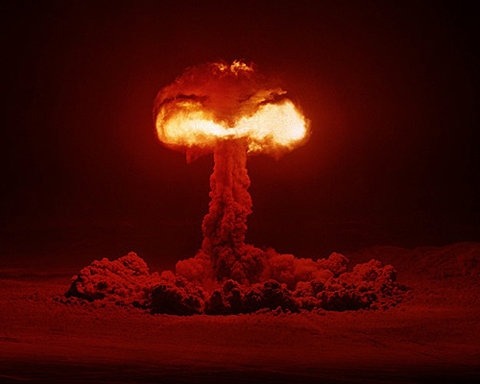
For man's been endowed with a mushroom shaped cloud
And we know for certain that some lovely day
Someone will set the spark off, and we will all be blown away

They're rioting in Africa
La,la la, la la, la la
There's strife in Iran
La,la la, la la, la la
What nature doesn't do to us
La,la la, la la, la la
Will be done by our fellow man
La,la la, la la, la la

Thursday, March 17, 2011

For St. Patrick's Day: The Incomparable Clancy Brothers And Tommy Makem

"And since it falls/Unto my lot..." - that this year, St. Patrick's Day coincides with my normal Weekend Videos post, it seems only right that I devote this week's offering to the greatest and most influential Irish folk vocal group ever. What this group brought to the world will last as long as Irish music does, long after U2 and the Pogues and the Young Dubliners and the rest are simply footnotes in the story of 20th century pop music. Additionally and regarding Xroads and the KT - this is perhaps the only folk group that both was influenced by and in turn influenced the Kingston Trio.*

A word on that, and an interesting one, I think. About 10 years ago, Liam Clancy (the last of the group to pass away, in December of 2009) published a memoir called The Mountain of the Women. In it, he related how the group's first gig outside of Greenwich Village was at Bob Gibson's (and Albert Grossman's) Gate of Horn club in Chicago in 1959 or early 1960, Gibson having met Pat Clancy and Tommy Makem at the first Newport Folk Festival in '59 where both appeared as soloists before the formal start of the group. At the Gate, the boys dressed in their Irish best - meaning tweed jackets, dress shirts, and ties. They were mortified by the ridicule from some parts of the audience at their appearance and resolved that it should never happened again. Inspired by the Kingston Trio, who was at that point riding an unprecedented wave of popularity and whom Liam described as "our heroes," the group decided to wear a stage costume of the nearly-matching Aran Island-style sweaters that Mother Clancy had sent for her sons, fearing the harsh New York winters' effects on their health. ("Nearly" because, as the true Irishman knows, those cream-colored sweaters with the cable and popcorn knit are native only to the three lonely Aran isles to the west of the country, populated by fishermen who wore them to sea - in part because when and if they drowned, as they frequently did, their decomposed bodies could be identified if they washed ashore by the family pattern and individual stitching of the knit of each sweater.) The Kingstons returned the favor by recording and popularizing a number of songs that they themselves first heard from the Clancys, including "The Gypsy Rover", "Roddy McCorley", and "The Patriot Game".

The CB&TM had developed a strong local following in NYC and Boston both as soloists and as a kind of informal group, and the success of their early home-made recordings on their own Tradition Records (truly home-made: many of the tracks were recorded in oldest brother Pat's kitchen) led Columbia Records to sign them at the precise point that Ed Sullivan featured them for what was supposed to be two songs on his show in 1961. Someone in the act that was to follow them on Sullivan became ill back stage (it was live, you remember) - and the producers asked the Clancys to fill in - so they ended up on national TV for an astounding 16 minutes when they had been scheduled for five. Both the in-studio and national broadcast audiences loved them, and they were propelled into a decade of recording and concert success, not only in the U.S. but throughout the rest of the English-speaking world. And just as the Kingston's enormous record sales paved the way for record companies to sign and promote other American folk groups, the Clancys opened up an international market for many of the great '60s Irish groups that followed them, notably the Dubliners and the Wolfe Tones.

In the '70s and following, the group broke up and re-assembled in various configurations, including the much-beloved Liam Clancy-Tommy Makem duo and the reunion tours of the original four in the 1980s. But for me, it was that original group in its first few years that created the template for the way that Irish music should sound - this despite the fact that the Clancys were almost fully as much popularizers as the U.S. pop-folk groups were - and were equally derided by purists who recognized a truer Celtic art in the Chieftains and similar groups. I would guess, however, that even purists might find the 1960 Clancy sound preferable to much of what emanates from Ireland today attempting to pass as folk, be it the smarmy "Celtic"-type groups or the rockers like the Pogues and their ilk who think that folk music should be electric and shouted.

So let us recall with fondness some of the great songs of the Clancy Brothers and Tommy Makem. This handful of tunes, culled from a YouTube library of several hundred uploads and from a personal memory of many more, is simply a collection of some of my own and my family's favorites, songs we have known and sung together for fifty years and more. There are ballads here, and rebel songs, and love songs - they truly need no introduction beyond saying that this is some of the best folk music Ireland ever produced.


The significance of the group both in the U.S. and internationally far transcends their fairly brief moment in the pop music sun. When Tommy Makem died in the summer of 2007, my prominent conservative blogger brother Rick published a remarkable essay titled "Death Be Not Proud" - and since he reflected at length on that and did so eloquently, I'm going to let him speak for me here:

For the Moran family, The Clancy Brothers and Tommy Makem opened up an entirely new world, a means of discovering our past. Their music was not at all like the melodramatic “American” Irish music we were all familiar with. Their songs were of the real Ireland – a place of pain and suffering, of oppression, and a kind of fatalism that seems to me unique to the Irish people. In fact, the group’s first album – Irish Songs of the Rebellion – released in 1956, celebrated that fatalism in songs that told the story of several futile Irish uprisings against British rule. One of those songs, Roddy McCorely, is a staple of family reunions and is guaranteed to bring emotions about our heritage close to the surface:

"O see the fleet-foot host of men, who march with faces drawn,
From farmstead and from fishers’ cot, along the banks of Ban;
They come with vengeance in their eyes. Too late! Too late are they,
For young Roddy McCorley goes to die on the bridge of Toome today.

Up the narrow street he stepped, so smiling, proud and young.
About the hemp-rope on his neck, the golden ringlets clung;
There’s ne’er a tear in his blue eyes, fearless and brave are they,
As young Roddy McCorley goes to die on the bridge of Toome today."

...The image of the young McCorely going to his death so stoically is one of the most powerful of my childhood. It’s an example of a song with a mournful subject that has the effect of uplifting the listener emotionally.

Beyond the impact the group had on the world at large, their affect on my family cannot be measured. We glory in singing many of the group’s songs (accompanied by my brother Jim and his trusty Martin guitar). The drinking songs, the Irish patriot songs, and the songs of protest...There is something so defiant in those lyrics that brings out the pride I feel in being of Irish heritage.

Tommy Makem is gone. I wonder if they’ll put the lyrics to this last verse of “Jug of Punch” on his gravestone?

"And when I’m dead and in my grave
No costly tombstone will I have,
Just lay me down in my native peat
With a jug of punch at my head and feet."

No, Rick, they didn't. But no matter. You recall that on the original recording, Tom Clancy barks "The best one!" after the word "tombstone." He meant a jug, of course - but we know that the real marker is the wonderful body of music that they left behind, and the reawakened sense of identity and heritage that many of us have come to feel because of their music, especially on this day of all days. Erin go Bragh!


*One little fun indication of that - Bob Shane himself asked me to do a presentation at next August's Fantasy Camp on the influence of the Clancys and Irish music on the history of the KT. Of course I will...

Wednesday, March 9, 2011

¡Víva Las Mujeres Mexicanas! - "La Adelita"

Director Fred Zinneman's 1952 film High Noon is on the short list of the best westerns ever made, and in fact of the best American movies of all time. Beyond the taut drama of a decent man facing almost certain death as the clock ticks relentlessly toward noon, the film was decades ahead of its time in its depiction of good and evil, of racial prejudice, and of thoughtful and mature women. The latter aspect of the film featured the classic cinematic dichotomy between the fair-haired heroine, in this case actress Grace Kelly portraying Amy Fowler Kane, the prim Quaker bride of Gary Cooper's Marshal Will Kane, and the dark and passionate lady Helen Ramírez, played by the superb Mexican actress Katy Jurado. Ramírez owns the local saloon (purchased with money earned in a bordello) and was Kane's lover prior to his marriage.

Both women in the film are frightened by the prospect of Kane's imminent gunfight with four convicts whom he had sent to prison, and wife Amy vows to leave town rather than see her Will shot down. In a last desperate attempt to forestall the duel, Amy visits Helen an hour before the fight to enlist her aid in dissuading Kane from facing his enemies. Jurado's Helen listens in disbelief as Kelly's Amy announces her intention to depart, and then scorches the Quaker woman with her contempt by saying, "What kind of woman are you? How can you leave him like this?...If Kane was my man, I would never leave him like this. I would get a gun. I would fight."

When I first saw the movie on television some years later, that scene burned itself into my memory. I knew that in the Hollywood scheme of things (though clearly not in the subversive Zinneman's view), I was supposed to respond to the delicate, virginal, and ultimately sexless morality and beauty of the Kelly character. But it was Jurado's Helen and her fierce and undying love for the man who had been faithless to her that seized my imagination. "I would get a gun. I would fight" - now THAT was a woman.

And it is just such a woman who has been immortalized in the ever-popular Mexican corrído "La Adelita," a song as widely-known and as frequently sung in México as perhaps "This Land Is Your Land" is in the U.S. The song in its present form dates from the period of the 1910 Mexican Revolution in which Francisco Madero led a democratic rebellion against the dictatorship of Porfirio Díaz (though it may be based on an older tune). The lyrics exist in several significantly differing variants. Some portray Adelita as the beloved of an officer in the revolutionary forces whom he must leave to fight for freedom; in many others, however, she is the very personification of the soldadera, the strong and independent woman who goes to battle herself, both for liberty and for the man she loves. In other words - "I'd get a gun. I'd fight."

Both the authorship of the song and the woman depicted in it are of uncertain origin. Some research seems to suggest that there was a woman from Durango, possibly named Velarde, whose battlefield exploits provided the raw material for the song, but this is speculative and no hard evidence exists. Nonetheless, "Adelita" came to be a term used to describe any of the women who joined the military. One soldadera recalled in a 1979 interview:


The most popular lyric sung today makes only passing reference to Adelita's courage:

En lo alto de la abrupta serranía
acampado se encontraba un regimiento
y una joven que valiente los seguía
locamente enamorada del sargento.

(In the heights of a steep mountainous range
a regiment was encamped
and a young woman bravely follows them
madly in love with the sergeant.)

Popular entre la tropa era Adelita
la mujer que el sargento idolatraba
y además de ser valiente era bonita
que hasta el mismo Coronel la respetaba.

(Popular among the troop was Adelita
the woman that the sergeant idolized
and besides being brave she was pretty
that even the Colonel respected her.)

Y se oía, que decía, aquel que tanto la quería:

Y si Adelita se fuera con otro
la seguiría por tierra y por mar
si por mar en un buque de guerra
si por tierra en un tren militar.

(And it was heard, that he, who loved her so much, said:

If Adelita would leave with another man
I'd follow her by land and sea
if by sea in a war ship
if by land in a military train.)

Y si Adelita quisiera ser mi novia
y si Adelita fuera mi mujer
le compraría un vestido de seda
para llevarla a bailar al cuartel.

(If Adelita would like to be my girlfriend
If Adelita would be my wife
I'd buy her a silk dress
to take her to the barrack's dance.)

One of the earliest recordings of the song is from Trio González, waxed in 1917:


This rendition is in the original, simple, pure mariachi style - accompaniment by strings only, with a simple harmony in thirds around the melody.

A more contemporary mariachi sound, one in a style that you'd be more likely to hear in México today, is by Pepe Aguilar, a great singer in his own right but also son of the legendary Antonio Aguilar:


The trumpet flourish that opens the song is now an almost required element in modern arrangements of corridos, and the lushness of the instrumental accompaniment indicates how sophisticated (or you could say "commercial) traditional music in México has become, as is the case here.

A fine instrumental version here from Stephane Kubiak and orchestra:


Once again, the trumpets open the number, but note both the primacy of the strings (both violins and guitars) and the polka-like tempo throughout.

"Adelita" is one of a handful of genuine Mexican folk songs that has become popular in the U.S., especially in the southwest. Though English-language versions are rare, no less of a major pop vocalist than Nat "King" Cole gave the song a try in Spanish in the late 1950s:


Though Cole is singing only the chorus, he is showing a remarkable respect for and fidelity to the source song, very unusual for a norteamericano at the time.

Cole's version almost undoubtedly inspired the Kingston Trio's loose translation of one version of the lyric where Adelita is the passive lover and not the brave fighter:


This is clearly an anglicized version of the song, but while not copying the Spanish source, it too respects the song's origin in its own way - and it is no further afield from that than many of the KT's and other pop folk groups' renditions of English language traditional songs were.

And Mexican folk has also gone country and electric, as the next two versions demonstrate. First, the Country Roland Band combines "Adelita" with a familiar country tune:


And if you're ready for it - a Mexican ska version:


To such an end folk music seems to be coming worldwide. If you know Oysterband or the Dropkick Murphys or the Pogues or the Killigans, you'll recognize the trend of electrifying and rock-ifying songs that originally were neither.

Yet even in these last versions, something of the original spirit of La Adelita survives. I think that my personal favorite of these is the very first one in this collection, for its purity and its proximity in time to the actual inspiration for the song - who in my mind will always look like Katy Jurado: "I would never leave him like this. I would get a gun. I would fight."

Wednesday, March 2, 2011

Derroll Adams, John Stewart, And "Portland Town"

It has been just over 35 years since former Beatle George Harrison was forced into court in late February of 1976 to defend himself against charges of copyright infringement and plagiarism by Ronald Mack and Bright Tunes Music in the case of Harrison's hit single "My Sweet Lord," which Mack and Bright Tunes contended was stolen from the song "He's So Fine" that Mack had composed for The Chiffons in 1963. Harrison acknowledged that he had heard the song but contended that the guitar setting and overall meaning of the piece were different enough to warrant consideration as an original composition. The trial lasted three days, and the judge's decision was swift: Harrison was indeed liable and ordered to pay $1.6 million (rather more valuable dollars then than now). Thus the term "unconscious plagiarism" became a part of the world's vocabulary when discussing intellectual property. There is a good and relatively brief discussion of the case HERE.

The case involving this week's song "Portland Town" was a bit simpler and more straightforward, but some of the same issues of ownership of an idea or a musical phrase did crop up. "Portland Town" was written in about 1957 by Derroll Adams, an American who never achieved much success in the U.S. but was and remains highly regarded as a kind of godfather figure in the European folk revival, especially in the U.K. Adams was a colorful character, an Oregonian (from Portland, of course) who joined the Navy at the under-age of 16 in 1941 to fight in the war - until the military found out about his age and a debilitating medical condition and discharged him. Adams went to Portland's prestigious Reed College and its art school - where he saw Josh White and became enthused about folk music. He taught himself the rudiments of the five-string banjo while working at several different jobs but only became serious about it after he met Pete Seeger around 1952 - and learned how to tune it properly. Adams drifted to southern California, living first in San Diego and eventually on Will Geer's Topanga Canyon ranch, which was a sort of art colony for radicals. It was there that Adams met the newly re-named Ramblin' Jack Elliott (born as Elliott Adnopoz), and the two became fast friends and performing partners, eventually moving as all early 50s folkies did to New York City.

Elliott sought greener and less McCarthyistic pastures in Europe and urged Adams to join him. Adams did so and spent the rest of his life there, mainly in the U.K., Belgium, and Italy, with sojourns in Denmark several times as well. His now fully-developed banjo and guitar skills won him an impressive following of soon-to-be influential musicians, most notably Davy Graham, Donovan Leitch (who idolized Adams), Paul Simon, Bert Jansch, Ralph McTell, and dozens more. Despite a troubled personal life that included extended bouts of alcoholism and extended hiatuses from performing, Adams remained a seminal figure in the Old World, appearing at and being honored by folk festivals across the continent until his death in 2000.

Adams wrote "Portland Town," he said, as a response to a couple he knew who lost their only son in the Korean War. Here is the song as he wrote it:


It's easy to discern the mid-50s folk/radical/Seeger/Geer nature of the song - and to understand why an America in the shadow of the Red Scare and McCarthy hearings was none-too-friendly an environment for Adams. But it is equally easy, given the simple, traditional-sounding and compelling nature of the song, to understand how a 22-year-old John Stewart of the Kingston Trio could have mistaken it for a traditional number. Where Stewart heard it first is unclear; it may well have been in one of the Greenwich Village folk clubs that Stewart frequented as a member both of the Cumberland Three and the KT. In any event, Stewart re-wrote both melody and lyric in his first year with the Trio and chose the song as his solo for the second KT album on which he appeared, the orchestra-supported Something Special. Stewart took the basic structure and some of the lyrics of the piece but turned them from an anti-war statement [which interestingly prefigured Stewart's own "Oldest Living Son" from his early solo album Willard (1970)] to a plaintive love song. Here is his acoustic track for the album:


The dressed-up album cut sounded like this:


This is instructive, I think. There is a charm, innocence, and longing in Stewart's acoustic version, which retains the simplicity if not the meaning of Adams' original. The Jimmie Haskell orchestrations, however, distort those charms here as they did on most of the cuts on the album and turned Stewart and the KT into a kind of poor man's Brothers Four, a pop vocal group before the folk boom whose Four-Preps-type roots showed in most of their recordings, many of which were unabashedly similarly orchestrated.

Stewart was not the only artist to mistake Adams composition as a traditional song. British pop superstar Marianne Faithfull (who had folk roots as well) recorded the song for a 1965 album and cited it on the record as "Traditional." She performs the song as Adams wrote it:


At a distance of 50 years and with Adams now departed, it is hard to ascertain what exactly his response to these versions was. One music website claims that he "never even attempted to reclaim his lawfull [sic] rights on this song," citing Stewart's adaptation as an example. But Adams' good friend Frank Hamilton - co-founder of Chicago's influential Old Town School of Folk Music and one of Pete Seeger's banjo-playing replacements in the Weavers - wrote just three years ago that "Derroll didn't get anything for Portland Town 'cause John Stewart of the Kingston Trio stole it from him and used up the royalties supposedly to go to Derroll in court costs. Welcome to the music business." Hamilton clearly implies that Adams either sued or threatened to sue Stewart. I can find no hard evidence of this on the web, and it would take more time and better legal research skills than I have to determine exactly what the interchange between the two was. I suspect that legalities were involved if not an actual suit, and with songwriter's royalties for a tune on a #7 charting album with sales approaching 300,000 copies, there would have been quite a lot of money at stake, if not at the gargantuan proportions of George Harrison's liability. Two things seem to me to be uncontestable: first, Stewart was not cynically and deliberately plagiarizing, as Hamilton implies (which BTW would not have mattered in an actual lawsuit), and second, that Adams never made any money off of Stewart's efforts. History has had its revenge, however: Stewart's version today is largely forgotten while Adams' original is still performed. Here is an unnamed Korean trio from two years ago:


An equally eerie-sounding take on the song from A Hawk and a Hacksaw from 2006:


A more straight-on interpretation of the number from the now ragingly popular roots/rock band, the Avett Brothers from last August:


There is no great lesson here, no grandiose conclusion to be drawn. Adams' original marches on, like "Blowin' In The Wind," because there are always cannonballs flying somewhere that still need to be forever banned. Stewart's nearly forgotten rewrite remains only as a minor memory to those who loved the popularized folk music of an era that in public perception is practically invisible. That fact is more melancholy than the song itself.

Appendix

For comparison's sake -


Thursday, February 24, 2011

Goodbye, America - How Were You? Steve Goodman's "City Of New Orleans"

It is "the best damn train song ever written," according to (depending on your source) Johnny Cash, Kris Kristofferson (who discovered it and composer Steve Goodman), or John Prine - or all three, though my money is on Goodman's close friend and collaborator Prine. Whoever originated it, he was making a sweepingly significant statement, given the centrality of the train to the history of the U.S. and the plethora of great songs engendered by it, songs like "The Wreck of Old 97" and its nephew "Charlie on the MTA," and like "The Ballad of Casey Jones," and "Pat Works on the Railway" and "Drill Ye Tarriers" and "John Henry" and "The Wabash Cannonball" and "Freight Train" and scores, even hundreds more. It may have been the automobile industry that turned America from a middling power to the industrial giant of the world through most of the 20th century - but that would never have happened had there not first been what we today call an infrastructure of steel rails that made large scale - gigantic scale, really, - manufacturing in this country possible, even inevitable.

It was the train that superseded the barge and the paddle-wheel steamer as the primary vehicle of American commerce because the latter were limited to where there were navigable waterways but the former could and did go anywhere and everywhere. The railroads did not simply connect places where people were; they led the way to places for people to go. And go they did, by the millions, especially at the end of the 19th and the beginning of the 20th centuries. That's why every one of us learned about the driving of the Golden Spike at Promontory Point, Utah, in 1869 completing the transcontinental railroad, an epic achievement that marked the first time in human history that a fast, reliable, and safe means of transport breached a continental expanse and linked the two largest oceans in the world.

Freight was always at the core of the railroad business, but the great rail companies of the day took such pride in the quality of their passenger service that they dared to name their trains in much the same way as ocean liners were named - and those names conjured up the romance of far places in the minds of American children for more than a century. The Empire Builder. The Super Chief. The Sunset Limited. The Zephyr. The Silver Meteor. The Twentieth Century Limited. Who of us did not have a model train set, likely with an engine that recreated one of those fabled trains?

And for nearly a hundred years, the very center of rail service in the U.S. was my home town of Chicago. It was also Steve Goodman's birthplace in 1948 (2 years before me), and you just couldn't live in the Second City in the '50s without your life defined by trains of all sorts, from freight and long-haul passenger trains to the electric inter-urbans to the subways to the commuter trains to the legendary El (for those non-Chicagoans, the elevated electric commuter trains whose track configuration created the Loop, which is downtown Chicago.) Trains were in our DNA as surely as autos were for '50s and '60s teens in LA.

So it is no surprise to me at all that the best damn train song ever written was brought into being by a Chicagoan, and that is what Steve Goodman was, dyed in the wool and to the marrow of his bones. Who else but an unreconstructed Chicagoan could have written such wonderful songs as "A Dying Cub Fan's Last Request" or "Lincoln Park Pirates' or "Daley's Gone, One More Round" - or "The City of New Orleans"?

Goodman penned CONY likely in early 1970, when plans were announced to end independent passenger rail service in the U.S. and amalgamate the most profitable routes into AMTRAK - which at first de-commissioned many of the named trains in an effort to establish its own "brand." The success of Arlo Guthrie's version of Goodman's song, however, changed some corporate minds, and AMTRAK in 1974 resurrected the name a mere three years after it had dropped it. The names were good for business, and a number of the other classic monnikers were resurrected as well.

Goodman's song is a poetic eulogy to the passing of an era, and bringing back the name did not bring back that era. My guess is that Goodman knew that more than a name was evanescing into the mists of history; it was a way of life, or perhaps more properly stated, an attitude toward life. Travel by train seemed lightning-quick in 1910, but air travel supplanted it over the next fifty years for speed and initially for convenience. Rail travel became leisurely, relaxed, and at times elegant in a country and era that had little use for any of those. And as passenger patronage dropped, the old grand dames of the named trains fell into deep disrepair. I took the CONY any number of times in the mid- and late 60's to visit friends at the University of Illinois in Champaign-Urbana, a stop on the route, and the cars had gone to seed: torn upholstery, dirty decks, stinking restrooms, third-rate and over-priced food.

But Goodman's artistic eye saw past all that and into the heart of the romance that the train and its name engendered: his City of New Orleans is still the proud queen of the heartland, at least in his imagination. While I know that most people respond most enthusiastically to Arlo Guthrie's hit version, for my money no one else ever did the song as well as Goodman himself - here in the original 1970 studio recording:


I wish every cover artist had heeded Goodman's original concept. Listen. It's Kank -akee, folks, not Kan - kakee. The rhythm of the song is that of drive wheels pounding at full speed through the open countryside. In his original lyric (and clearly he is amending it as he goes along here) it was "passing trains that have no names" - those less regal and distinguished than CONY.

But what is, is - and Arlo Guthrie's arrangement is the one that most people know. And a fine arrangement it is - but it's not the way Goodman imagined it. Arlo in 1978:


Guthrie gives the tune a bit of country swing, and he sings it movingly - but it doesn't sound or feel much like a train at all.

John Denver stayed closer to the song's roots and Goodman's musical concept, though like much of JD's early stuff, this is maybe a bit over-produced:


You undoubtedly noticed that Denver substantially rewrote the melody and lyric in verses two and three - one of the more disreputable things he ever did musically, partly because he claimed partial copyright for a song not of his own making. I wonder why Goodman let him get away with this. I'd guess that it was because Goodman was struggling still and Denver had already had a Top 10 hit and was beginning his stratospheric ascent into superstardom. But I also wonder if Denver ever realized how badly he compromised the tune and how completely he missed the inherent melancholy of the song.

Willie Nelson won a country Grammy for his 1984 recording (at which ceremony a Grammy was also awarded posthumously to Goodman, who had died earlier that year at age 36 from leukemia):


Nelson is a great singer and interpreter, but this quasi-country blues approach leaves me unmoved, at least to the extent that I can ever listen to this song and not be moved.

I think that New Orleans R&B legend Alan Toussaint is more successful at translating Guthrie's musical setting into his own idiom:


There's a catch in Toussaint's voice on the chorus that gives his rendition just enough of an edge of sadness to keep it in Goodman's conceptual ballpark.

Country legend Hank Snow goes full-on cheery here:


I like the way Snow preserves the speed and something of the rhythm of a passenger train rumbling through the night that Goodman invested into the song. He still sounds too happy for my taste.

The song was tailor-made for a pop-folk group like the Kingston Trio, who gave us a tightly-harmonized and thoroughly professional take on the song in their 1976 Live In Reno album:


Lead vocal here is by the late Roger Gambill, and the banjo is by Bill Zorn, who rejoined the group in 2004 after a 28-year hiatus. This version has the right rhythm, even if the gusto of the vocal overwhelms the lyric a bit at points. It's still a fine performance.

I might be less inclined to find fault with the versions above did I not have a superior interpretation to close with...but I do. Johnny Cash, solo acoustic, the only accompaniment being Cash on rhythm guitar, from 1984:


That would be my favorite version after Goodman's himself. Cash knows what to do with the lyric, and if he is simplifying the chords somewhat, he is simultaneously making the song his own while recognizing what the composer's intent was.

Steve Goodman wrote a song that lamented, as noted, the passing of an era. But the era of the song's composition has also passed, a distant memory like the America that you could greet in the morning that now is no more. I am reminded by this song of the opening scenes of the movie Rudy, which I love not simply because I went to Notre Dame but even more because it evokes the gritty, snowy, industrial Midwest of my boyhood - the same industrial Midwest that nurtured Steve Goodman and the great trains that rolled out of the great stations, many of which are today abandoned and silent. All is changed, changed utterly, as Yeats wrote. While I have little doubt that something golden and wonderful will ultimately arise from the ashes of the fires we lit that destroyed our industries and our cities of what is now most accurately termed the Rust Belt, it is too much to expect that some of us will not mourn what has been lost. Steve Goodman did, though he didn't live to see how the disappearance of this train simply presaged the disappearance of so much more. He has, however, left us with a great and evocative song that reminds us of that loss.

Friday, February 18, 2011

"Old Joe Clark": Then And Now

Old fashions please me best; I am not so nice
To change true rules for odd inventions. - Shakespeare

Ah, the Bard! As almost always, the perfect phrase for every mood and thought. I was reminded of this line (culled from a funny scene about a music lesson, of all things, in The Taming of the Shrew) as I watched parts of last Sunday's Grammy ceremonies - and subsequently after an exchange of posts on the John Stewart message board regarding whether or not popular music has descended to a lower level today even than heretofore. For me, the main show was secondary to the internet-broadcast Special Awards ceremony at which the Kingston Trio, Julie Andrews, drummer Roy Haynes and several others were honored with Lifetime Achievement Awards. The Sunday broadcast of the 53rd awards left me with the impression that there is still a tremendous amount of genuine talent in American popular music, but that much of it is wasted in over-glitzed, over-produced, pyrotechnics-riddled refuse, vulgar at best and ridiculous at worst - or roughly the same as it has always been. Take the opening - Lady Gaga has written a genuinely fine pop-rock number in "I Was Born This Way," and she has the genuine vocal chops of a real singer. But the egg thing from which she emerged (intended to be symbolism of the kind that would be thought cool and deep by a 12-year-old) and the hyper-sexual costumes, dance, and overall visuals actually worked to obscure the quality of the number rather than clarify or enhance it.

Which is not to say that old things are always better than new, but rather as Shakespeare's Bianca notes above, the "true rules" of the better parts of the traditional are always under assault from those "odd inventions" of pop culture, which has an insatiable appetite not for the truly innovative as much as it does for the short-term novelty. Were this not so, we would have seen long before now some genuine innovation in rock music away from a pattern like the four or five instrument-based band that has been the ironclad rule since the Stones and the Who nearly fifty years ago. Instead - just more of the same, never done as well now as when it was new. Punk, hip-hop, glam - all the same - a burst of innovation followed by endless, unimaginative replication. Most years the Grammys simply add an exclamation point to that, as they did this year.

At its best, American folk music has been able to find a kind of middle ground between a slavish imitation of the old and a careless disregard for it. I fear that in last week's post I didn't clarify how much I appreciate what the so-called traditionalists of folk have done. What they have tried to preserve is worth preserving, and its near-invisibility now simply underscores the validity of their efforts. But it's too bad that the "big tent" idea of George Wein at the original Newport Folk Festival never actually took hold (even at that festival, which today tends to include nearly no traditional music at all). About all that you find on the American music scene today that resembles what used to be called folk are bluegrass bands (and that is a genre which can hardly be called traditional, dating as it does and as we've discussed here really only to the 1940s) and a large number of "Celtic" bands, many of which from Celtic Woman to Celtic Thunder to Celtic-What-Have-You are simply pop groups that affect an Irish accent and go in for the heavily-orchestrated and visually over-produced settings of their rock and "country" cousins. But folk in its original sense? It's AWOL.

Or almost. Here and there, scattered around the English-speaking world, there are bands and soloists who owe their musical aesthetic rather more to the New Lost City Ramblers than they do to Peter, Paul and Mary and the Kingston Trio. And this week's song, "Old Joe Clark," gives us ample evidence of where folk music has been and the crossroads at which it finds itself. Again.

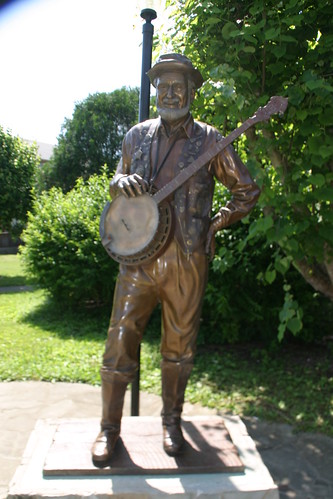
"Old Joe Clark" has been a popular number for more than 90 years, and there seems to have been a real character by that name who inspired the song. Most folklorists believe that the real Clark was born in 1839 in either eastern Kentucky (probably) or western Virginia (maybe) and was eventually murdered, date and circumstances subject to dispute. The real Clark (and the picture above is allegedly a statue of him) made moonshine, possibly under a government license. He may have been married twice, or three times. He may have been murdered by his first wife's second lover - or by his own son. What is certain is that a lot of mountaineer doughboys in WWI sang the song quite a bit, and a lot of Yankee doughboys and Rocky Mountain doughboys and Midwest farmer doughboys took a liking to it and brought it home with them after the war, which accounts for the explosion of published and later recorded versions following the initial printed versions from 1918. You can find several versions of the song's history on the excellent website of our first artists for this week, the UK's Rosinators:

Lisa Clark On Ancestor Joe

The Rosinators On Song History

The Rosinators deliver a fairly straightforward fiddle- and banjo-inflected interpretation, though I personally could do without the Seeger-Sessions-Springsteen-infected-not-inflected drums. A kindly word here - in traditional music, both the banjo and guitar ARE the rhythm setting for the song. Oh well.


Many of our contemporary recordings are derived from the one of the first waxed versions, the 1927 recording of Fiddlin' John Carson:


Carson sets as a pattern one of the more interesting aspects of the song - he opens with an instrumental, which you'll see is common to all all the versions below. An acknowledgment is due here from me to Chicago-area musician and folklorist Jeremy Raven, who knows more than I ever will about folk roots and whose writings introduced me first to Carson several years ago on the KT message board.

There were plenty of other old-timey recordings of the song, but Ol' Joe takes a major step into Big Time Show Biz when Pete Seeger in 1946 not only records a version of the song but films it as well. "OJC" is the third tune:


That opening banjo riff is amazing - and it sounds to me like Uncle Dave Macon's "Keep My Skillet Good And Greasy". Seeger and the Almanac Singers re-wrote the lyrics for "Round and Round Hitler's Grave":


The videographer made one clear mistake - Burl Ives was never in the Almanacs and was not on this recording - which should have been more controversial than it was, taking a traditional tune and appending topical lyrics to it. Tsk, tsk, Peter.

The Callahan Brothers in 1945 also played a bit fast and loose with instrumentation to create this sort of proto-country take on the tune:


And on to the crass popularizers of the 1960s - first the Kingston Trio from their 1962 album Something Special:


Traditional? Not quite, though you can hear the roots in it. Fun? I'd say so.

And speaking of fun - the great Chet Atkins:


Atkins had bona fide country/folk roots, but he is really breaking the versatility bank here - you can hear classic pop, a touch of blues, genuine rockabilly, and a bit of rock all in this one cut.

Finally to the contemporary. The Avett Brothers of North Carolina are an up-and-coming band who were featured last Sunday on the Grammy broadcast. They have been including their unique arrangement of "OJC" in their concerts for several years:


Folk-rock, I'd call this, and more legitimately so than bands like the Byrds or Mamas and Papas, who were singer/songwriter rock rather more than folk.

Yet in hidden and distant corners of our benighted land (smiley), the traditional continues, here by mountain autoharpist Kenneth Bennefield on Folkways Records in 2006:


The production and recording here were done by the late Mike Seeger of the NLCR, one of the last of his decades of contributions to American folk music.

Finally - maybe my favorite of all of these recordings, two guys at home making some good old time music and recording themselves. That's Casey Abair on fiddle and Hunter Robinson on clawhammer banjo:


George Wein had it right, I think - American folk music is a big tent, probably with room enough for all of these markedly different styles.