Friday, March 27, 2009

Tom Paxton's "The Last Thing On My Mind"

Tom Paxton is on the short list of the greatest singer/songwriters of the folk era, and I have always had the sneaking suspicion that his songs may well outlast those of some of the more topical writers of the period. If he has never been as highly regarded (to the point of adulation and near-idolatry) as Bob Dylan has, and if he never generated the record sales of John Denver or James Taylor, he nonetheless has created a body of work that in its elegant simplicity, its humor, its trenchant politicality, and its sincerity is more deserving to be called "folk" than that of the writers above and most others who have worked under that banner

I'm assuming that most readers here know the basic facts about Tom Paxton - raised primarily in Oklahoma (though born in Chicago and lived for a few years in Arizona), he was a fixture at and bona fide member of the Greenwich Village folk scene starting around 1959 or 1960, when he was in his early 20s. Paxton could be even more directly political in his songwriting than the other enfant terrible of the scene, Bob Dylan, though Paxton never seemed as angry, was far wittier, and in most respects a better singer. Paxton is also just plain folkier - the cost of which is that his lyrics make their cases with the direct simplicity of Woody Guthrie but do not soar to the heights of poetry that Dylan sometimes achieved. And as much as I like Dylan in all his guises and appearances - I think I'd rather spend an afternoon chatting with and would certainly prefer listening to a few hours of Tom over Bob.

"The Last Thing On My Mind" is hands down Paxton's best known and most often covered song - its discography and YouTube videography are genuinely stunning in their scopes. And with good reason, I think - just as "Early Morning Rain" (the other candidate for most widely covered folk type song of the era - throw In "Blowing In The Wind" as well) is unmatched in its evocation of the desperate loneliness of the hung over abandoned moments of life, I'm not sure that I've ever heard another song that so simply yet profoundly expresses the sense of impending loss of love, the realization of one's own foolish failures, the quiet desperation of hoping that it's not completely over. We've all been there (I hope) - and Tom Paxton is the guy who captured it the best. Now 71 and still writing and singing, he was justifiably honored this year with a Lifetime Achievement award from the Grammies.

I assume everyone knows that Tom was considered to replace Mike Pugh in the original CMT, the position that went to Joe Frazier (see below). It was said that Paxton's voice didn't blend well with Mitchell's and Mike Kobluk's. Listening to this great artist do his greatest song - I don't think so. I think his range was just too close to Chad's. Certainly he is one great singer :


Joe Frazier of the Mitchell Trio (the later name for the CMT) gave a reading of the song on the group's Typical American Boys album that even Paxton was said to regard as the second best recorded version of his composition. Frazier's baritone takes Paxton's rendering and gives it a slightly darker tone:


I have thought since I first heard this album cut nearly 45 years ago that it was the single best solo by any member of the many folk groups of the time and one of the best recorded performances of the folk era.

The Kingston Trio, at the time late in their initial ten year run, took an experimental and radically different tack with the song. They included it in their Somethin' Else compilation, which included a back-up band with electrified instruments. The KT was trying to catch the folk-rock wave that was threatening to bury them, and if the album itself failed to do so ( as the 24th album of the KT, it was the first that failed to make any sales chart), certainly individual cuts on it caught some attention. There is in their version here an almost Nashville or country sound, several full years before the Byrds and the Flying Burrito Brothers and the Eagles (and even trio member John Stewart) began the fusion that came to be known in the 70s as country rock:


Here is another a great group doing an arrangement very close to the Trio's, complete with a quiet banjo (oxymoron, anyone?) and that is none other than the wonderful Cumberland Trio, shown here in their 2001 reunion concert. After I posted their "Chilly Winds" here in January, C3 moving force Jere Haskew posted on Xroads and emailed me, mentioning that they used the Trio's arrangement for the latter song because they couldn't improve on perfection. I think you'll agree that they render the KT a similar compliment with their performance here:


Superior musicianship and singing - gotta love that dobro - a great version!

Now I'm running out of characters in this post - so I'm going to present simply a number of other really fine versions of this classic.

From The Blue Grass: Doc & Merle Watson, Earl and Randy Scruggs


Hardcore Pop Country: Porter Waggoner and Dolly Parton


Really Fine Pop Version: Neil Diamond


A phenomenal song, one that I'm convinced will still be around in yet another century.

Addendum - July, 2012

Since leaving the Chad Mitchell Trio in 1966, Joe Frazier (whose solo version is above) has been an Episcopal priest and is currently vicar at St. Columba's Church in the mountain community of Big Bear, California, where for the last three years the parish fundraiser has included a hootenanny show featuring Fr. Joe, George Grove of the Kingston Trio, Art Podell of the New Christy Minstrels back in the day, CMT bassist Ron Greenstein, and myself. Here is Joe taking the lead on a 2012 rendition of "Last Thing," rather more like the Kingston group or Porter and Dolly:

Friday, March 20, 2009

Go To Sea Once More: "Haul Away, Joe"


There seems to be a national renascence of interest in our seagoing heritage occurring in the last few years, with an increased emphasis on preservation of some of the decaying and disappearing assets of the past (note restorations of sister ships the USS Constitution in Boston and the USS Constellation in Baltimore), rising attendance at maritime museums like the Mystic Seaport in CT and Nantucket as well as on the Great Lakes, the Outer Banks, San Francisco and Seattle on the West Coast, and as far away as the whaling memorials in Hawaii. And since the magnificent parade of the Tall Ships during the Bicentennial celebrations thirty plus years ago, the sight of square-rigged three masters and barks and schooners to frigates to training ships and replicas has become common during celebrations along US coastal waters.

Not surprisingly, there has been a renewal of interest in the songs of the Age of Sail, and that age produced quite a few, most of which despite the diversity of their origins and uses we categorize as "sea chanteys," the latter word clearly derived from the French chanter (chan-TAY), meaning "to sing." Reasons for this are harder to pin down, but I'd offer two. First, many are just so damned lovely (like "Shenandoah" or "Lowlands" or "Golden Vanity") and fun and easy to sing ("Blow The Man Down" and "I'll Go No More A-Roving" and "Drunken Sailor," to name a few) that someone in each generation will always find them and keep them alive. Second, the more rough-edged ones seem ideal for the wide variety of Irish and Celtic groups that form so huge a part of today's folk scene, second only in my informal national survey to bluegrass music among acoustic forms.

The Kingston Trio recorded no fewer than ten identifiable chantey (exclusive of sea-oriented calypsos like "Bimini" and "Sloop John B"), starting with "Santy Anno" (one of the first weekend videos I did, readable here) on the first album and ending with "Away Rio" on Something Special.

The Trio had a sort of formula for many of these. They would take the basic folk song and do a kind of traditional reading of the root song but then (reflecting, I think, their origin as a nightclub act) add a coda or an extra verse or a chord change to enhance the drama of the song. Consider the minor chords and prominent bass runs on "Santy Anno" or the coda-like addition of "This Boston town don't suit my notion" on "Bonny Hieland Laddie" - and the "east wind" part of today's number, "Haul Away" from Here We Go Again.

Though Wikipedia among others attempts to distinguish capstan chanteys from windlass chanteys from haul chanteys from fo'c'stle chanteys - they were all work songs, sung to accompany and make easier the backbreaking and extremely dangerous work of a deep-water sailor of long ago. While I'm sure that "Shenandoah" was sung as the windlass pulling up the anchor was cranked - it's hard not to imagine a group of the boys singing it at sunset in the tropics while resting, making it a fo'c'stle chantey as well - right before the melancholy of "The Water Is Wide."

"Haul A-weigh, Joe" is the proper name for today's song - aweigh as in "anchors aweigh" - pull it up and let's go - a capstan chantey if ever there was one, as the Clancys make clear below. The Kingston version, widely praised then and now though non-traditional, features the aforementioned dramatic interlude, with the shift to a major chord, furious energy, and really excellent frailing by Dave Guard. Here they are - from a phonograph recording:
with an excellent video interpretation by YouTube poster Munrow:

(Remember to toggle the little wheel bottom right when the video begins for HD - well worth doing so here.)


Here's a more traditional version from The Clancy Brothers and Tommy Makem. Tom Clancy, fine actor that he was, does a creditable impersonation of the "chantey man" or lead singer on the work crew:


Among John Stewart's many hidden talents was that he was a marvelous mimic. He told the story at FC4 in 2003 of how he and Nick were at a Greenwich Village folk party at which an earnest young lady was trying to hush a boisterous crowd so that Theodore Bikel could sing some tender ballad or other (and Stewart's enactment of the girl was hilarious). But according to John, every time Bikel would start to sing, a wildly drunk Tom Clancy would begin to bellow "When I was a lit-tle boy-ee," as above. Stewart's imitation was perfect.

Clearly influenced by the Clancys but with a tempo closer to the Trio is this group from "Victory Sings At Sea" out of Seattle (also on the Santy Anno page). Forgive me for posting the creepy anime, but the song is great, and there's a fine bit of "Away, Rio" at the end:


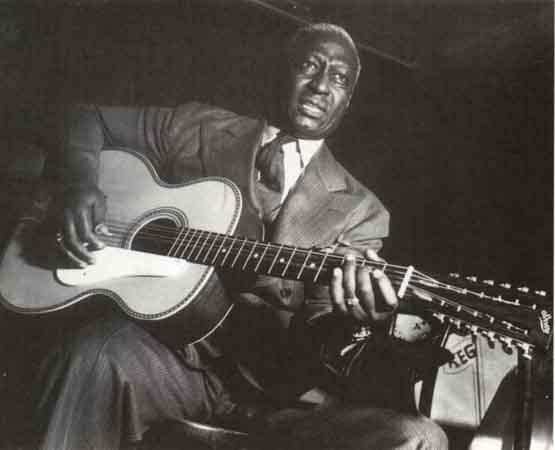
And now for the patented Weekend Videos surprise. Who would have thought to find Lead Belly doing a really bluesy 12 string version of a sea chantey?? Here it is - strange, but it works:


For a truly unusual modern take on the song, here is the Clancys' lyric presented by Marc Anthony Thompson in a strange amalgam of southern white blues, four part harmony, and folk instrumentation (including possibly some bagpipes and maybe a didgeridoo) - sort of Tom Waits meets "The Gypsy Rover":


Finally - a KT-type uptempo version from a 2007 Minneapolis theatrical production called Or The White Whale:


I have to say that the availability of so many modern versions is something I find encouraging - I have loved these songs forever. I first heard "Haul Away" at the age of six or seven (pre-KT by several years) as incidental music on a two-sided early LP that was a spoken-word rendition of Stevenson's Treasure Island. That's more than fifty years ago - and I'm looking forward to its next incarnation.

Friday, March 13, 2009

Romance And Retribution: "The Whistling Gypsy Rover"

In observation of the upcoming St. Patrick's Day holiday, on which half the country is bemused by our Celtic madness and the other half wishes that we'd shut up and/or go away - I thought it'd be a good time to write about my all-time favorite Irish song. I've known and loved this number for fifty years, well before the Kingston Trio recorded it, and I absolutely never tire of hearing it.

But what makes this song even more attractive to me is the complex and dark tale of its origins, a story that I have learned only gradually through the decades, and a lingering controversy regarding its "authenticity" that still surfaces today. So let's look at the song's evolution.

Act I - The Abduction and Retribution

In 1724 (according to Dorothy Scarborough, below - but 1642 in other sources), Sir John Faw (or Faa or Fa'a or Johnny Fa'a) of Dunbar in Scotland decided that he would be a happier man if he could secure the permanent company of his former fiancee, Lady Jean (or Jane) Hamilton, who sadly had been bargained into an arranged marriage with a certain John Kennedy, the sixth Earl of Cassilis. Accordingly, Faw and seven of his friends waited until Lord C. was out hunting (shades of Menelaus, Paris, and Helen from the Trojan War stories) and then showed up at Castle Cassilis disguised as gypsies and made off with the all-too-willing lady. The point of the disguise is obscure, because virtually everyone from the town drunk to the stableman's grandmother recognized Sir Johnny and reported so promptly to an enraged Lord C. upon his return. Well, her husband saddled his fastest steed and roamed these valleys all over, seeking his lady at great speed and the now-doomed Gypsy Rover. Cassilis and an ad hoc posse caught up with the fake gypsies in about a week as they headed for the River Clyde (perhaps the origin of the non-existent River Claydee of the song) and promptly strung them all up to the same (presumably massive) tree, thus ending Johnny Faw's brief career as a romantic hero. Lady Cassilis was returned to the castle and imprisoned for the rest of her life in a tower built just for her - which I'm thinking prevented those embarrassing dinner table moments that might ensue (and that Homer portrays with wicked humor between the forcibly reunited Menelaus and Helen in The Odyssey).

Act II - The Song

The story was just to good to escape being memorialized in a folk song, and Francis James Child, the famous 19th century American scholar who created a more comprehensive catalog of songs from the British Isles than anyone from them did, lists about twenty variants that began to appear in Scotland as early as the 1740s. The most common names for these songs include "Gypsy Davey," "The Wraggle-Taggle Gypsies," and "Black Jack Davey" among many others. These songs don't sound much like "The Gypsy Rover" and they don't have a chorus (see below). After the abortive attempt at a restoration of the Stuarts with Bonnie Prince Charlie in 1745, thousands of Scots left the country for Ireland, from whence a good many later emigrated to America as the Scots-Irish, bringing with them (especially to the southern Appalachians) their traditions and songs, including "The Gypsy Laddie," which has been part of the American folk repertoire for a very long time.

Act III - The Controversy

The song continued to develop wide variations in melody and lyrics, though always preserving the gypsy abduction bit. In 1937, Professor Dorothy Scarborough of Columbia University published a book called A Songcatcher In Southern Mountains that included several variants of the song - including one called "The Gypsy Laddie" that included a happier ending (the lady stays with the gypsy, abandoning her forlorn husband and newborn baby) and including the "ah dee doo" chorus. Scarborough got the song from two different women who were from West Virginia originally, one identifying the song as English but the other relating that she learned it from a grandmother who learned it in Ireland. Here is a link to a MIDI of the tune that Scarborough published in 1937 but which she reprinted from a tune collected by John Cox in 1925:

MIDI Of "The Gypsy Laddie" From Scarborough's Book [Scroll to the bottom of the page and click "Gypsy Davy ( Widdermer Schauffler version)"]

Sound familiar? Then you have to wonder how 13 years later in 1950, Dublin songwriter, singer, and radio show host Leo Maguire could claim to have written a song he called "The Whistling Gypsy Rover" and copyright it, asserting that he had penned it on a dare that he could not compose "an Irish song with a happy ending." Maguire may have turned husband into father and forgotten about the baby - but the rest of the words with the shady valley and ah-dee-dos are from Scarborough and probably originally from a forgotten Irish variant of the poor Johnny Faw song.

So Irish immigrant New Hampshire millworker Tommy Makem picks up Maguire's version somewhere and sings it as a lovely solo at the 1959 debut Newport Folk Festival, from which Vanguard Records waxes and releases an anthology including Makem (already teamed informally with the Clancys) doing the song. It catches fire - in 1961 alone, versions are released by the Chad Mitchell Trio, the Highwaymen (as a single reaching #42 on the Billboard charts), the Clancys and Tommy on their first Columbia release - and the Kingston Trio.

The Highwaymen credited it as traditional, though purists have scoffed at that, braying about Maguire's copyright (which the KT acknowledged). But the song IS traditional to someone, and my Irish American grandmother (born in 1891) recognized the Clancy's version as one she had heard as a little girl.

So here they are - from 1962, with Tommy Makem on lead, with their original instrumentation - Liam Clancy on guitar. Tommy M. had become a fine banjoist by then...can't tell why he isn't playing...


Can't tell you how much I miss this group...Tommy Makem was a sublime singer.

The Kingston Trio does a great job here with it - I think it's their most successful venture into Irish music, without the slight accent of "Mountains of Mourne" or for me the unnecessary dramatics of "Roddy McCorley" or "The Patriot Game." Tom Lamb opined, I think, that the intro may be John Stewart using a banjo mute - an odd sound certainly - and I'm betting on David Wheat on lead guitar:


Here is the "hit" version - the Highwaymen, who do a fine job. Their quiet version is a lot like Chad Mitchell's:


Finally - because I like ladies voices - The Sirens of Sterling from the 2007 New York Renaissance Fair:


So a happy St. Paddy's Day to all...and may ye be in heaven an hour before the divil knows yer dead...


Thursday, March 12, 2009

Lead Belly's "Goodnight, Irene"


It could be reasonably argued that the commercial boom in American folk music really began not with the Kingston Trio's 1958 hit "Tom Dooley" but rather nearly a decade earlier in 1949 when the Weavers topped the Billboard charts with "Goodnight, Irene," which was #1 for three weeks and on the list for 25. As most know, the politics of the era did the Weavers in (after two more #1s, "Tzena, Tzena" and "On Top Of Old Smoky," both in 1950), and the Kingstons had a more sustained commercial career and a significantly greater effect on popular music in America. Also as we'll see, the KT came out of the gate with a more authentic fake folk sound :) than did the Weavers.

But throughout their long and honored career, members of the Kingston Trio always acknowledged the Weavers as the greatest of American folk groups. Founding member Bob Shane has said this repeatedly, as did the recently departed Nick Reynolds, and Shane acknowledges in his introduction to "Goodnight, Irene" on the Once Upon A Time album that the group started doing out "everything" by the Weavers - a fact that any fan of the latter group already knew from the selections on the KT's first two albums.

It was a personal delight for me to find a Kingston Trio performance of this Huddie Ledbetter classic on OUAT because it had always been one of my favorite Weavers songs (and Ken Kesey's, I'd guess, since he took his novel's title Sometimes A Great Notion from the lyric here), and I'd bet that the original Trio noodled around with it years before they waxed it on that last album.

Huddie Ledbetter, who styled himself Lead Belly, was a complex and fascinating figure. Born the son of slaves in 1888 in Louisiana, he became a virtuoso musician on the twelve string guitar and the accordion and reportedly could acquit himself well on the tenor banjo as well. A man of volatile temperament, he served at least three significant hitches in penitentiaries in Texas, once for theft, once for attempted murder, and once for manslaughter after he killed a cousin in a knife fight over a woman.

It was while in prison that Lead Belly learned and refined many of the songs associated with him (like "The Midnight Special" and "Pick A Bale Of Cotton" and "Cane On The Brazos") and where folk song archivist John A. Lomax discovered and began to record him, boosting Ledbetter into a musical career which kept him on the straight and narrow after his release unit his death in 1949 (after the Weavers' hit) at age 61 from Lou Gehrig's disease.

Lead Belly never claimed to have written "Goodnight, Irene," saying that he learned it from an uncle, who may have learned it from his own grandmother. Whatever its origins, it is from Lead Belly and his friendship with Lomax (and Lomax's connection to Pete Seeger) that we know the song today. Here's The Man Himself doing the song:


Amazingly good audio quality for a 1944 recording.

Now here is the Weavers' million seller - the Gordon Jenkins string version - hence my comment about the original Weavers recordings not sounding very folky - give it fifteen seconds or so:


As an antidote - here's how they really sounded - we can overlook the suits, no? It's 50s television, after all:

>

I think you'll find fidelity to both the Weavers and Lead Belly in the Kingston Trio's version, clearly an homage to Seeger, Hellerman, Hays, and Gilbert. They give it more of a rousing treatment than the earlier group, but as with many a rousing number, it works perfectly for the Trio:


Now for some latter day versions. I hope everyone knows Ry Cooder, folk instrumentalist extraordinaire. I've always thought that one of Cooder's strongest assets (beyond amazing ability on a variety of mostly stringed instruments) is the thoughtfulness of his arrangements. Here is Cooder from the 80s with a group called the Moula Banda Rhythm Aces, which includes among others Van Dyke Parks:


Who better to close with than Willie Nelson, whose county-bluesy voice is perfect for this song:


This video occasionally gets yanked from YouTube. Let's enjoy it while we can....

Saturday, February 28, 2009

A Touch Of Bluegrass : "Molly And Tenbrooks"


Supreme Court Justice Potter Stewart remarked in a 1964 decision that although he was unable to offer a clear and concise definition of what constitutes pornography - "I know it when I see it." I am not about to divert this PG-13 blog into NC-17 territory - it's just that Stewart's phrase is so very applicable to the less volatile topic of bluegrass music. No one has ever been able to define precisely what it is - but I know it when I hear it.

It's not a traditional folk form at all and really isn't very old, going back as it does no earlier than the 1930s or 40s. Not quite country and not quite folk, bluegrass derives some of its character from both - twangy vocals and the prominence of the fiddle in most bluegrass bands from country, the five string banjo and general Scotch-Irish Appalachian tone from folk. The music is usually played at supersonic speed with breaks for each of the principal instruments.

The name bluegrass itself is derived from the band name of the genre's first superstar, Bill Monroe, whose most successful band was called The Blue Grass Boys (above) and in its most famous incarnation in the late 40s included the instrumental line-up most common in bluegrass bands since - guitar and vocals by Lester Flatt, banjo by Earl Scruggs, Chubby Wise on fiddle, and Monroe himself on mandolin and often doing very high harmonies a fifth (rather than the more usual third) above the melody line. This band's success on national radio's Grand Ole Opry (propelled in part by the electrifyingly original sound of the three-fingered rolls that Scruggs was doing that have since become known as Scruggs picking) led to a string of hits, many off from the 1947 recording sessions that yielded a number of huge 45 rpm hits - including "Molly and Tenbrooks." The Monroe video has been pulled from YouTube, but Allison Krause and Union Station do a fine replication:


Fourteen years later, the Kingston Trio with characteristic brashness decided to do their own version of the song, simplifying the lyrics, folkifying the tone - and not surprisingly changing the banjo part to something that Dave Guard could handle. Guard's growth as a banjoist from the first album to this cut from his last with the Trio is stunning, and DG acquits himself well here - but it's not quite bluegrass even though Guard seems to be doing some three-fingered picking here as opposed to his earlier thumb/forefinger instrumentals (maybe not - comments/speculations welcome). The KT called it, of course,"Run, Molly, Run" from Goin' Places:


This is a classic KT banjo blaster, performed with their trademark verve and just that little bit of vocal "acting" that made their concerts a delight. I always thought that this would have been a great concert opener for the Trio - and one that John Stewart would just absolutely have nailed had they kept it in the repertoire.

Most of the other bluegrass versions of the song are pretty direct derivatives from Monroe's recording, but the next two videos are worth a look for different reasons. Peter Rowan and Tony Rice's version showcases Rice's unbelievable bluegrass flatpicking:

.

Lester Flatt was a great, great flatpicking artist - but has anyone ever been better than Rice?

Tony appears again with another great instrumental here with the Manzanita Band. This superstar group has Sam Bush on the Monroe-styled lead and mandolin, but what makes this performance different is - no banjo. You won't exactly miss it, though, because its position is filled by dobro guitar played by Jerry Douglass, the greatest who ever touched the instrument and one of the great musicians America has produced:


KT fans may recall the liner notes from the Live At Newport CD from a few years back. Flatt and Scruggs had left Monroe to form their own band and like the Trio had been invited (in both cases against the wishes of folk purists) to play at the 1960 Newport Folk festival, which was in desperate need that year of an infusion of cash, as its very existence was threatened. Bringing non-traditional artists like Flatt and Scruggs and the KT caused some bitterness in the Greenwich Village crowd but saved the festival. (BTW - Flatt and Scruggs performance of four or five songs including "Salty Dog" is on the Vanguard two album set from the festival that year - one of the first records I ever bought. They were great!) The fans were so raucous demanding a KT encore that they drowned out Flatt and Scruggs until guard came back on stage and assured the crowd that the KT would return after the bluegrass set, and urged the crowd to listen to his own personal favorite banjo player of all time. The crowd complied.

I've often wondered how many of them recognized Scruggs distinctive style seven years later in the monster hit "Foggy Mountain Breakdown" that had been in the film Bonnie and Clyde....

Appendix

How about some pure bluegrass? What better song than "Cripple Creek," and what better band than Flatt and Scruggs and the Foggy Mountain Boys?


And ole Earl is still picking away - I hope everyone saw this wonderful performance of "Foggy Mountain Breakdown" from the David Letterman show a couple years back:


And why not? The scene from 1972's Deliverance with possibly the most famous bluegrass-styled number ever, "Dueling Banjos" played by the great Eric Weissberg of The Tarriers:


Beyond the music - Burt Reynolds...Ronny Cox...Jon Voight...Ned Beatty...script by James Dickey (who wrote the novel) and directed by John Boorman - will I be forgiven for saying they just don't make any movies this great any more?

Saturday, February 21, 2009

Dave Guard + John Stewart + The Boss + More: "Oh, Mary Don't You Weep"

I believe that there is one genuine and distinct difference between American sacred music and that of our European ancestors. In Europe, virtually all of the religiously-oriented music possesses a complexity born of its origins, whether in monasteries and cathedrals or churches or the garrets in which composers tended to live. The monks who wrote the Gregorian chant and the masses based on it were musical and harmonic geniuses, accomplishing a sense of mystery and reverence with about half of the notes in the chromatic scales that we use. And much of the rest of the continent's Christian music came from both trained musicians and the greatest composers in world history - think Bach's Mass in B Minor and Handel's Messiah and Schubert's "Ave Maria," to name a few of the high-profile examples.

Now America's rich heritage of religious music includes a good many of the European compositions, from the stately Anglican-Episcopal hymns like "Now Thank We All Our God" and "Praise To The Lord" and "Nearer My God To Thee" to Martin Luther's "A Mighty Fortress Is Our God" and many more.

But America engendered what we might term the "folk hymn" as well - compositions less complex and easier to sing, often springing from sects and congregations of American origin like the Shakers, whose "Simple Gifts" keeps reappearing decade after decade in some modified form or other. And the first musical form entirely native to the U.S. - before ragtime or blues or jazz or rock - is what used to be termed the "Negro spiritual" and which is now generally referred to simply by the latter term.

Though many spirituals were simple expressions of religious faith, some scholars believe that quite a few of them were also coded to make powerful political statements of both anger and hope as well. They suggest that "All My Trials" is a thinly-veiled reference to the tribulations of slavery, and "Swing Low, Sweet Chariot" is both a reference to and instruction manual for the use of the Underground Railroad (as is "Follow The Drinking Gourd"). "Oh Mary Don't You Weep" is almost certainly one of those - concealed beneath a veneer of salvation lyrics is a timeless cry for freedom.

The ostensible sense of the lyrics for "Oh, Mary Don't You Weep" is the anticipation of the Last Judgment/Apocalypse/Second Coming/Parousia - but the "coded meaning" could be an expression of an intense desire for freedom from slavery. "The rock where Moses stood" references the biblical figure whose primary symbolic value is as a liberator; "one of these nights around twelve o'clock/this old world is gonna reel and rock" looks toward the day of liberation, as do the "good times by and by" that are to deter Mary from weeping.

It's no surprise that this song has multiple variants in both lyrics and performance. It also is a wonderful index to the transition between the Guard and Stewart troupes of the Kingston Trio, since both trios recorded the song within months of each other, to very different effect. The Guard version wasn't released for nearly thirty years after its recording - I suspect because the Stewart version was already in the works when the Goin' Places album for which it was recorded came out.

Here are the two Trio versions, which differ clearly in rhythm, speed, chords, and lyrics. I am delighted to say that through no doing of mine - these tracks will play in full stereo.

The Guard Trio


The Stewart Trio


NBD throw in a seventh chord that the NBJ version omits. I'm also reminded here of a comment that John Stewart made often that his background in rock music gave his banjo work more of a driving rhythm than Dave Guard had used, and I think these two recordings bear that out.

But this next remarkable recording from 1929 seems to show that the Guard trio is more faithful to the source. Here is a group of anonymous field hands doing the song:


A comment on YouTube asserts that the sound must be studio recorded because of its quality. I think rather that this is an intensely cleaned-up digitized sound track - or these guys are the best lip-syncers in history.

Next - Pete Seeger delivers a fine and folky performance:


And this one won't be removed for CopyVio - because copyright holder Smithsonian/Folkways uploaded it themselves.

I tend to prefer performances of spirituals that have some real soul to them - did anyone ever sing them better than Mahalia Jackson? - and this classic gospel group the Caravans (from 1958) takes the song hard and completely into gospel blues:


Our final performance here is from Bruce Springsteen's The Seeger Sessions, which IMHO was, as Herbert Hoover said of Prohibition, a noble experiment (but by implication of course one that didn't work). Some of the Boss's selections therein I found grating and some ridiculous. A few of them worked really well for me, and this was one of them - you have to appreciate the drive that Springsteen brings to the piece,leaving everything on the stage, as he always does:


In any version and whatever its intended meaning, the song is about as joyous expression of hope for some kind of better day ahead as you're likely to find in American folk music.